Quarry Ballast Crushing Equipment Vendor Samples: A Comprehensive Guide for Procurement and Operations
In the critical infrastructure sectors of rail and construction, ballast forms the foundational bed for tracks and roads, providing drainage, stability, and load distribution. The production of high-quality, specification-compliant ballast is a precise operation heavily reliant on robust crushing equipment. For quarry operators, project managers, and procurement specialists, evaluating quarry ballast crushing equipment vendor samples is not merely a transactional step but a fundamental technical and commercial due diligence process. This detailed guide explores the multifaceted aspects of these samples, from their intrinsic purpose to the critical parameters for evaluation.
1. The Strategic Purpose of Vendor Samples
Vendor samples serve as a tangible bridge between equipment specifications on paper and real-world performance. Their primary functions are:
- Performance Verification: Catalogs list theoretical capacities and product curves. A sample test with site-specific feed material confirms if the equipment can achieve the required product gradation (typically 28-50mm for rail ballast), cubicity (high percentage of equidimensional particles), and cleanliness (low fines content).
- Quality Assessment of Output: Beyond size, ballast must be durable, resistant to abrasion, and have high mechanical strength. Crushing samples allow for laboratory tests like the Los Angeles Abrasion (LAA) test, Aggregate Crushing Value (ACV) test, and flakiness index determination to ensure the final product meets standards such as AREMA or ASTM D692/D692M.
- Operational Insight: Samples are often generated during a demonstration or trial. This provides invaluable insight into the machine’s operational characteristics: fuel/power consumption per ton, ease of maintenance access, dust emission levels, noise output, and overall workflow integration.
- Risk Mitigation in Procurement: Investing in crushing equipment is capital-intensive. Testing a vendor’s sample mitigates the risk of purchasing machinery unsuited to the local geology (e.g., highly abrasive granite vs. softer limestone), which can lead to premature wear, excessive downtime, and failure to meet production contracts.
- Vendor Capability Evaluation: The process of providing a representative sample reflects on the vendor itself. Their willingness to conduct tests, technical support during sampling, data transparency, and ability to tailor solutions are all assessed alongside the physical sample.
2. Key Equipment Types and Their Sample Characteristics
The ballast production circuit typically involves primary, secondary, and sometimes tertiary crushing stages. Samples from different equipment types reveal distinct information:
- Jaw Crushers (Primary): A sample from a jaw crusher setup will show the initial size reduction from blasted rock (e.g., 0-800mm) to a manageable size (e.g., 0-250mm). Evaluation focuses on capacity to handle large feed, nip angle effectiveness for breaking large fragments, and wear pattern on jaw plates which impacts long-term operating costs.
- Cone Crushers (Secondary/Tertiary): This is the heart of ballast production for achieving final shape and size. A cone crusher sample is paramount. It must demonstrate excellent particle shape (cubical), controlled top-size limitation via CSS (Closed Side Setting), and efficient fines management through its chamber design and crushing action (e.g., multi-cylinder hydraulic for precise control).
- Impact Crushers (Secondary): While less common for high-spec rail ballast due to potential higher fines generation, they are used for certain rock types or construction ballast. Their sample highlights product shape and versatility. Modern vertical shaft impactors (VSIs), however, are prized for their superior cubicity.
- Screens: While not crushers themselves,vendor samples of screen media (wire mesh,polyurethane panels)are crucial when evaluatingthe entire crushing circuit.A screen sampletest shows classification efficiency,aperture durability,and its role in ensuringthe final productis within strictgradation bands.
3. Critical Parameters for Evaluating Ballast Samples
A systematic evaluation framework is essential when assessing vendor-provided samples.
A. Physical & Geometrical Properties:
- Gradation Analysis: Sieve analysis is non-negotiable.The sample must consistentlymeetthe specifiedparticle size distribution.Poor control indicates inadequate crusher settings or screen sizing.
- Flakiness & Elongation Index: Ballast with excessive flaky or elongated particles breaks down more quickly under load,causing track settlement.A low index fromthe sample indicatesa well-configuredcrushing chamberand correct reduction ratios.
- Cubicity: Visualandinstrumentalanalysisfor equidimensional,fractured faces.This isa key indicatorof load-bearingcapacityand interlock.
B.Mechanical & Durability Properties:
- Los Angeles Abrasion Loss:This standard test simulates wearand degradation.A low LAA value(fromthe suppliedsample material)is criticalfor long-termtrack stability.Vendorsshould providepredictive data basedon rock typeand theircrushing principle.
- Aggregate Crushing Value: Measures resistance tocrushing under gradually applied compressive load.Ballast must havea low ACV.
- Specific Gravity & Water Absorption: Affects drainageand frost resistance.
C.Equipment Performance Data Derived from Sampling:
The processof generatingthe sampledeliversoperational metrics: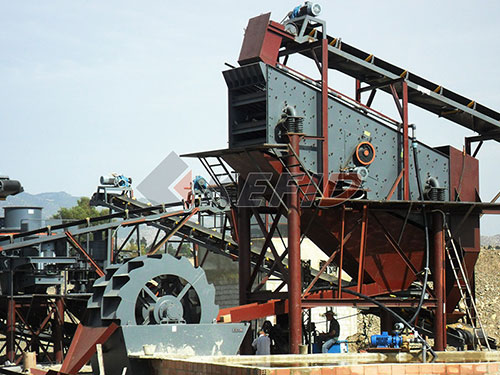
- Tonnage Rate: Actual throughput vs.promised capacity.
- Power Consumption: kWh per ton crushed,a direct operational cost indicator.
- Wear Part Consumption Estimate: Sample runscan help estimatewear rates(jaw plates,mantle,bowl liners)basedon feed materialabrasiveness.
- Noiseand Dust Emissions: Observable duringthe test,directly impacting environmental complianceandsite working conditions.
4.The Vendor Selection Process: Beyond the Sample
Whilethe sampleis central,the broadercontext ofthe vendorrelationshipmust be scrutinized.
1.Requestfor Proposal with Clear Specs: Defineexact feed material characteristics(provideyour own quarry samples),required final product specifications(quoting relevant standards),and expected annual production.The vendorshould then proposea circuitandsupplyasample outputbasedon that proposal.
2.Sample Test Protocol: Insiston a structuredtest,eitherat your quarrywith mobile equipmentorat their testing facilityusing your providedfeed material.Document all conditions:CSS,speed,cavity setting(if cone crusher),feed rate,and powersettings.
3.Technical Data Review & Lifecycle Cost Analysis:
- Compare promisedvs.deliveredgradation curvesfromthe test.
- Requestdetailedwear part life projectionsand costs.
- Analyze proposedplant layoutfor maintenanceaccessibility(e.g.,hydraulic adjustment& clearing systems).
- Evaluatecontrol systemautomationfor optimumpower useand product quality.
4.After-Sales Support Sample: Considervendor-suppliedsamplesof servicessuchas liner profile designs,wearsensor systems,training manuals,and remotemonitoring capabilities.Theseareintangiblebut critical”soft samples”of long-termvalue.
5.Common Pitfalls to Avoid
- Non-Representative Feed Material: Testingwith ideal rock insteadof your actualquarry materialrendersresults meaningless.
- *Ignoring Fines Generation: Focusing solelyon top-sizewhile neglectingthe -10mmfines contentcan leadto drainageissuesand wastedmaterialthat requiresadditional processing.
- *Overlooking Operational Flexibility: Ballastspecificationscan varybetween projects.Equipmentthat cannotbe easilyadjustedto producea slightlydifferentgradation may limitfuturecontract opportunities.Sampleshould demonstrateadjustability.
- *Choosing Price Over Total Cost of Ownership: A cheapermachine may producea marginallyacceptable samplebut with higherwear costsand lowerenergy efficiency,makingit more expensiveovera 5-yearperiod.
Conclusion
The processof solicitingandevaluatingquarryballastcrushingequipmentvendorsamplesisacornerstoneofsuccessfulinfrastructurematerialproduction.Itisa technicalaudit,a financialsimulation,andapartnershipassessmentrolledintoone.Acomprehensiveapproach—combiningrigorousphysicaltestingoftheoutputsamplewithadetailedanalysisoftheequipment’soperationaldataandsupportframework—providestheconfidence neededformajorcapitalinvestment.Ultimately,thegoalistotranslatethepromiseofavendorsampleintotherealityofadeployedcrushingplantthatdeliversconsistent,durableballastefficientlyandsustainably,foryearsofreliableservice.Undervaluingthisprocessexposestheoperationtosignificanttechnical,finical,andreputationalrisks,makingmeticulousattentiontovendorsamplesnotjustbestpractice,butabusinessimperativeintheaggregatesindustry
