
The infrastructure and railway sectors are foundational to global economic development, with railway ballast serving as a critical, load-bearing component of track beds. Producing this essential material requires specialized machinery: quarry ballast crushing equipment. For businesses looking to enter or expand in this market without developing their own machinery from scratch, private label manufacturing presents a compelling strategy. This article provides a detailed, professional examination of quarry ballast crushing equipment within the context of private label manufacturing, with a particular focus on the implications of Minimum Order Quantities (MOQs).
Railway ballast is coarse aggregate—typically hard, angular crushed stone of specific size (usually between 25mm and 63mm). Its primary functions are to distribute load, provide drainage, inhibit vegetation growth, and facilitate track maintenance. The ideal ballast material is durable, resistant to weathering, and possesses sharp edges for interlocking.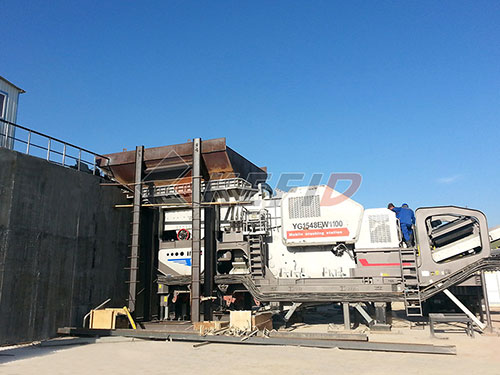
Producing such specification-bound aggregate demands robust, multi-stage crushing and screening processes. A standard ballast production line includes:
The equipment must be engineered for high throughput, extreme abrasion resistance (using manganese steel wear parts), and consistent product gradation control.
Private label manufacturing involves contracting an established Original Equipment Manufacturer (OEM) to produce machinery that will be sold under another company’s brand name. In heavy industrial equipment like crushing plants, this model offers distinct advantages:
For the Brand Owner (Client):
For the Manufacturer (OEM):
The MOQ is a critical commercial term defining the smallest number of units a manufacturer is willing to produce for a private label order. In capital-intensive industries like heavy crusher manufacturing, MOQs are not arbitrary; they are calculated based on complex cost structures.
Key Factors Determining MOQ for Crushing Equipment:
Typical MOQ Scenarios:
For a company considering this path several strategic approaches can make MOQs manageable
1 Partnership Over Transaction
Treating the manufacturer as a long-term strategic partner rather than a one-time vendor is crucial Discussing a rolling forecast over multiple years can sometimes motivate manufacturers to offer more favorable terms on initial MOQs anticipating future business
2 Modular Ordering & Phased Delivery
Instead of ordering multiple complete identical plants consider ordering core crushing modules jaw cone screen in higher quantities then configuring them differently or adding auxiliary modules conveyors power units later This leverages standardization benefits
3 Consortium Buying or Dealer Network Development
If acting as distributor establishing firm commitments from your own dealer network before approaching manufacturer can aggregate demand meeting higher MOQs Alternatively smaller companies might form buying consortium though this requires aligning specifications branding
4 Negotiation Beyond Unit Price
If struggling with unit-count MOQ negotiate on other terms
5 Due Diligence on Manufacturer Capability
Verifying manufacturer’s credentials is non-negotiable
Entering quarry ballast crushing equipment market via private label manufacturing offers viable accelerated path bypassing immense hurdles inherent in de novo heavy machinery development However model governed by stringent economic realities particularly Minimum Order Quantity Understanding drivers behind MOQ—setup costs procurement engineering supply chain efficiency—allows informed negotiation strategic planning
Success this arena hinges on selecting technically proficient financially stable OEM partner one transparent about cost structures flexible within reason Ultimately goal establish symbiotic relationship where manufacturer efficiently produces reliable high-performance crushing equipment while brand owner effectively markets services it building reputational equity own label By carefully planning investment potentially leveraging phased modular approach businesses can overcome initial hurdle MOQ position themselves competitively essential global infrastructure supply chain
Lorem ipsum dolor sit amet, consectetur adipisicing elit. Consectetur sequi saepe ut sunt eveniet perferendis excepturi, iste obcaecati. Qui tempore hic sed quia soluta obcaecati vel.