Quarry Ballast Crushing Equipment: OEM Factory Discounts and Strategic Procurement
In the robust world of rail and construction infrastructure, quarry ballast forms the literal bedrock of stability. This coarse aggregate, typically sized between 28mm and 50mm, provides drainage, load distribution, and structural support for railway tracks and other heavy-duty applications. The production of this specification-critical material hinges on specialized quarry ballast crushing equipment. For quarry operators, mining companies, and large contractors, navigating the procurement landscape—particularly the allure of OEM factory discounts—requires a blend of technical understanding and strategic sourcing. This article delves into the equipment ecosystem, the true value proposition of OEM partnerships, and a critical analysis of how to evaluate factory discount offers.
The Technical Imperative: Why Specialized Equipment is Non-Negotiable
Ballast is not merely crushed stone; it must meet stringent geometric (particle shape, size distribution), mechanical (abrasion resistance, toughness), and durability (weathering) standards (e.g., AREMA, ASTM D692/D692M). Producing such material demands a crushing circuit designed for specific outcomes:
- Primary Crushing: The first reduction of blasted rock. Jaw Crushers dominate here due to their high capacity, robustness, and ability to handle large feed sizes. Their compressive action produces initial fragmentation.
- Secondary & Tertiary Crushing: This is where cubicity—the crucial shape characteristic—is achieved. Cone Crushers are the industry standard for ballast production. Their interparticle crushing action in a packed chamber (especially in modern hydroset or hydraulic adjustment models) excels at producing well-shaped, low-flakiness aggregates. For certain rock types and desired product shapes, high-speed Impact Crushers may be used in secondary roles but require careful control to avoid excessive fines.
- Screening: Multi-deck Vibrating Screens are integral for precise size separation, ensuring the final product adheres to tight gradation bands. Oversize material is recirculated (closed-circuit crushing), while undersize material is diverted for other uses or further processing.
- Additional Processing: Washing Screws or Log Washers may be incorporated to remove clay coatings or fine contaminants that could impair drainage—a key function of ballast.
An optimal flowsheet is rock-dependent (granite vs. basalt vs. limestone) and output-specific. An OEM with deep application expertise doesn’t just sell machines; they provide a crushing solution.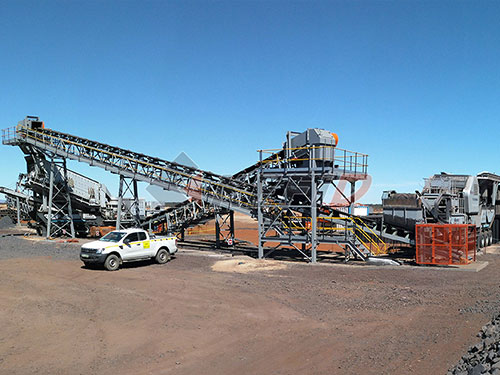
The OEM Value Proposition: Beyond the Price Tag
An Original Equipment Manufacturer (OEM) offers intrinsic value that transcends the initial invoice.
- Integrated System Design: Leading OEMs engineer their jaw, cone, screen, and feeder lines to work in harmony within a plant layout optimized for flow and efficiency.
- Proven Performance & Reliability: Equipment is built to withstand the relentless abrasion and high-impact loads of quarrying. Proprietary metallurgy for wear parts (mantles, concaves, jaw dies) directly impacts cost-per-ton.
- Application Engineering Support: Reputable OEMs have technical teams that can model entire circuits using simulation software to predict output gradation and tonnage before a single piece of steel is fabricated.
- Genuine Parts & Warranty: Using OEM parts ensures dimensional integrity and performance consistency. Warranties are straightforward and supported by the manufacturer’s engineering authority.
- Technology & Automation: Modern OEM equipment often features advanced automation systems like ASRi (Automatic Setting Regulation) for cone crushers, which optimizes throughput and protects the machine from uncrushables.
Decoding “Factory Discount”: Strategic Sourcing vs. Mere Cost-Cutting
The term “factory discount” can signify several scenarios in heavy equipment procurement:
- Standard Commercial Discounts: Offered based on order size (e.g., complete plant package), long-term frame agreements, or as part of a competitive bidding process.
- Promotional or Inventory Clearance: Discounts on specific models being phased out or on machinery built to standard configurations that match a buyer’s needs closely.
- Demonstration or Low-Hour Units: Essentially “like-new” equipment that has been used for trade shows or short-term site trials at a significant discount.
- Regional Market Incentives: Aggressive pricing to enter new geographical markets or gain market share against competitors.
- Bundled Service Agreements: Discount on capital equipment tied to signing a long-term service or parts supply contract.
A Critical Framework for Evaluating Discount Offers
A savvy buyer must conduct a holistic Total Cost of Ownership (TCO) analysis where the discounted purchase price is just one input.
| Consideration |
Questions to Ask |
Risk of Ignoring |
| Technical Suitability |
Does this specific model/circuit optimally produce specification ballast from my geology? |
Poor product shape/ yield; failure to meet specs; constant circuit adjustments. |
| Lifecycle Cost Analysis |
What is the predicted cost-per-ton over 50k hours? Factor in energy consumption & wear part costs? |
High operating costs erode capital savings; unexpected downtime expenses. |
| After-Sales Support Network |
Is there an OEM-trained service team with stocked parts within a reasonable distance? |
Extended downtime waiting for parts/traveling technicians; loss of production revenue far exceeding any discount. |
| Technology & Modernity |
Is this discounted model several generations old? Does it support modern automation platforms? |
Higher energy consumption; lack of data for predictive maintenance; operational inefficiency |
| Financial Terms & Conditions |
Does the discount require unfavorable payment terms? Is warranty coverage reduced? |
Cash flow strain; uncovered repair costs negating initial savings |
Strategic Recommendations for Procurement
- Define Needs Precisely First: Engage your process engineers to define target tonnage, product specifications (% cubicity), feed material characteristics, and site constraints before soliciting quotes.
- Request Complete Package Quotes: Ask competing OEMs for bids on the entire system, including design support, commissioning spares package installation supervision if needed), training).
3.Leverage Competition Intelligently: Use an attractive quote from one reputable OEM as leverage in negotiations with another preferred supplier rather than simply chasing lowest sticker price
4.Scrutinize The Fine Print: Understand exactly what “factory direct” means –is it from main factory sales channel authorized regional distributor?
5.Consider Lifecycle Partnerships: Explore long-term service agreements LTSA). These can offer predictable maintenance costs often include priority support may be bundled with more attractive capital equipment discounts
6.Visit Reference Sites: Insist on visiting quarries running same proposed equipment under similar conditions Talk operators about reliability support actual production costs
Conclusion: Discount as an Enabler Value as Goal
In realm quarry ballast crushing equipment pursuit genuine value must supersede attraction short-term discount True economic advantage lies optimizing cost-per-tonne over lifespan asset not minimizing initial capital outlay alone An informed buyer recognizes best “OEM factory discount” one applied high-quality fit-for-purpose machinery backed by robust local service network Such strategic procurement results reliable efficient production line consistently delivers specification-compliant ballast ensuring downstream infrastructure integrity while maximizing quarry profitability Therefore treat significant discount offer not as standalone victory but as invitation conduct even more rigorous due diligence ensuring foundational investment will support business decades come
