
In the vast and intricate world of rail infrastructure, few components are as fundamentally critical yet understated as railway ballast. This layer of crushed stone, meticulously graded and compacted, forms the stable bed upon which sleepers and tracks are laid. It distributes load, facilitates drainage, prevents vegetation growth, and dampens vibrations—functions essential for safety, speed, and longevity of rail networks. The production of this high-specification aggregate is a precise science, hinging on specialized Quarry Ballast Crushing Equipment. Furthermore, the provenance of this machinery from an Original Equipment Manufacturer (OEM) with valid Factory Certificates is not merely a commercial detail but a cornerstone of project reliability, performance assurance, and long-term operational economics.
Railway ballast is governed by stringent international standards (such as AREMA in North America, EN 13450 in Europe, or specific national railway specifications). These standards dictate strict criteria for:
Producing aggregate that consistently meets these exacting requirements demands more than generic crushing machinery. It necessitates a purpose-designed Ballast Crushing Plant, engineered to optimize each stage of size reduction and classification.
A typical OEM-designed ballast production line integrates several key equipment modules into a cohesive system:
Primary Crushing Station: This is the first point of contact with blasted quarry rock. Heavy-duty Jaw Crushers or Gyratory Crushers are employed here. Their role is to accept large feed material (up to 1-1.5 meters) and reduce it to a manageable size (approx. 150-250mm). For ballast production, robustness and capacity are paramount in this stage.
Secondary & Tertiary Crushing Stations: This is where the critical shaping occurs. Cone Crushers are the industry standard for these stages. Modern cone crushers equipped with advanced hydraulic systems, adjustable eccentric throws, and automated control cavities excel at producing the desired cubical product while minimizing waste fines. Some circuits may incorporate Horizontal Shaft Impact (HSI) Crushers for further shaping, though their use is carefully balanced against potential over-generation of fines.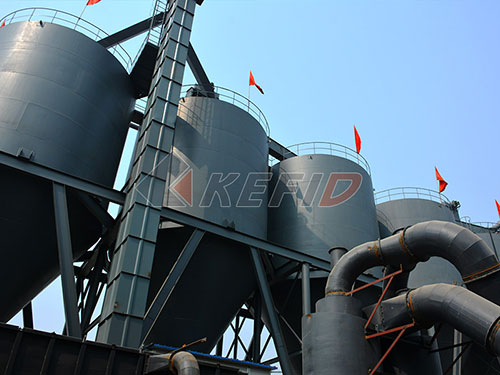
Screening & Classification: Multi-deck Vibrating Screens are the arbiters of final product specification. They separate crushed material into precise size fractions—oversize material is recirculated (closed-circuit design), on-spec material is conveyed to stockpiles as finished ballast, and undersize material is removed as quarry fines for other uses. Efficient screening is vital for yield optimization.
Fines Removal System: To achieve the required cleanliness, dedicated Sand Washing Plants or air classifiers may be integrated to scrub and remove deleterious dust from the final product.
The Nerve Center: Automation & Control Systems: Modern OEM equipment comes with sophisticated programmable logic controller (PLC) systems that monitor crusher load, power draw, chamber pressure, and screen efficiencies. This allows for real-time adjustments to optimize yield, shape, and throughput while protecting the machinery.
Purchasing such complex capital equipment involves significant investment and long-term operational dependencies. Here’s why sourcing from a certified OEM factory transcends simple branding:
1. Engineering Integrity & Design Provenance:
An OEM designs, engineers, manufactures, and tests the complete system as an integrated whole. Factory certification verifies that every component—from the crusher’s cast steel main frame to the screen’s vibration mechanisms—is produced under controlled conditions adhering to documented quality management systems (e.g., ISO 9001). This ensures dimensional accuracy, material traceability (using certified grades of steel), and welding integrity critical for enduring high-cycle fatigue loads in quarry environments.
2. Performance Guarantee & Warranty Validity:
OEMs provide performance guarantees for throughput capacity and product gradation based on specific feed materials. These guarantees are only valid for certified equipment installed as per OEM specifications. Third-party or “clone” parts often void these warranties, transferring all performance risks solely to the quarry operator.
3. Optimal Compatibility & System Synergy:
In an OEM system conveyors are sized to match crusher discharge rates; motors have correct power ratings; control systems speak a unified language ensuring smooth interlocking operation Mismatched components from various suppliers can create bottlenecks increase energy consumption per ton produced lead to frequent breakdowns due to incompatible stress profiles
4.Genuine Spare Parts & Metallurgical Consistency:
Crushing equipment subjects wear parts mantles concaves jaw dies screen meshes )to extreme abrasion impact Certified OEM factories use proprietary metallurgies heat treatment processes e g for manganese steel )to achieve optimal balance between hardness toughness Using non-genuine parts often results in drastically reduced wear life unpredictable failure potentially causing catastrophic secondary damage to crusher bodies
5.Technical Support & Specialized Knowledge:
OEMs possess deep tacit knowledge about their equipment’s design intent They provide comprehensive installation commissioning supervision operator training maintenance schedules tailored technical documentation Access factory-trained service engineers specialized diagnostic tools invaluable minimizing downtime during repairs upgrades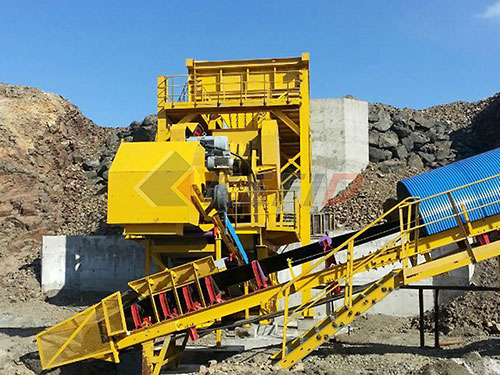
6.Long-term Product Development & Modernization Paths:
Technology evolves Certified OEM invest research development innovations like automation energy efficiency improvements connectivity Industrial Internet Things IIoT Sourcing from ensures pathway future retrofits software updates keeping plant competitive regulatory compliant over decades-long lifespan
While uncertified alternative equipment appear offer lower initial capital outlay total cost ownership TCO analysis reveals different picture:
The production railway ballast represents perfect intersection geology mechanical engineering civil infrastructure demands precision durability scale cannot overstated Specialized Quarry Ballast Crushing Equipment forms technological heart this process However machinery’s pedigree matters much its mechanical specifications Procuring such equipment from genuine Original Equipment Manufacturer backed verifiable Factory Certificates strategic decision underpinning not just plant’s operational efficiency but also financial viability risk management long-term project success It represents commitment engineering excellence providing literal foundation upon which safe reliable sustainable rail transport networks built As global investment rail expansion decarbonized transport accelerates role certified OEM crushing solutions will remain indispensable building resilient infrastructure future
Lorem ipsum dolor sit amet, consectetur adipisicing elit. Consectetur sequi saepe ut sunt eveniet perferendis excepturi, iste obcaecati. Qui tempore hic sed quia soluta obcaecati vel.