
The production of railway ballast—the graded layer of crushed stone that forms the trackbed—is a critical process demanding precision, durability, and consistency. As global infrastructure projects expand and existing networks require maintenance, the demand for high-quality ballast has intensified. This has propelled the evolution of quarry ballast crushing equipment from standardized machinery to highly customized manufacturing solutions. Customization in this field is not a luxury but an engineering imperative, driven by the unique characteristics of each quarry deposit, stringent technical specifications for ballast, and the relentless pursuit of operational efficiency and cost-effectiveness.
Railway ballast must fulfill specific mechanical functions: distributing load, providing drainage, facilitating track alignment, and inhibiting vegetation growth. Consequently, standards like AREMA (American Railway Engineering and Maintenance-of-Way Association) or EN 13450 (European Standard) define strict criteria for particle size distribution (typically 25-65mm), shape (angular for interlock), hardness (Los Angeles Abrasion test), and cleanliness.
A one-size-fits-all crusher cannot optimally meet these demands across diverse operational contexts. Key variables necessitating customization include:
Customized manufacturing involves a holistic approach to system engineering, focusing on several core areas:
A. Process Flow Design & Plant Configuration
This is the foundational stage of customization. Engineers analyze all input parameters to design an optimal crushing circuit. A typical customized ballast plant often employs a three-stage process:
B. Crusher Chamber & Wear Part Optimization
The heart of customization lies in the crushing chamber geometry and wear part metallurgy.
C.Drive System & Power Train Engineering
Power requirements vary dramatically.Customization ensures motors,couplings,and drive belts are correctly sized for peak load conditions,fueling efficiency.Variable Frequency Drives(VFDs) can be integrated for soft-start capabilities and energy savings during partial load operation.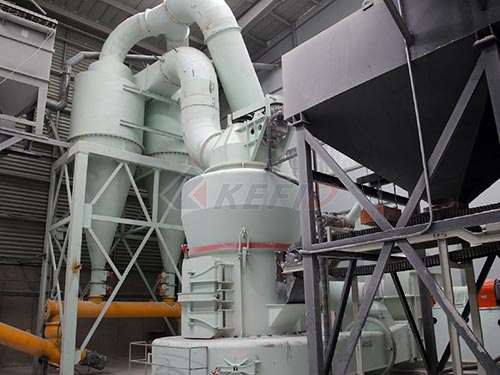
D.Dust Suppression & Environmental Controls
Modern quarries operate under strict environmental regulations.Customized plants integrate targeted dust suppression sprays at transfer points,dust encapsulation,and sometimes full baghouse filtration systems designed specifically for the plant’s airflow volume generated during crushing.
E.Mobility & Modularity
For quarries with multiple faces or limited fixed infrastructure,semi-mobile or modular skid-mounted plants offer a customized solution.They provide flexibility while retaining optimized process flows tailored to that specific site’s material.
True customization requires a deep partnership between the quarry operator/ballast producer and the equipment manufacturer.The process typically follows these stages:
1.Consultation & Site Audit: Engineers conduct geological reviews,material testing,and site surveys.
2.Simulation & Proposal: Using specialized software,the entire process flow is simulated to predict output gradation,yield,and efficiency.This data-driven proposal forms the basis of design.
3.Detailed Engineering Design(DE): Every component,layout,and interface is detailed in custom drawings.
4.Modular Fabrication & Assembly: Equipment is built-to-order in controlled factory conditions.Often,the plant is pre-assembled into large modules for faster site erection.
5.Factory Acceptance Testing(FAT): Critical systems are tested before shipment.
6.Supervised Installation & Commissioning: Manufacturer specialists oversee assembly,fine-tune settings,and conduct performance guarantee tests(PGT).
7.Training & Ongoing Support: Custom equipment requires tailored operator training.Predictive maintenance plans based on specific wear rates complete lifecycle support.
The investment in customization yields significant long-term returns:
In conclusion,customized quarry ballast crushing equipment manufacturing represents the zenith of applied mechanical engineering in aggregate processing.It transcends mere equipment supply evolving into a comprehensive service that integrates geology mechanical design,material science,and automation.The driving force behind this trend is clear:in an industry where margins are defined by yield,efficiency,and compliance,the ability to precisely engineer a crushing solution from the ground up provides an undeniable competitive advantage.As railway networks continue pushing into challenging terrains requiring higher performance standards,the role of deeply customized reliable crushing systems will only become more central ensuring that foundational layer upon which global mobility depends
Lorem ipsum dolor sit amet, consectetur adipisicing elit. Consectetur sequi saepe ut sunt eveniet perferendis excepturi, iste obcaecati. Qui tempore hic sed quia soluta obcaecati vel.