
The construction and maintenance of railway infrastructure represent a monumental engineering endeavor, where stability, durability, and safety are paramount. At the very foundation of this system lies quarry ballast—the crushed stone layer that supports railway tracks, facilitates drainage, and distributes immense loads. The production of high-quality, specification-compliant ballast is a sophisticated process entirely dependent on specialized quarry ballast crushing equipment. This article provides a detailed, professional examination of this critical machinery sector, exploring the technological principles, key manufacturers, selection criteria, and market dynamics that define this niche yet vital industry.
Railway ballast is not mere gravel; it is a precisely engineered product. Its primary functions include:
Consequently, ballast must meet strict geometric (particle size distribution, shape) and mechanical (abrasion resistance, toughness) specifications (e.g., AREMA in North America, EN 13450 in Europe). The ideal ballast particle is angular, with sharp edges for optimal interlocking, and produced from hard, durable igneous rocks like granite or basalt. This demand for specific particle shape (“cubicity”) directly dictates the design of crushing equipment.
The production process typically involves a multi-stage crushing and screening circuit designed to maximize yield of the desired size fraction (e.g., 28-50 mm or 1.5-2.5 inches).
a) Primary Crushing:
The first reduction of blasted quarry run rock (often up to 1-meter pieces). The dominant technology here is the Jaw Crusher. Its robust, compressive breaking action is ideal for handling large, variable feed material. Key considerations are feed opening size, crushing force (toggle plate design), and wear resistance of manganese steel jaws. Gyratory crushers are an alternative for very high-capacity quarries.
b) Secondary Crushing:
This stage further reduces the primary crushed product and is crucial for shaping. Cone Crushers are the industry standard for secondary ballast production. Modern cone crushers offer advanced hydraulic settings adjustment systems (like ASRi™ or Hydroset™) that allow real-time control over product size and compensate for wear automatically. The inter-particle comminution within a cone crusher’s chamber is highly effective at producing the required cubical particles.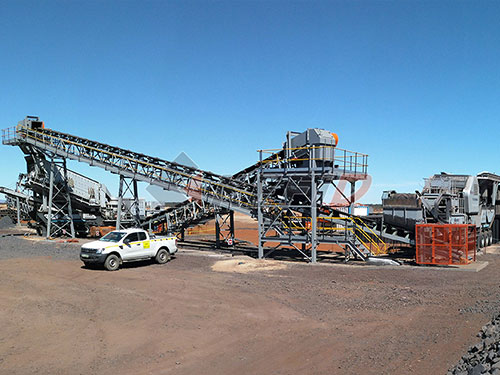
c) Tertiary/Quaternary Crushing (Shape Optimization):
For premium ballast where superior shape is non-negotiable, a third stage employing Vertical Shaft Impactors (VSI) or high-pressure grinding rolls may be used. VSIs utilize a high-speed rotor to throw rock against anvils or rock shelves, creating particles through “rock-on-rock” impact. This method excels at producing optimally shaped, cubical aggregates with minimal flaky or elongated grains.
d) Screening and Scalping:
Integrated throughout the circuit are vibrating screens—typically heavy-duty inclined or horizontal models—that separate material into precise size fractions. Efficient screening ensures oversize material is recirculated (“closed-circuit” design) and removes undersize fines (“scalping”), which are detrimental to ballast drainage.
e) Mobility Considerations:
While many ballast plants are fixed installations near quarries adjacent to rail lines, there is growing demand for track-mounted mobile crushers and screens. These portable plants can be deployed for dedicated short-term projects or maintenance renewals directly on-site.
The market comprises global giants with full-line offerings and specialized firms focusing on high-performance crushing technology.
Global Full-Line Leaders:
Specialized & Regional Powerhouses:
Choosing equipment requires a holistic analysis:
The quarry ballast crushing equipment sector evolving alongside broader trends:
Manufacturers quarry ballast crushing equipment provide engineering backbone global railway networks Their machinery transforms raw bedrock into precisely graded angular stone underpinning safe efficient rail transport While brand reputation matters ultimate selection must driven rigorous technical economic analysis matching specific geology project requirements operational philosophy As railways face demands greater speeds heavier axle loads sustainability pressures innovation this specialized field will continue focus delivering higher quality product lower total cost ownership reduced environmental impact ensuring tracks laid today remain stable decades come
Lorem ipsum dolor sit amet, consectetur adipisicing elit. Consectetur sequi saepe ut sunt eveniet perferendis excepturi, iste obcaecati. Qui tempore hic sed quia soluta obcaecati vel.