
The global infrastructure and construction boom, particularly in developing economies and large-scale rail projects, has created a sustained demand for high-quality quarry ballast. Ballast, the coarse aggregate placed beneath railway tracks and in other construction applications, serves the critical function of distributing load, providing drainage, and inhibiting vegetation growth. Its production is a specialized process requiring robust and efficient crushing equipment. Consequently, the role of the quarry ballast crushing equipment importer is both crucial and complex. This article serves as a detailed guide for such importers, outlining the technical considerations, market dynamics, procurement processes, and strategic partnerships necessary for successful acquisition.
Before selecting equipment, an importer must have a foundational understanding of the ballast material itself. Railway ballast specifications are exceptionally stringent. It typically consists of crushed hard rock—such as granite, basalt, gneiss, or trap rock—with particles generally ranging from 25mm to 65mm (1 to 2.5 inches). The material must be angular in shape to interlock effectively, be durable (with high resistance to abrasion as measured by the Los Angeles Abrasion test), and be free of dust and fine particles.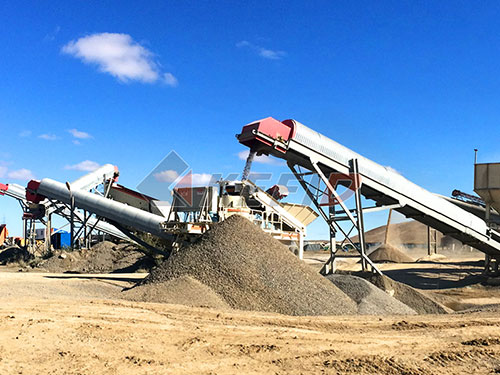
The production process to achieve this involves several stages:
Therefore, a standard ballast crushing circuit comprises a primary jaw crusher, a secondary cone crusher, screens, and conveyors linking them all.
An importer’s sample specification sheet must reflect these operational needs with precision.
A. Technical Specifications:
B. Quality and Durability:
The equipment will process millions of tonnes of abrasive rock. Critical components include:
C. Operational Costs:
The purchase price is only part of the equation. A sophisticated importer evaluates Total Cost of Ownership (TCO):
An importer acts as a critical bridge between international manufacturers and local end-users (quarry operators). Their responsibilities extend far beyond placing an order.
A. They possess deep knowledge of local market conditions: understanding client preferences after-sales support availability logistical challenges at ports customs clearance procedures import duties taxes
B. They provide vital technical support acting as first-line troubleshooters for their clients often requiring strong in-house engineering expertise
C. They manage inventory supply chains ensuring timely delivery wear spare parts minimizing costly downtime quarries
When an importer initiates contact with potential suppliers they typically send detailed request quotation RFQ This document should comprehensive leave ambiguity Below hypothetical sample key sections
[Importer Company Letterhead]
Date: [Date]
Ref: RFQ/BCE/2023/089
To: [Supplier/Manufacturer Name & Address]
Subject: Request for Quotation (RFQ) for Complete Track-Mounted Ballast Crushing Plant
Dear Sir/Madam,
We are leading importers heavy mining quarrying equipment [Country Name] currently sourcing complete track-mounted crushing screening plant specifically production high-quality railway ballast behalf our client major infrastructure development corporation
Project requirements mandate final product conform [e.g., RDSO Chapter IV – 2015] specifications predominantly 50-65mm fraction Please find below preliminary technical specification your consideration
1.0 TECHNICAL DATA SHEET
| Item | Specification |
|---|---|
| Application | Railway Ballast Production |
| Required Final Product | 95% within 50mm – 65mm range; Cubical Particle Shape |
| Feed Material | Hard Granite; Unconfined Compressive Strength (UCS): 150-200 MPa |
| Maximum Feed Size | 800 mm |
| Required Capacity | Minimum 250 TPH (tonnes per hour) |
| Plant Type | Track-Mounted Mobile Closed Circuit |
| Primary Crusher | Single Toggle Jaw Crusher; Minimum Feed Opening [e.g., 1100x700mm] |
| Secondary Crusher | Cone Crusher with Hydraulic Adjustment & Clearing System |
| Screen | Large Inclined Vibrating Screen; Triple Deck preferred |
| Conveyors | Stockpiling Conveyors with metal detectors & magnets |
| Power Unit | Diesel-Electric or Tier 4 Final Equivalent Diesel Hydraulic |
We request you provide detailed quotation inclusive following items:
Please note shortlisted suppliers may subject audit visit our technical team manufacturing facility We look forward your prompt comprehensive response within [e.g., 21 days] this RFQ receipt
Sincerely,
[Importer Contact Person & Details]
Importing quarry ballast crushing equipment significant capital investment strategic decision that can define profitability competitiveness quarry operator Therefore professional importer cannot simply order-taker They must act technically astute partner capable navigating complex landscape international manufacturing logistics local regulatory frameworks end-user operational needs Success hinges meticulous specification demonstrated sample RFQ thorough evaluation supplier capabilities beyond price alone considering factors like innovation reputation after-sales service By adopting holistic strategic approach importers position themselves indispensable partners driving national infrastructure development while building sustainable profitable business
Lorem ipsum dolor sit amet, consectetur adipisicing elit. Consectetur sequi saepe ut sunt eveniet perferendis excepturi, iste obcaecati. Qui tempore hic sed quia soluta obcaecati vel.