
The foundation of any reliable railway network lies not on the tracks themselves, but beneath them, in the carefully graded layer of quarry ballast. This crushed stone aggregate provides drainage, load distribution, and stability for the sleepers and rails. The quality, consistency, and physical properties of this ballast are paramount to safety, longevity, and reduced maintenance costs. At the heart of producing this critical material is the specialized machinery used to crush it, and behind every high-performance crusher lies a sophisticated Factory Research and Development (R&D) department. The R&D function within a quarry ballast crushing equipment factory is not merely a support unit; it is the strategic engine driving innovation, precision engineering, and adaptation to the evolving demands of global rail infrastructure.
The primary mission of ballast crushing equipment R&D is to translate stringent geological and engineering requirements into robust machine design. Ballast specifications (governed by standards like AREMA in North America or EN 13450 in Europe) are exacting. They dictate strict limits on particle size distribution (gradation), flakiness and elongation indices, toughness (Los Angeles Abrasion test), durability (Magnesium Sulfate Soundness test), and cleanliness. Unlike general-purpose aggregate crushers, ballast crushers must be engineered to consistently yield a cubical, angular product that interlocks effectively while minimizing friable or flat particles that would degrade under cyclic loading.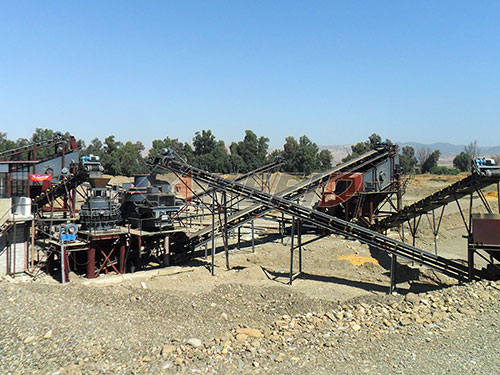
R&D teams begin with material science. They analyze a wide range of feed materials—granite, basalt, limestone, quartzite—from different quarries worldwide to understand variations in hardness (Unconfined Compressive Strength), abrasiveness (SiO2 content), and feed size. This empirical data feeds into advanced simulation software for Discrete Element Modeling (DEM) and Finite Element Analysis (FEA). DEM simulates the flow and breakage patterns of thousands of stone particles inside a crushing chamber, allowing engineers to optimize chamber geometry, rotor velocity, and anvil/crushing surface configurations virtually before a single piece of metal is cut. FEA is used to subject virtual machine components—like rotors, frames, and bearings—to extreme dynamic loads to predict stress points, fatigue life, and prevent catastrophic failure.
1. Crusher Technology Optimization:
The core of the product line—typically Horizontal Shaft Impact (HSI) crushers for their superior cubical shaping capabilities, but also including Jaw Crushers for primary breaking and Cone Crushers for secondary applications—undergoes constant refinement.
2. Complete Plant Integration & Flow Dynamics:
Ballast production is a system comprising feeding (vibrating grizzly feeders), primary crushing secondary/tertiary crushing screening washing (to remove fines) stockpiling conveyors dust suppression noise control systems An equipment factory’s R&D must view its crusher not as an isolated unit but as the heart of an integrated process They develop holistic plant simulation models using specialized software like Bruno or PlantDesigner® These models optimize entire flowsheets ensuring balanced capacity minimizing bottlenecks reducing recirculating loads maximizing yield within spec while minimizing energy consumption per ton produced
3 Sustainability & Environmental Compliance:
R&D has a growing mandate to reduce environmental footprint Key areas include:
4 Testing & Validation: The Crucible of Innovation
A defining feature leading factory’s R&D department possesses comprehensive testing facilities These include:
Factory R&D does not operate in vacuum It responds directly market forces:
In conclusion Factory R&D quarry ballast crushing equipment represents critical nexus mechanical engineering material science process automation digital innovation It transforms brute force rock breaking into precise controlled manufacturing process vital infrastructure component Through relentless pursuit durability efficiency end-product quality these teams ensure their machinery produces ballast forms stable predictable trackbed Ultimately their work translates directly into safer more resilient cost-effective railways As global investment rail transport expands both traditional lines high-speed networks role this specialized R&D will only grow more central It quiet relentless engine powering progress one perfectly crushed angular stone time
Lorem ipsum dolor sit amet, consectetur adipisicing elit. Consectetur sequi saepe ut sunt eveniet perferendis excepturi, iste obcaecati. Qui tempore hic sed quia soluta obcaecati vel.