
The global infrastructure and construction sectors are fundamentally dependent on a steady, high-quality supply of railway ballast. This coarse aggregate, typically composed of crushed hard rock, forms the bed upon which railway tracks are laid, providing drainage, load distribution, and structural stability. The production of this critical material is a sophisticated industrial process that begins in specialized quarries and culminates in its delivery to rail construction sites worldwide. At the heart of this process lie quarry ballast crushing equipment factories—highly engineered manufacturing hubs whose efficiency and output directly influence the pace and quality of rail development. The subsequent shipping of this heavy machinery is a logistical feat in itself, involving complex planning and specialized transport. This article provides a detailed examination of this interconnected chain, from factory floor to global destination.
Ballast is not merely rubble; it must meet stringent specifications regarding particle size, shape, hardness, abrasion resistance, and durability. Producing such a product requires a carefully selected and configured sequence of crushing and screening machinery.
1.1 Primary Crushing: The First Reduction
The process begins with primary crushers, which are designed to handle the largest feed material directly from the quarry blast. Their primary function is to reduce large boulders (often up to 1-1.5 meters in diameter) to manageable sizes (around 100-200 mm).
1.2 Secondary and Tertiary Crushing: Refining the Product
The output from the primary crusher is too coarse for ballast. It proceeds to secondary and sometimes tertiary crushing stages to be further reduced and shaped.
1.3 Auxiliary Equipment: Screening and Washing
Crushing is only half the process. Screening is essential for grading the crushed material to meet exact specifications.
The entire crushing circuit is typically controlled by a centralized Programmable Logic Controller (PLC) system that monitors feed rates, power draw, and product sizes to optimize efficiency and consistency.
The factories that manufacture this heavy-duty equipment are themselves marvels of modern industrial engineering. They are not simple assembly lines but complex ecosystems of fabrication, machining, assembly, and testing.
2.1 Design and Engineering
Before any metal is cut, extensive design work takes place using Computer-Aided Design (CAD) and Finite Element Analysis (FEA) software. Engineers simulate stresses, loads,and wear patterns to ensure each component—from the main frame of a jaw crusher to individual liner bolts—can withstand decades of punishing operation in a dusty quarry environment.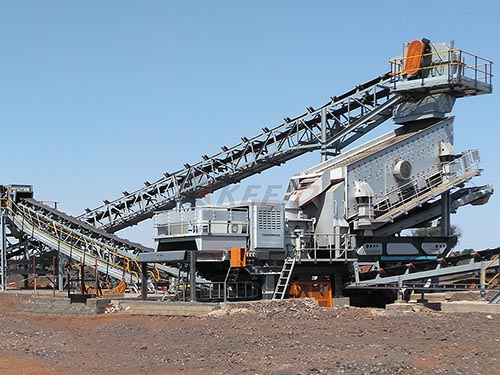
2.2 Fabrication and Machining
These factories house massive workshops equipped with:
2.3 Assembly and Quality Control
Sub-assemblies like bearings,hydraulic systems,and motorsare integrated into themain structure.Quality controlis relentless,involving non-destructive testing(NDT) methodslike Magnetic Particle Inspection(MPI)and Ultrasonic Testing(UT)to detect subsurface flaws.Every crusheris often test-run at the factory under no-load conditions to verify alignment,vibration levels,and operational functionality before itis approved for shipment.
2..4 Key Global Hubs
While many countries have local manufacturers,the global marketfor high-capacity,ballast-qualitycrushing equipmentis dominated by factories locatedin key industrial regions:
Shippinga several-hundred-toncrushing plantfroma factoryin Europeor Chinatoa quarryin AfricaAustraliaor South Americais one ofthe most complexchallengesin heavy-lift logisticsIt requiresmeticulous planningcoordinationand specialized assets
3..1 Pre-Shipment Preparation: Dismantlingand Packing
Fewcrushing plantsare shippedas single unitsThey are systematically dismantledinto modular componentsThis serves two purposesit brings individual pieceswithin manageable weightand size limitsfor transportand it often allowsfor easier onsite reassembly
3..2 Modesof Transport: A Multimodal Journey
The journeyis almost alwaysmultimodalinvolvinga combinationof roadseaand sometimesrail transport
3..3 Documentation Insuranceand Risk Management
The paperworkis as criticalas the physical moveIt includes:
The unassuming pileof crushed stone that formsa railwayballast bedisthe productofa highly advancedglobal industrial systemFromthedesign boardsandsophisticatedfactory floorswherecrushing equipmentis conceivedand builtto tcomplex balletof heavy-lift logistics that deliversittoa remote quarrythis process exemplifiesmodern engineeringandeconomic interdependenceThe continuous innovationin crushing technologyfor improved efficiencyandsustainabilitycoupledwiththe evolving capabilitiesof global shippingensures thatthe foundational materialfor our world’s rail networkscan be producedandreliably deliveredwhereverit is neededdriving economic growthand connectivityforward
Lorem ipsum dolor sit amet, consectetur adipisicing elit. Consectetur sequi saepe ut sunt eveniet perferendis excepturi, iste obcaecati. Qui tempore hic sed quia soluta obcaecati vel.