
Quarry Ballast Crushing Equipment Fabricators Factory Price: A Comprehensive Technical and Commercial Analysis
Introduction
In the global infrastructure and railway construction sectors, ballast—the crushed stone layer that supports railway tracks—remains an indispensable material. Its primary functions are to distribute the heavy dynamic loads from trains, provide lateral stability to the sleepers, facilitate rapid drainage, and resist frost heave. The production of high-quality ballast demands not only specific rock types (typically basalt, granite, or hard limestone) but also a precisely controlled crushing process that yields angular, cubical particles with a narrow gradation envelope. This is where quarry ballast crushing equipment comes into play. The term “fabricators factory price” refers to the direct-from-manufacturer cost of this heavy machinery, a critical factor for quarry operators, mining contractors, and infrastructure developers who seek to balance capital expenditure (CAPEX) with long-term operational efficiency.
This article provides a detailed, professional, and objective examination of quarry ballast crushing equipment, focusing on the types of machinery, the engineering principles behind ballast production, the role of fabricators, and the economic implications of factory-direct pricing. The analysis is grounded in current industry standards, mechanical design considerations, and market dynamics, offering a comprehensive reference for procurement managers, project engineers, and quarry owners.
1. The Metallurgical and Mechanical Demands of Ballast Crushing
Unlike ordinary aggregate for concrete or asphalt, railway ballast must meet stringent specifications, such as those outlined by AREMA (American Railway Engineering and Maintenance-of-Way Association) or UIC (International Union of Railways). These standards require:
Achieving these parameters is not a matter of simply reducing rock size; it requires a multi-stage crushing circuit with specific chamber geometries and stroke settings. The equipment must generate high inter-particle compression and shear forces, while minimizing over-crushing (which produces unwanted fines) and flaky shapes. Consequently, the machinery used is not generic; it is engineered for high reduction ratios, robust construction, and continuous duty cycles of 16-20 hours per day.
2. Core Equipment Categories in a Ballast Crushing Plant
A typical ballast production line comprises three or four stages, each with distinct equipment types. The fabricators—companies that design, cast, weld, and assemble these machines—must offer a portfolio that covers the entire process.
2.1 Primary Crushing: Jaw Crushers and Gyratory Crushers
The run-of-mine (ROM) rock from the quarry face can be up to 1,200 mm in size. The primary crusher reduces this to a manageable 150-300 mm. For ballast, heavy-duty jaw crushers (e.g., with a feed opening of 1,200 x 1,000 mm) are the most common. They operate on the principle of compressive force between a fixed and a movable jaw plate. Key design features for ballast duty include:
Gyratory crushers, while more expensive, offer higher capacity (up to 5,000 t/h) and are used in mega-quarries. However, for most ballast operations, jaw crushers are the economic choice.
2.2 Secondary Crushing: Cone Crushers
The secondary stage is where the shape of the ballast is largely determined. Cone crushers, specifically the “coarse” and “medium” chamber types, are the industry standard. They use a rotating eccentric mantle within a concave bowl, creating a gyrating motion that crushes rock through a combination of compression and attrition. For ballast, the following features are non-negotiable:
Modern cone crushers from leading fabricators (e.g., Sandvik CH-series, Metso HP-series, or equivalent Chinese brands like Shanbao and Puzzolana) offer automated setting adjustment and cavity clearing, reducing downtime.
2.3 Tertiary and Quaternary Crushing: Vertical Shaft Impactors (VSI) and High-Pressure Grinding Rolls (HPGR)
To achieve the final cubical shape and reduce the flakiness index below 15%, a tertiary stage is often required. Two main technologies are used:
2.4 Screening and Washing Equipment
After each crushing stage, vibrating screens (inclined or horizontal) separate the material into size fractions. For ballast, the screens must have high screening efficiency ( > 90%) to remove oversize and undersize. The screen media is typically polyurethane or rubber panels to reduce blinding and wear. Additionally, a washing system (e.g., a log washer or a bucket wheel) is often required to remove clay and dust, as ballast must have a clean surface for proper interlock.
3. The Role of Fabricators: Engineering, Casting, and Assembly
The term “fabricator” in the heavy machinery industry refers to a company that not only assembles components but also manufactures critical parts in-house. A reputable ballast crushing equipment fabricator must possess: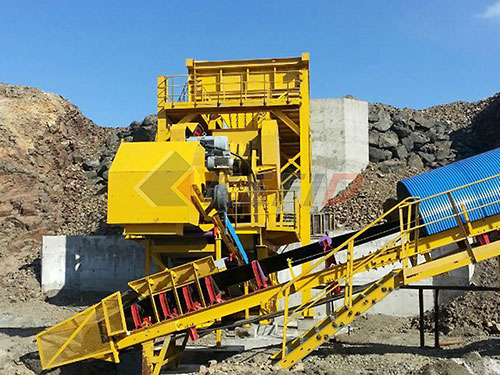
A key differentiator among fabricators is their after-sales support – availability of spare parts (liners, bearings, hydraulic seals) and technical service. Factory-direct pricing often includes a basic warranty (typically 12-24 months) but may exclude wear parts, which are considered consumables.
4. Factory Price: Cost Structure and Economic Implications
“Factory price” (also known as ex-works or EXW price) is the cost of the equipment at the fabricator’s factory gate, excluding transportation, insurance, customs duties, and installation. This pricing model is attractive for large-scale buyers who have their own logistics and erection teams. However, a professional procurement analysis must consider the total cost of ownership (TCO) , not just the initial purchase price.
4.1 Breakdown of Factory Price Components
For example, a mid-size secondary cone crusher (e.g., 200-300 t/h capacity) from a Chinese fabricator might have a factory price of $150,000 – $250,000. An equivalent European or American unit could cost $400,000 – $600,000. The price gap is due to labor costs, material grades, and stricter certification (e.g., CE, ISO 9001). However, the lower factory price often comes with trade-offs: lower-grade bearings (e.g., Chinese ZWZ vs. Swedish SKF), thinner liners, and less sophisticated automation.
4.2 Hidden Costs in Factory-Direct Purchases
4.3 Negotiation Strategies for Factory Price
5. Comparative Analysis of Global Fabricators
The market for ballast crushing equipment is dominated by a few global players, but regional fabricators are increasingly competitive.
6. Technological Trends Affecting Factory Price and Performance
7. Case Study: Factory Price vs. Total Cost for a 500,000 t/year Ballast Plant
Consider a hypothetical quarry in East Africa producing 500,000 tons of ballast annually. The required equipment list:
Total factory price (Chinese): $510,000. Total (European): $1,130,000.
However, adding shipping ($60,000), import duty (20% = $102,000 vs. $226,000), installation ($80,000 vs. $120,000), and initial spares ($50,000 vs. $100,000), the total project cost becomes:
Now, consider operational costs over 10 years (assuming 2,000 operating hours/year):
Net TCO (10 years):
Thus, despite the higher factory price, the European equipment still has a 40% higher TCO. However, the Chinese option offers a lower initial CAPEX, which is critical for a project with tight financing. The decision ultimately depends on the operator’s risk appetite, local technical support, and the availability of skilled maintenance personnel.
8. Conclusion: Strategic Procurement of Ballast Crushing Equipment
The phrase “quarry ballast crushing equipment fabricators factory price” encapsulates a complex procurement decision. It is not merely about finding the lowest quote; it is about understanding the engineering trade-offs between initial cost, durability, and operational efficiency. A professional buyer should:
In conclusion, the global market for ballast crushing equipment is highly competitive, and factory-direct pricing offers significant savings for informed buyers. However, the lowest factory price is rarely the cheapest in the long run. The optimal choice balances robust mechanical design, proven metallurgy, and a responsive supply chain—ensuring that the ballast produced meets the rigorous standards of modern railway networks, while the quarry operates at maximum profitability. As railway infrastructure expands globally—from high-speed lines in Asia to heavy-haul freight corridors in Australia and Africa—the role of specialized fabricators becomes ever more critical. Those who invest in quality equipment, regardless of the factory price, will ultimately deliver the most reliable and cost-effective ballast for the world’s railways.
If you have any questions about our products, please feel free to contact us. We take all inquiries and suggestions very seriously.