Quarry Ballast Crushing Equipment Distributors: A Critical Link in the Infrastructure Supply Chain
The construction and maintenance of robust railway networks and heavy-duty road bases rely fundamentally on a specific, high-quality aggregate: quarry ballast. This angular, durable crushed stone provides drainage, stability, and load distribution. The production of this essential material is dependent on specialized quarry ballast crushing equipment, a market segment where distributors play an indispensable role. This article provides a detailed examination of these distributors, their functions, the equipment they supply, market dynamics, and the critical factors defining their success.
Understanding the Product: Ballast Crushing Equipment
Before delving into distribution, it’s crucial to understand the equipment itself. Ballast production demands specific particle size distributions (typically 25-65mm for railway ballast) and cubical, angular shapes to ensure proper interlocking. The crushing circuit is therefore designed for high abrasion resistance and precise sizing.
Key equipment types distributed include:
- Primary Crushers: Large jaw crushers or gyratory crushers that handle the initial size reduction of blasted quarry rock.
- Secondary & Tertiary Crushers: Cone crushers are the industry standard for secondary crushing, producing the desired cubical shape. For finer control or harder rock, vertical shaft impactors (VSIs) or high-pressure grinding rolls (HPGRs) may be used in tertiary stages.
- Screening Equipment: Multi-deck vibrating screens are vital for separating crushed material into precise specification fractions, rejecting undersize (fines) and oversize material for re-crushing.
- Feeders & Conveyors: Robust apron feeders, vibrating grizzly feeders, and extensive conveyor systems handle material transfer between stages.
- Control Systems & Automation: Modern distributed control systems (DCS) and programmable logic controllers (PLCs) optimize throughput, product quality, and energy efficiency.
The Role of Distributors: More Than Just Middlemen
Distributors in this sector are far from passive intermediaries; they are value-added partners integral to the quarrying operation’s success. Their core functions include:
- Technical Expertise & Application Engineering: A premier distributor employs application engineers who understand rock mechanics (e.g., abrasion index, Los Angeles value), required capacities (TPH), and final product specs. They design or recommend optimal crushing circuits tailored to the parent rock (granite, basalt, limestone) and end-use requirements.
- Product Portfolio Management: They represent one or several leading original equipment manufacturers (OEMs), such as Metso Outotec, Sandvik, Terex MPS, or ThyssenKrupp. Their portfolio must offer a range of solutions from stationary plants to track-mounted mobile units for contract crushing.
- After-Sales Support & Parts Supply: This is arguably their most critical function. Ballast production is a 24/7 operation; downtime is catastrophic. Distributors maintain extensive local parts inventories for wear parts (mantles, concaves, jaw dies) and mechanical components. They provide fast-response field service technicians for maintenance and repairs.
- Commissioning & Training: They oversee plant installation and commissioning, ensuring optimal performance from day one. Comprehensive operator and maintenance training programs are provided to maximize equipment lifespan and safety.
- Market Intelligence & Financing Solutions: Distributors act as a market conduit, advising clients on regional demand trends. They also often facilitate financing through leases or loans in partnership with financial institutions.
Market Dynamics and Distribution Models
The market for ballast crushing equipment distributors is influenced by several key factors:
- Infrastructure Investment Cycles: Government spending on rail expansion/maintenance (e.g., high-speed rail projects) and heavy-haul road construction directly drives demand.
- Commodity Prices & Mining Activity: While ballast is a low-value bulk material compared to metals, its production often occurs in quarries that also produce aggregates for concrete or asphalt. Broader construction booms benefit distributors.
- Technological Advancement: The shift towards automation (“smart crushing”), energy-efficient drives, and mobile solutions creates opportunities for distributors to upgrade existing client plants.
- Geographic Concentration: Distributors typically operate within defined territories granted by OEMs. Key markets are regions with extensive rail networks (North America, Europe, China, India) and developing infrastructure corridors (Southeast Asia, Africa).
Distribution models vary:
- Exclusive Territory Distributors: Hold sole rights to sell an OEM’s full line within a region.
- Multi-Line Distributors: Represent complementary non-competing brands (e.g., one brand of crushers with another brand of screens).
- Dealers with Rental Fleets: In addition to sales, they maintain an inventory of mobile track-mounted crushers and screens available for short-term rental—a model popular with contracting firms.
Challenges Facing Distributors
Distributors navigate a complex landscape:
- Capital Intensity: Holding large demonstration units and vast parts inventories requires significant capital investment.
- Skilled Labor Shortage: Finding qualified service technicians and application engineers is an ongoing industry-wide challenge.
- Supply Chain Volatility: Global disruptions can delay OEM component shipments, straining the distributor’s ability to fulfill parts orders promptly.
- Price Sensitivity of End-Product: Since ballast is a cost-sensitive commodity aggregate , quarries exert constant pressure on equipment prices and operating costs per ton.
Samples of Leading Global Players
While specific regional players abound globally , examining samples of leading entities illustrates market standards:
1.Metso Outotec / Metso Distribution Network: As a top OEM , Metso relies on a global network of independent distributors . A sample likeMellott Companyin North America exemplifies best practices . Mellott provides full-circuit design , holds massive parts inventories , operates its own contract crushing service ,and offers advanced rebuild capabilities . Their model demonstrates deep integration into client operations .
2.Sandvik Rock Processing Solutions’ Partners: Sandvik utilizes both direct sales offices in key marketsand strong independent distributors elsewhere . A European sample likeSwedish Rock Products Groupor an Asian partner likePromanin India showcases technical prowess in designing automated stationary plantsfor high-volume ballast production meeting stringent European(Railway Group Standards )or Indian(RDSO )specifications .
3.Terex MPS / Cedarapids Dealers: Knownfor robust mobileand modular plants ,their distributors—such asPower Equipment Companyin the US Rocky Mountain region—excel insupplying flexible solutionsfor remoteor temporaryballastsourcing projects .Their strength liesin rapid deploymentand easeof relocation .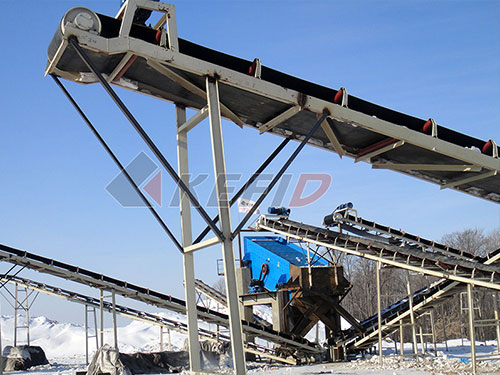
4.Regional Specialists: Companies likePilot Crushtecin South Africaare not justdistributors formajor brands(like Terex )but also developersof their owninnovative modular plants tailoredfor African miningand infrastructureconditions .They highlight howdistributorsevolve intosolution providers .
Conclusion: The Indispensable Link
Quarry ballast crushing equipment distributors arethe vital connective tissue between sophisticated manufacturing technologyandthe rugged,demanding worldof aggregate production.Their successis not measured merelyby sales volumes,butby their clients’ uptime metricsand cost-per-tonfigures.In an erawhere infrastructure reliabilityis paramount,the distributor’s rolein ensuringa steady supplyof specification-gradeballast—through reliableequipment,support,and expertise—is foundational.As technologyadvances towardspredictive maintenance,direct drive systems,and autonomous operations,the distributor’svalue will further evolvefrom partssupplierto data-drivenperformance partner.Ultimately,the strengthofthe world’srailbedsand roadwaysrestsin partonthe technical competenceandsupport networkprovidedby these specializeddistribution channels
