Quarry Ballast Crushing Equipment Company Catalog: A Comprehensive Guide to Infrastructure’s Backbone
The construction and maintenance of robust railway networks and heavy-duty road foundations rely on a seemingly humble yet critically engineered material: quarry ballast. This uniformly graded, angular crushed stone provides drainage, load distribution, and stability. The production of this essential aggregate is a sophisticated process centered on specialized crushing equipment. A Quarry Ballast Crushing Equipment Company Catalog is, therefore, not merely a product list but a strategic blueprint for building the literal foundation of modern infrastructure. This detailed exploration delves into the components, technological considerations, and selection criteria encapsulated within such a catalog, underscoring its role in optimizing productivity, product quality, and operational efficiency.
1. The Core Mission: Defining Ballast Specifications
Before examining equipment, a professional catalog must establish the “why.” It typically opens with a technical overview of ballast specifications as dictated by international railway standards (e.g., AREMA in North America, EN 13450 in Europe) or national transportation authorities. Key parameters include:
- Particle Size & Gradation: A tightly controlled range (e.g., 25mm to 63mm) is mandatory. The final product must exhibit a well-interlocked structure with minimal fines.
- Shape & Angularity: Cubical or angular particles are paramount for optimal interlocking and resistance to lateral movement under dynamic loads. Flaky or elongated stones are unacceptable.
- Durability & Strength: High resistance to abrasion (Los Angeles Abrasion test) and weathering (Magnesium Sulfate Soundness test) ensures longevity under cyclic loading and harsh environmental conditions.
- Cleanliness: Freedom from dust, clay, and organic matter prevents fouling, which compromises drainage and leads to track settlement.
A reputable catalog educates the client, framing all subsequent equipment recommendations against these non-negotiable performance criteria.
2. The Crushing Circuit: Equipment Breakdown in the Catalog
The heart of the catalog is its systematic presentation of the crushing circuit—a staged process where raw quarry-run rock is transformed into specification ballast.
a) Primary Crushing Station: The First Reduction
- Equipment Focus: Jaw Crushers and Gyratory Crushers.
- Catalog Presentation: Detailed specifications for various models highlighting feed opening size, capacity (TPH), power requirements, and closed-side settings (CSS). Emphasis is placed on ruggedness, ability to handle large feed size (often >1m), and high throughput. Features like hydraulic adjustment systems for quick CSS changes and overload protection mechanisms are highlighted as key differentiators.
b) Secondary & Tertiary Crushing: Shaping the Product
This stage is crucial for achieving the required cubical shape.
- Equipment Focus: Cone Crushers and Impact Crushers.
- Catalog Nuance: The catalog must guide the selection between these technologies.
- Cone Crushers are often featured for their reliability in producing well-graded, low-fines aggregate. Advanced models with multi-cylinder hydraulic systems allow precise control over product size and shape. The catalog will detail automation features like Automatic Setting Regulation (ASR) systems.
- Impact Crushers (Horizontal Shaft Impactors – HSIs) are promoted for their excellent cubical shaping capabilities and high reduction ratios. Specifications will highlight rotor design, hammer metallurgy, and adjustable aprons/grinding paths for tuning product gradation.
c) Screening & Classification: Precision Grading
Crushing is inseparable from screening. A comprehensive catalog dedicates significant space to vibrating screens.
- Equipment Focus: Multi-deck Heavy-Duty Vibrating Screens.
- Catalog Details: Technical data includes screen deck configuration (typically 2 or 3 decks), screen media type (wire mesh or polyurethane panels), drive mechanism (circle-throw or linear vibration), and installed power. The narrative explains how screen aperture selection directly dictates final product fractions—oversize material is recirculated (“closed-circuit” design), on-size ballast is conveyed to stockpiles, and undersize fines are removed for sale as by-products.
d) Ancillary Systems: The Supporting Cast
No crushing plant operates in isolation. A professional catalog integrates:
- Feeders: Apron feeders for primary dump pockets and vibrating grizzly feeders for scalp removal.
- Conveyors: Extensive belt conveyor systems with specifications for width, speed, incline, and load capacity.
- Dust Suppression & Control: Detailed wet suppression systems (nozzles, pumps) or dry filter baghouse solutions to meet environmental regulations.
- Power & Control Systems: Modular electrical cabins and centralized PLC-based automation systems that allow single-point control of the entire circuit.
3. Technological Themes & Modern Catalog Highlights
A modern catalog transcends basic specifications by showcasing technological integration: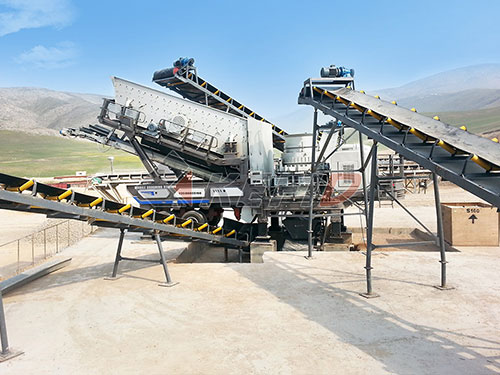
- Plant Automation & Intelligence: Emphasis on control systems that monitor crusher load, power draw, chamber pressure, and conveyor speeds. Features like continuous liner wear monitoring (via laser scanning or sensors) and automatic calibration routines are prominently displayed as value-adds.
- Mobility & Modularity: For contractors or quarries with multiple sites, catalogs feature mobile and semi-mobile track-mounted or wheeled plants. These modules (primary + screen; secondary + screen) offer flexibility and rapid redeployment.
- Sustainability & Efficiency: Data on energy-efficient drives (e.g., direct drive crushers), water recycling circuits for dust suppression, noise abatement technologies, and advanced emission controls align with modern ESG (Environmental Social Governance) goals.
- Serviceability & Maintenance: Cross-sections illustrating easy-access maintenance platforms; hydraulic adjustment/tramp release systems; tool-less components; commonality of wear parts across models; all these reduce downtime—a critical selling point.
4. Selection Guidance: From Catalog to Quarry Floor
An exceptional catalog acts as a consultant. It includes:
- Flow Diagrams: Typical circuit layouts for different feed materials (hard granite vs. softer limestone).
- Capacity Tables: Clear matrices showing expected output ranges based on crusher model settings feed material characteristics
Material Characterization Guides: Advice on testing rock abrasiveness compressive strength
Total Cost of Ownership Analysis: Framework comparing not just initial capital cost but projected costs for energy consumption wear parts maintenance labor over plant lifetime
Conclusion: More Than a Brochure A Strategic Partnership Document
In conclusion contemporary Quarry Ballast Crushing Equipment Company Catalog serves as vital technical compendium strategic planning tool It bridges gap between rigorous engineering standards of rail road infrastructure practical realities of aggregate production By meticulously detailing interdependent stages of crushing circuit—from primary reduction final precision screening—and integrating themes of automation efficiency sustainability catalogs empower quarry operators engineers make informed capital investment decisions Ultimately quality reliability equipment presented within directly correlates performance durability ballast produced thereby influencing safety longevity transportation networks themselves Therefore such catalog represents not just sales document but foundational resource industry dedicated building sustaining physical backbone global economy
