The Prospecting Crusher: A Foundational Tool for the Modern Artisanal Miner

In the realm of mineral exploration and small-scale mining, efficiency is not merely a luxury but a determinant of viability. For the prospector and artisanal miner, the process of reducing large, unmanageable rock samples into a fine, consistent powder is a critical step in the analytical workflow. The machine at the heart of this operation is the Prospecting Crusher, a specialized piece of equipment designed to bridge the gap between field discovery and laboratory analysis. More than just a simple rock breaker, a modern prospecting crusher is an engineered solution that balances power, portability, and particle size control to empower geological investigation.

Defining the Prospecting Crusher

A prospecting crusher is a compact, robust mechanical device used to reduce the size of rock and ore samples collected in the field. Its primary purpose is to liberate potential minerals of interest from their host rock, creating a homogeneous powder that is representative of the original sample. This powdered sample is then suitable for a variety of analytical techniques, including fire assay, ICP-MS (Inductively Coupled Plasma Mass Spectrometry), and XRF (X-Ray Fluorescence) analysis. Without proper crushing and pulverizing, assay results would be inaccurate, non-representative, and ultimately misleading, potentially causing a prospector to overlook a valuable mineral deposit or waste resources on an unproductive claim.Prospecting Crusher

These crushers are distinct from their large-scale industrial counterparts—such as gyratory crushers or massive jaw crushers used in commercial mines—in their scale, throughput, and design philosophy. Where industrial crushers process hundreds to thousands of tons per hour, a prospecting crusher typically handles batches ranging from a few kilograms to perhaps 50 kg, prioritizing sample integrity and contamination control over raw throughput.

Key Types and Their Operational Principles

Several crusher types fall under the “prospecting” umbrella, each with specific mechanisms and optimal use cases.Prospecting Crusher
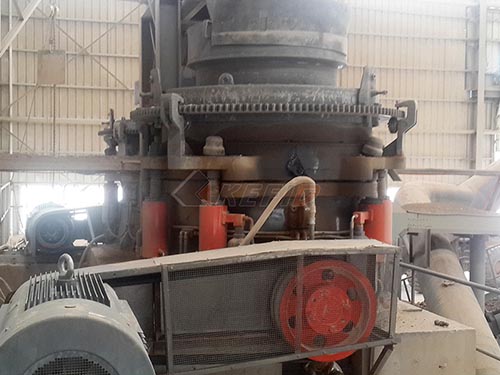
1. Jaw Crusher: The Primary Workhorse
The jaw crusher is often the first stage in the size reduction process for prospectors. It functions on a simple but powerful principle: two vertical manganese steel jaws—one stationary and one moving in an elliptical motion—crush the rock between them through compressive force.

  • Mechanism: The moving jaw exerts immense pressure on the rock against the fixed jaw, breaking it into smaller fragments. The gap between the jaws at their closest point is known as the “closed-side setting,” which determines the maximum size of the crushed product.
  • Application: Jaw crushers are designed for coarse crushing. They take raw field samples that can be several inches in diameter and reduce them to a manageable gravel-sized product (typically down to 6mm to 10mm). This material is often still too coarse for precise analysis and must be fed into a secondary crusher or pulverizer.
  • Advantages: High robustness, ability to handle hard and abrasive rocks, relatively simple maintenance.

2. Hammer Mill: The Versatile Percussionist
Hammer mills utilize a high-speed rotary mechanism to shatter rocks through impact rather than compression.

  • Mechanism: A central rotor shaft spins at high velocity with several freely-swinging or fixed hammers attached. Rock fed into the chamber is repeatedly struck by these hammers until it is small enough to pass through a screen or grate located at the bottom of the mill. The size of the screen openings dictates the final product size.
  • Application: Hammer mills are effective for both coarse and medium-fine crushing. They can process softer materials very efficiently but may wear more quickly on very hard, abrasive ores like quartz-rich lodes.
  • Advantages: High reduction ratio (ability to take large feed and produce fine output in one pass), good throughput, versatility with different screen sizes.

3. Pulverizer or Ring Mill: The Final Stage for Analytical Precision
For preparing samples for geochemical assay, ring mills are considered industry standard due to their superior ability to create an ultra-fine homogeneous powder while minimizing contamination.

  • Mechanism: This machine consists of a steel pot containing one or more rings (or puck-and-bowl configuration). The pot is secured inside the machine and vibrated or shaken at high speed with immense force. The grinding rings inside collide with each other and with sample material trapped between them; this combination of impact and friction pulverizes it into fine dust.
  • Application: This is exclusively a fine-grinding machine used after primary crushing by jaw or hammer mill has occurred.
  • Advantages: Produces an extremely consistent particle size (often minus 150 mesh or 106 microns), which is critical for accurate assaying; excellent sample homogeneity; modern ceramic-lined pots and grinding rings minimize metallic contamination from wear (e.g., using chrome-steel for general use or carbide-tungsten for maximum wear resistance).

Critical Selection Criteria for Prospectors

Choosing an appropriate prospecting crusher requires careful consideration of several factors:

  1. Sample Hardness & Abrasiveness: The type of ore being tested dictates material choice within any given machine.
  2. Required Final Particle Size: Coarse crushing for visual inspection requires only jaw/hammer mill; precise assaying necessitates pulverizing down sub-150 mesh.
  3. Throughput Needs: A single operator testing occasional samples has different needs than small mining co-op processing dozens daily.
  4. Contamination Control: For trace element analysis even minute cross-contamination between samples can skew results significantly leading many professionals towards pulverizers with easy-clean designs & ceramic components.
  5. Power Source & Portability: Options range from manual hand-operated crank crushers through electric motors powered by generators common remote sites gasoline/diesel engines fully mobile operations all way lab-based phase units requiring stable grid power supply
  6. Dust Containment: Crushing creates silica dust hazardous respiratory health well potential loss valuable mineral particles Modern machines often feature sealed containers dust extraction ports

Operational Best Practices & Safety

Proper operation extends equipment life ensures personal safety guarantees integrity analytical data Key practices include:

  • Progressive Size Reduction: Avoid forcing large rocks directly into fine-grinding pulverizer Always use staged approach e.g., break with sledgehammer first then jaw crush finally pulverize
  • Sample Cleaning: Remove any foreign debris metal from previous samples prevent damage cross-contamination
  • Proper Feeding: Never overload machine follow manufacturer’s recommended feed rate capacity
  • Personal Protective Equipment PPE: Safety glasses respirator mask rated silica dust hearing protection noisy environments sturdy gloves handling sharp rock fragments non-negotiable requirements
  • Regular Maintenance: Lubrication moving parts timely replacement worn liners screens grinding elements according manufacturer schedules crucial maintaining performance preventing catastrophic failure

The Economic Justification

For serious prospector investment quality crushing equipment significant yet justifiable one Initial cost reliable machine pales comparison potential losses incurred from inaccurate assays leading poor decision-making Furthermore efficiency gains time saved processing samples manually translate directly increased ground tested more data collected faster progression exploration pipeline Ultimately prospecting crusher not expense but fundamental enabling technology transforms physical rock actionable geochemical intelligence

Conclusion

The prospecting crusher stands as an indispensable ally in mineral exploration far beyond simple tool represents critical link empirical observation scientific validation From rugged jaw breaking fist-sized specimens manageable gravel precision pulverizer creating analytical-grade powder these machines enable modern prospector operate levels efficiency accuracy unimaginable past Their continued evolution materials design automation promises further enhance capabilities those seeking unlock Earth’s mineral wealth ensuring even smallest most remote operation can produce laboratory-quality data foundation upon which sound economic geological decisions made

Lorem ipsum dolor sit amet, consectetur adipisicing elit. Consectetur sequi saepe ut sunt eveniet perferendis excepturi, iste obcaecati. Qui tempore hic sed quia soluta obcaecati vel.