
In the relentless drive for industrial efficiency and sustainable development, the management of by-products has evolved from a mere disposal concern to a strategic opportunity. At the heart of this transformation for the metallurgical and mining sectors stands the professional slag crusher plant producer. These specialized engineering firms are not merely equipment manufacturers; they are solution architects, designing and delivering integrated systems that transform molten slag—a once troublesome industrial residue—into valuable, marketable aggregates and raw materials. This article delves into the critical role, technological expertise, and comprehensive solutions offered by these producers, highlighting their indispensable contribution to circular economies and modern industrial infrastructure.
To appreciate the producer’s role, one must first understand the material. Slag is a non-metallic by-product generated during the smelting or refining of ores to extract metals (like iron, steel, copper, and nickel) or from coal combustion in power plants (coal slag). It is a complex mixture of silicates, oxides, and other compounds that solidify upon cooling. Historically considered waste, slag often occupied vast landfill spaces. However, its inherent properties—hardness, density, and cementitious characteristics in some forms—make it a superior alternative to natural aggregates like gravel and sand.
The challenge lies in its variability. Slag can be air-cooled (forming dense, crystalline rock), granulated (quenched with water to form glassy granules), or expanded (foamed to create a lightweight product). Each type demands a specific processing approach. This is where the professional crusher plant producer’s expertise becomes paramount.
A true professional in this field distinguishes itself through a holistic approach encompassing design, engineering, manufacturing, and service.
1. Process Engineering & System Design:
The cornerstone of their offering is custom engineering. A professional producer does not sell standalone machines; they design complete process flows. This begins with a thorough analysis of the feedstock: chemical composition, feed size (from massive ladle skulls to granular material), hardness (Mohs scale), abrasiveness, and desired final products (e.g., road base material, railway ballast, sand for concrete, or feedstock for cement kilns). The plant design must account for potential tramp metal within the slag stream and variable moisture content. The resulting layout integrates feeding, crushing stages (primary/secondary/tertiary), screening with precise classification circuits using vibrating screens or air classifiers for fine separation , magnetic separation for metal recovery , dust suppression systems , noise control measures , automation controls ,and conveying systems into a cohesive , efficient operation.
2. Equipment Selection & Robustness:
Slag is notoriously abrasive. Therefore,the selection of crushers is critical.
3. Metal Recovery Integration:
A significant value stream in slag processing is the recovery of entrapped metallic fractions.This is not an afterthought but an integral part of the plant design.Powerful overhead suspended magnets,cross-belt magnets,and eddy current separators are strategically placed within the crushing circuit to extract ferrous and non-ferrous metals.This recovered metal provides direct revenue,significantly improving the plant’s return on investment while purifying the final aggregate product.
4. Automation & Control Systems:
Modern plants are governed by sophisticated Programmable Logic Controller(PLC)-based automation systems.They enable continuous monitoring of motor loads,crusher chamber pressures,vibration levels,and production rates.Automated control can adjust feeder speeds,crusher settings,and conveyor sequences to optimize throughput and product gradation while protecting equipment from damage.Remote monitoring capabilities allow producers to offer predictive maintenance services,further enhancing operational uptime.
5.Dust Suppression & Environmental Compliance:
Professional producers prioritize environmental stewardship.Slag crushing can generate dust.Comprehensive solutions include fully enclosed conveyors,dust extraction points at transfer points connected to baghouse filter systems,and strategically placed fog cannons or spray bars.The entire plant design adheres strictly to local environmental regulations regarding emissions,silhouette noise levels,and water runoff,making permitting smoother for clients.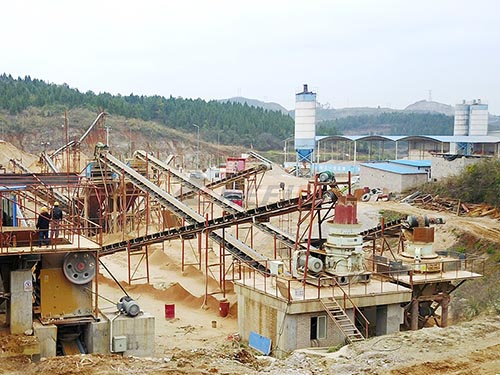
The partnership with a professional producer delivers multifaceted value:
The output from professionally designed slag crusher plants feeds numerous critical industries:
The professional slag crusher plant producer occupies vital niche at intersection heavy industry environmental technology resource economics.They are catalysts waste valorization transforming linear “extract-use-dispose” model into circular regenerative system.Their work requires synthesis mechanical engineering process chemistry materials science environmental planning project management.This holistic expertise ensures that modern metallurgical power generation facilities can operate not only more profitably but also more responsibly closing material loops contributing sustainable built environment.As global emphasis resource efficiency climate action intensifies role these specialized engineering partners will only grow more central making them unsung heroes industrial ecosystem quietly building foundation greener economy one ton processed slag time
Lorem ipsum dolor sit amet, consectetur adipisicing elit. Consectetur sequi saepe ut sunt eveniet perferendis excepturi, iste obcaecati. Qui tempore hic sed quia soluta obcaecati vel.