The Professional Slag Crusher Plant Maker: Engineering Sustainable Value from Industrial By-Products

In the relentless drive for industrial progress, the management of by-products has evolved from a mere disposal concern to a critical component of sustainable and profitable operations. At the forefront of this transformation is the Professional Slag Crusher Plant Maker. Far more than simple equipment manufacturers, these specialized engineering firms are pivotal partners in the circular economy, designing and delivering integrated systems that convert molten slag—a ubiquitous by-product of metal smelting and refining—into valuable, marketable aggregates and raw materials. Their work sits at the intersection of mechanical engineering, process optimization, and environmental science.

Understanding the Raw Material: What is Slag?

To appreciate the complexity of the plant maker’s task, one must first understand the material. Slag is a non-metallic, stony by-product generated during the separation of a desired metal from its ore in blast furnaces (ironmaking) or during steelmaking, copper, lead, and nickel production. Its composition varies widely but typically includes silicates, alumina, calcium oxides, and magnesium oxides. Freshly tapped from a furnace at temperatures exceeding 1500°C, it is a molten stream that must be processed.

There are two primary forms:

  1. Air-Cooled Blast Furnace Slag (BFS): Poured into pits and cooled slowly by ambient air, forming a crystalline, dense material.
  2. Granulated Slag (GGBS): Rapidly quenched with high-pressure water jets, forming glassy granules that are ground into Ground Granulated Blast-Furnace Slag (GGBS), a prized cement substitute.

The crusher plant primarily handles air-cooled slag and larger pieces of solidified slag from various processes. This material is hard, abrasive, and often contains uncrushed metallic fractions (“tramp metal”).

The Core Mission: From Waste to Resource

The professional plant maker’s mission is to design a system that reliably performs several key functions:

  • Size Reduction: Crushing large slag lumps (often over 1 meter in size) down to precisely graded aggregates (e.g., 0-4mm, 4-10mm, 10-20mm).
  • Metal Recovery: Efficiently separating ferrous and non-ferrous metallic components for recycling back to the furnace.
  • Classification & Sorting: Cleansing the final product to ensure purity and consistency for specific market applications.
  • Dust Suppression & Noise Control: Ensuring the operation meets stringent environmental health and safety standards.
  • Automation & Efficiency: Maximizing throughput (tons per hour) while minimizing energy consumption and operational costs.

Anatomy of a Professional Slag Crushing Plant: Key Components

A turnkey plant from a professional maker is a synchronized orchestra of heavy machinery.

  1. Primary Crushing Station: This is the first point of contact. Given the massive feed size and potential for uncrushable tramp metal (like anvils), this stage demands extreme robustness. Common choices include:

    • Jaw Crushers: Renowned for their reliability and high reduction ratio.
    • Gyratory Crushers: For very high-capacity primary stations.
    • Impact Crushers with Hydraulic Systems: Some modern designs use massive impact crushers with hydraulic adjustment and release mechanisms to handle uncrushables.
  2. Metal Separation Circuit:

    • Magnetic Separators: Overband magnets or drum magnets are strategically placed after each crushing stage to remove liberated ferrous scrap.
    • Eddy Current Separators/Induction Sorters: For recovering non-ferrous metals like copper or aluminum from finer fractions.
  3. Secondary & Tertiary Crushing Stations: To achieve precise final product gradations. Cone crushers are often favored here for their ability to produce well-shaped cubical aggregate efficiently. Horizontal shaft impactors may also be used for shaping.

  4. Screening Decks: Vibrating screens are deployed in multiple stages—for pre-screening before crushing (“scalping”), for classifying crushed material between stages (“closed-circuit crushing”), and for final product sizing.

  5. Material Handling System: A network of heavy-duty apron feeders, belt conveyors (with impact beds at loading points), chutes, and hoppers designed to handle highly abrasive material without excessive wear.

  6. The Control Brain: PLC & Automation. A professional-grade plant features a centralized programmable logic controller (PLC) system with an intuitive human-machine interface (HMI). It monitors motor loads, conveyor speeds, bin levels, and equipment statuses for optimized operation and predictive maintenance alerts.

  7. Environmental Management Package:

    • Enclosures around crushers and screens.
    • Comprehensive dust extraction systems with baghouse filters.
    • Water spray systems at transfer points.
    • Acoustic enclosures or barriers for noise abatement.

The Hallmarks of Professionalism in Plant Making

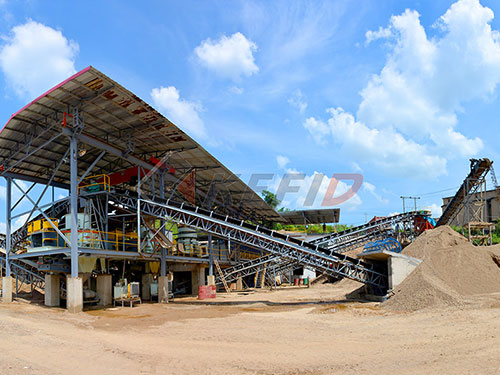
What distinguishes a true professional maker from a simple equipment assembler?Professional Slag Crusher Plant Maker
  • Process Engineering Expertise: They begin with thorough analysis—slag chemistry analysis reports on abrasiveness index (Ai), Bond Work Index hardness tests on representative samples—to correctly size every component.
  • Application-Driven Design: The plant layout is dictated by the end product goals: road base aggregate requires different specifications than railway ballast or raw feed for cement kilns.
  • Emphasis on Durability & Maintenance Engineering: They select wear parts made from specialized alloys (e.g., high-chrome blow bars). Designs facilitate easy access for liner changes and routine maintenance through walkways platforms ladders etc..
  • Lifecycle Cost Analysis Over Initial Price Focus. A professional maker demonstrates how superior efficiency higher metal recovery rates reduced downtime translate into lower cost per ton over decades not just lower capital expenditure upfront..
  • Comprehensive Service Portfolio. This includes detailed foundation drawings installation supervision commissioning operator training long-term supply guaranteed wear parts remote monitoring services..

Market Applications & Economic Drivers

The output from these plants fuels multiple industries creating direct revenue streams that justify investment:

  • Construction Aggregates: Slag aggregate excels as unbound base material sub-base road construction asphalt pavement layers due its excellent mechanical interlock angular shape..
  • Railway Ballast: Its hardness durability drainage properties make it ideal..
  • Cement and Concrete Production: Processed slag sand can replace natural sand while GGBFS production requires initial crushing before grinding into powder..
  • Agricultural Amendment: Certain slags provide valuable micronutrients like silicon calcium improving soil quality..

Economic drivers include rising costs associated with landfill disposal tipping fees scarcity premium prices natural virgin aggregates increasing corporate mandates resource efficiency carbon footprint reduction where using slag aggregate significantly lowers embodied carbon construction projects compared quarrying new stone..Professional Slag Crusher Plant Maker

Future Trends & Technological Advancements

The industry continues innovate:

  • Hybrid and Electric Drives: Exploring electric drives powered renewable sources reduce carbon footprint operations themselves..
  • Advanced Automation AI Integration: Using machine vision sort materials artificial intelligence optimize crusher settings real-time based feed conditions predictive analytics prevent failures before they occur..
  • Modular Portable Designs: Containerized plug-and-play modules allow flexible deployment smaller sites easier relocation reducing site preparation time costs..
  • Focus Total Resource Recovery: Developing techniques extract trace elements rare earth metals locked within certain slags pushing concept “zero-waste” metallurgical plant further reality..

Conclusion

The professional slag crusher plant maker embodies industrial ecology principle turning linear “take-make-dispose” model into circular value-creating loop.. They provide not just machinery but complete material transformation solutions combining brute force precision engineering sophisticated control.. In doing so they play indispensable role helping primary metal producers meet sustainability goals comply regulations unlock hidden profitability their own waste streams while supplying essential materials built environment more sustainable manner.. As global emphasis circular economy intensifies expertise these specialized engineering firms will only become more vital strategic asset any forward-looking metallurgical enterprise..

Lorem ipsum dolor sit amet, consectetur adipisicing elit. Consectetur sequi saepe ut sunt eveniet perferendis excepturi, iste obcaecati. Qui tempore hic sed quia soluta obcaecati vel.