
In the capital-intensive and operationally demanding gold mining industry, the crushing circuit is the foundational stage where run-of-mine (ROM) ore is reduced to a size suitable for further processing. The performance, reliability, and longevity of the crushing equipment directly dictate downstream recovery rates, operational costs, and overall project viability. Therefore, professional quality control (QC) in the manufacturing, selection, and operation of gold ore crushing equipment is not merely a procedural step but a critical strategic imperative. This detailed examination explores the multifaceted approach to QC, spanning design engineering, material science, manufacturing processes, performance validation, and lifecycle management.
Gold ores vary immensely, from free-milling alluvial deposits to complex refractory ores locked within sulfide minerals. The primary crushing stage must handle high volumes of often abrasive, hard, and sometimes wet material. Inefficient or unreliable crushing leads to bottlenecks: inconsistent feed size for grinding circuits reduces liberation efficiency, increases energy consumption in mills (the single largest cost center), and ultimately lowers gold recovery. Quality-controlled equipment ensures optimal size reduction with minimal fines generation (where gold can be lost through dust) or oversize material causing recirculation loads.
Professional QC is a holistic system integrated throughout the equipment’s lifecycle.
A. Design and Engineering QC
Quality begins on the drawing board. For crushers like jaw crushers (for primary breaking), gyratory crushers (high-capacity primary), cone crushers (secondary/tertiary), and high-pressure grinding rolls (HPGR) (energy-efficient tertiary), design QC involves:
B. Material Science and Metallurgical QC
The heart of crusher durability lies in its materials.
C. Manufacturing Process QC
Precision manufacturing is non-negotiable.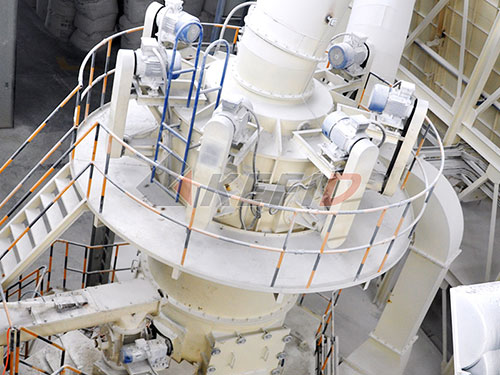
D Performance Testing Factory Acceptance Tests FAT
Before shipment major crushers undergo comprehensive FAT
Each crusher type has specific QC focal points
Jaw Crushers
Checkpoints include pitman swing dynamics toggle plate seating liner plate flatness ensuring even wear flywheel balance
Cone Crushers
Critical parameters are main shaft radial axial run out bowl adjustment ring thread wear spherical seat seating pressure clamping force verification Hydraulic system response time during uncrushable events is vital
Gyratory Crushers
Emphasis on spider arm concentricity top shell bushing clearance mainshaft straightness mantle backing compound application uniformity
HPGR Rolls
Extreme focus on roll surface integrity tungsten carbide stud welding pattern density roll alignment parallelism hydraulic pressing system calibration for consistent operating gap pressure
The best engineered equipment can fail under poor operational practices Thus professional QC extends into mine site implementation
Installation Supervision Manufacturer supervised installation ensures proper foundation grouting drive train alignment This phase often includes laser alignment thermal growth calculations
Commissioning Load Trials Controlled feeding monitoring power draw product sizing bearing temperatures Establishing baseline performance data against OEM specifications
Operator Training Quality operators understand choke feed versus starved feed importance of even feed distribution around chamber recognizing abnormal sounds vibrations Proper training reduces abuse extends liner life
Predictive Maintenance Integration Modern crushers equipped with IoT sensors real time monitoring Condition based lubrication oil analysis wear part measurement scheduling prevents catastrophic failures This represents dynamic ongoing QC
Investing in professional QC yields measurable returns
Reduced Total Cost Ownership TCO Higher upfront cost offset by extended service intervals lower specific energy consumption kWh ton higher availability uptime Reduced spare parts inventory through predictable wear life
Optimized Process Performance Consistent product size distribution improves downstream grinding flotation leaching circuit stability maximizing overall recovery by even 1 which translates into millions in revenue
Enhanced Safety Robust equipment fails less catastrophically Proper guarding interlock systems built during manufacturing prevent accidents Safety is ultimate quality metric
Professional quality control for gold ore crushing equipment transcends batch testing It embodies a culture of excellence from initial metallurgical test work through meticulous design precision manufacturing rigorous validation structured commissioning intelligent operation It recognizes that the crushing plant is the heart of the mineral processing circuit Its robust beat determines the health profitability sustainability entire mining operation In an industry where margins dictated by volatile gold prices operational efficiency reliability become paramount Therefore stringent disciplined quality control throughout equipment lifecycle represents not an expense but fundamental strategic investment ensuring that every ton ore crushed contributes maximally project economic success while safeguarding personnel environment Ultimately gold liberation process begins not mill but moment ore enters well controlled professionally crafted crushing system making its quality cornerstone successful mining venture
Lorem ipsum dolor sit amet, consectetur adipisicing elit. Consectetur sequi saepe ut sunt eveniet perferendis excepturi, iste obcaecati. Qui tempore hic sed quia soluta obcaecati vel.