
The global construction and mining industries are the bedrock of modern infrastructure development, and at the heart of material processing in these sectors lies the indispensable stone crusher machine. For equipment distributors, rental companies, and emerging brands, the private label model presents a compelling opportunity to enter this market without the colossal capital investment required for in-house manufacturing. A “Top Ten Stone Crusher Machine Catalog” from a private label manufacturer is not merely a list of products; it is a strategic portfolio designed to address diverse crushing needs. This article provides a professional and objective analysis of what such a catalog entails, breaking down the typical machine categories, their applications, and the critical considerations for any business evaluating a private label partner.
Before delving into the machines, it’s crucial to understand the private label dynamic. In this model, an Original Equipment Manufacturer (OEM) designs and produces stone crushers that are then sold under another company’s brand name. The distributor or retailer benefits from having a customized product line without managing complex supply chains or R&D departments. The success of this venture hinges entirely on the quality, reliability, and comprehensiveness of the OEM’s offerings, which are showcased in their catalog.
A top-tier private label catalog is characterized by a logical segmentation of machines based on capacity, mobility, and crushing technology. It should serve as a one-stop-shop for its clients, covering everything from small-scale quarry operations to large mining projects and urban construction sites.
A well-structured catalog typically features a mix of the following machine types, which can be grouped into a “top ten” list based on their core function and design.
1. Jaw Crushers
Often considered the workhorse of primary crushing, jaw crushers are designed to handle the largest feed sizes. They operate on a straightforward compressive force principle: a fixed jaw and a movable jaw create a “V” cavity where the material is crushed.
2. Cone Crushers
For secondary and tertiary crushing stages where a finer, more cubical product is required, cone crushers are unparalleled. They crush material between a gyrating spindle and a concave hopper.
3. Impact Crushers (Horizontal Shaft Impactor – HSI)
These crushers utilize high-speed impact forces from hammers or blow bars fixed to a rotor to shatter the material against impact aprons. They are excellent for producing a uniform cubical product.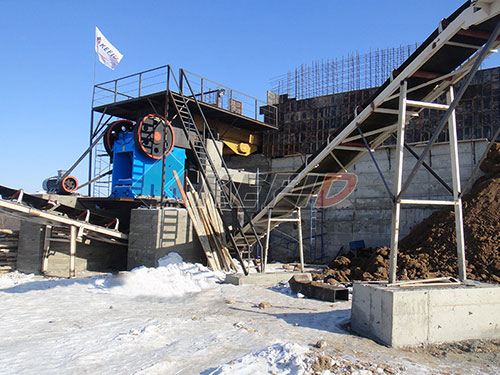
4. Vertical Shaft Impactors (VSI)
Also known as “sand makers,” VSIs use a high-velocity rotor to throw material against a stationary anvil ring or rock shelf. This results in intense attrition that produces highly shaped, cubical fine aggregates.
5. Gyratory Crushers
For very high-capacity primary crushing stations in large mines and quarries, gyratory crushers are often the preferred choice. They operate similarly to cone crushers but have a much larger capacity.
6 & 7: Mobile Jaw & Mobile Cone Crushers
Mobility has become paramount in modern crushing. These are track-mounted or wheel-mounted units that integrate jaw or cone crushers with feeders and pre-screens.
8 & 9: Mobile Impact & Mobile VSI Crushers
Following the same principle as their stationary counterparts but offering mobility,the mobile impactor is idealfor recyclingand demolition jobs.The mobile VSI brings sand-making capabilities directlyto site.
10.Hammer Mills / Reversible Impactors
While sometimes overlappingwith HSIin function hammer millsare often simplerin designand excelat crushingbymaterialsthatare nothighlyabrasive.Reversibleimpactorsallowrotorin both directions todoublethe lifeof blowbars.*
Application Limestone coal gypsumand other industrialcrushingapplications.
PrivateLabelValue Offersa cost-effectivecrushing solutionfor specificindustries broadeningthe marketappealof theretailer’sbrand.
A listof tenmachinesis meaninglesswithoutcontext.Whenanalyzinga private labelcatalog,a businessmustlookdeeper:
1.Technical Supportand Training:Does themanufacturerprovidecomprehensivetrainingonoperationandmaintenance?Is therea robustafter-salesservice networkwithreadilyavailable spare parts?
2.Customization Capabilities:Can themachinesbe paintedin yourcolors?Can yourbrandingbe seamlesslyintegrated?Can minor modificationsbe madeto suitregionalrequirements?
3.Component Qualityand Sourcing:The durabilityof acrusheris determinedbythe qualityof its components—bearingsmotorshydrauliccylindersetc.A reputableOEMwill usepremiumbrandedcomponentsfromknownsuppliers.
4.Complianceand Certification:Doesthe manufacturermeet international standardslike CEISOetc.?Thisis non-negotiablefor sellingin mostglobalmarkets.
5.R&D Investment:A staticcatalogis adyingcatalog.Does themanufacturerdemonstratea commitmentto innovationin fuelefficiencyautomationnoise reductionand dustcontrol?
A “Top Ten Stone Crusher Machine Catalog” froma private labelmanufactureris far morethan justtenproducts.It representsa carefullycuratedecosystemofcrushing solutionsdesignedto empowerdistributors.The mostsuccessfulprivate labelequipmentbrandsare builtnot juston themetalinthe machinesbuton theselectionof anOEMpartnerwhosecatalogdemonstratesbreadthdepthqualityanda sharedvisionfor long-termsuccess.For anybusinessconsideringthis path athoroughdue diligenceprocess focusedon boththe productswithinthecatalogandthe capabilitiesofthe manufacturerbehindthemisthe foundationalstep towardbuildinga profitableandreliablebrandinthe competitiveaggregatesindustry
Lorem ipsum dolor sit amet, consectetur adipisicing elit. Consectetur sequi saepe ut sunt eveniet perferendis excepturi, iste obcaecati. Qui tempore hic sed quia soluta obcaecati vel.