
The global push for sustainable industrial practices and circular economy models has propelled the value of industrial by-products like slag from a disposal cost to a significant revenue stream. Slag, a stony waste by-product separated from metals during the smelting of ores, is no longer seen as mere waste. When processed correctly, it becomes a valuable material for cement production, road construction, aggregate for concrete, and soil stabilization. Central to this transformation is the slag crusher plant. For businesses looking to capitalize on this opportunity without developing their own manufacturing infrastructure, the private label delivery of a complete slag crusher plant presents a strategic and efficient solution.
This article provides a detailed, objective examination of the entire process of private label slag crusher plant delivery, covering its definition, core components, the phased delivery process, critical considerations for buyers, and the inherent advantages and challenges.
In the context of heavy industrial equipment like slag crusher plants, “private labeling” refers to an arrangement where a specialized original equipment manufacturer (OEM) designs, engineers, manufactures, and assembles a complete processing plant. This plant is then delivered to the client (a construction firm, a mining company, or a recycling startup) who brands it with their own company name and logo.
The client essentially receives a turnkey solution that appears to be their own proprietary product line without incurring the massive capital expenditure and R&D timelines associated with developing such complex machinery from scratch. The OEM operates as the silent engineering partner behind the brand.
A privately labeled plant is not a single machine but an integrated system. Its performance hinges on the seamless operation of its key components:
The journey from initial inquiry to an operational plant is methodical and collaborative.
Phase 1: Consultation & Feasibility Analysis
This foundational phase involves deep dialogue between the client and the OEM. Key parameters are established:
Based on this data OEM engineers perform feasibility studies recommending optimal plant layout configuration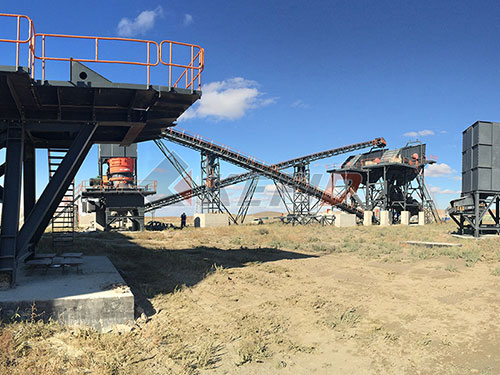
Phase 2: Engineering Design & Contract Finalization
Once feasibility confirmed detailed engineering begins Custom designs created using CAD software ensuring all components work harmoniously This stage also includes finalizing private label branding specifics: placement company colors control panel logos documentation At end phase detailed contract signed outlining scope supply delivery timeline payment terms performance guarantees
Phase 3: Manufacturing & Quality Assurance
The OEM initiates manufacturing process within their facility Components sourced fabricated assembled Sub-assemblies like crushers screens fabricated tested individually Stringent Quality Control QC protocols followed throughout Non-Destructive Testing NDT welding inspections material certifications standard practice Client often invited witness Factory Acceptance Tests FAT where plant run test materials verify performance meets contractual specifications before disassembly shipment
Phase 4: Logistics Packaging & Shipment
This critical logistical exercise involves carefully disassembling plant into transportable modules Each component crated skidded marked clearly secure overseas transport OEM typically handles complex logistics coordinating freight forwarders customs brokers ensuring timely port arrival Incoterms e.g., FOB CIF defined contract clarify responsibilities buyer seller
Phase 5: Site Preparation Civil Works
While manufacturing occurs parallel site preparation must completed client side based OEM-provided foundation drawings This includes civil works like concrete foundations for equipment proper drainage utility connections power water Effective project management this phase crucial avoid delays upon equipment arrival
Phase 6: Installation Supervision & Commissioning
Upon arrival site OEM dispatches team experienced erection supervisors engineers oversee installation local workforce They guide reassembly ensure alignment leveling according original design Once mechanically installed electrical wiring connections made The commissioning process begins starting individual component testing progressing full system test run with actual slag Performance metrics throughput final product gradation power consumption measured against guaranteed values
Phase 7: Operator Training & Handover
Comprehensive training provided client’s operational maintenance staff This covers daily operation routine maintenance troubleshooting safety procedures All technical documents—operation manuals maintenance schedules parts lists electrical diagrams—handed over branded client’s name After successful trial run demonstrating sustained performance plant officially handed over client
Phase 8: After-Sales Support & Spare Parts
A professional OEM provides robust after-sales support This includes readily available inventory critical wear parts technical support hotline periodic maintenance checks
Advantages:
Challenges:
The private label delivery of a slag crusher plant represents a sophisticated strategic partnership that merges industrial expertise with entrepreneurial vision It offers pragmatic pathway for companies enter expand within lucrative slag processing market leveraging specialized engineering while building their own brand identity Success hinges meticulous planning careful vendor selection clear contractual agreements By understanding comprehensive process outlined above—from initial feasibility study final commissioning—businesses can make informed decisions harness full potential turning industrial by-product profitable sustainable resource driving forward principles circular economy
Lorem ipsum dolor sit amet, consectetur adipisicing elit. Consectetur sequi saepe ut sunt eveniet perferendis excepturi, iste obcaecati. Qui tempore hic sed quia soluta obcaecati vel.