Private Label Quarry Ballast Crushing Equipment: A Comprehensive Technical and Commercial Analysis
Introduction
In the global construction and infrastructure sectors, railway ballast serves as the critical foundation layer for rail tracks, providing drainage, load distribution, and track stability. The production of high-quality, specification-compliant ballast is a core activity for quarries worldwide. Within this production chain, Private Label Quarry Ballast Crushing Equipment represents a significant and sophisticated niche. This refers to heavy-duty crushing machinery—such as jaw crushers, cone crushers, impact crushers—manufactured by an original equipment manufacturer (OEM) but branded and sold under another company’s name (the private label partner). This article delves into the technical specifications, market rationale, operational considerations, and commercial dynamics of this specialized equipment segment.
1. Technical Specifications and Design Imperatives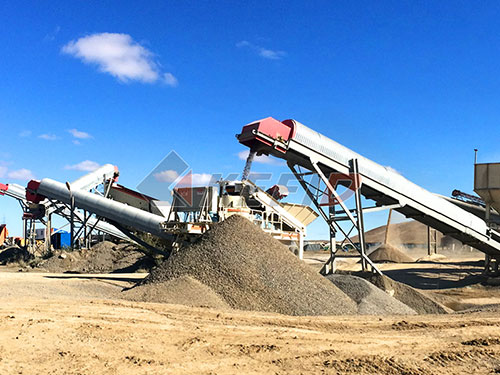
Ballast has strict geometric and mechanical specifications (e.g., EN 13450, AREMA standards). It must consist of clean, crushed, angular particles resistant to abrasion and weathering. Consequently, private label ballast crushers are not generic machines but are engineered for specific performance criteria.
- Primary Crushing (Jaw Crushers): The process typically begins with a robust primary jaw crusher designed to handle large feed material from the quarry face. For private label purposes, these crushers often feature heavy-duty frames, optimized nip angles for breaking flaky rock, and high throughput capacities. Key design focuses include wear resistance in liners (often using manganese steel) and reliability under cyclic loading.
- Secondary & Tertiary Crushing (Cone Crushers): This stage is crucial for shaping the final product. Cone crushers used for ballast production are often of the “cone” or “gyratory” type with advanced crushing chambers designed to produce a consistent cubical product. Features like hydraulic adjustment systems (for quick CSS changes), tramp release mechanisms, and automated control systems (like ASRi) are common value-adds that OEMs integrate into private label models to meet precise grading requirements.
- Impact Crushers (Alternative Option): Horizontal Shaft Impactors (HSIs) are sometimes employed for softer rock types. They excel at producing a highly cubical product. Private label versions would emphasize robust rotor designs, high-impact resistance in wear parts (blow bars), and adjustable aprons/grinding paths to fine-tune output gradation.
- Integrated Screening: While often separate units, crushing plants for ballast are integrated systems. Private label agreements may encompass vibrating screens with multiple decks to precisely separate oversized material (“scalping”), finished ballast fractions (e.g., 31.5-50mm or 28-63mm), and undersize fines—which must be minimized as per specification.
- Durability & Maintenance: Given the abrasive nature of hard rock like granite or basalt used for ballast, equipment is designed for easy maintenance. This includes centralized lubrication systems, accessible wear part replacement points, and diagnostic monitoring ports—all features that an OEM tailors for its private label partners who target quarry operators demanding minimal downtime.
2. The Market Rationale for Private Label Arrangements
The existence of a vibrant market for private label crushing equipment stems from strategic advantages for both the OEM manufacturer and the branding partner.
-
For the Branding Partner (e.g., Large Quarry Operator, Distributor, Regional Brand):
- Brand Control & Customer Loyalty: They can build a complete equipment ecosystem under their own trusted brand name without the capital expenditure and R&D overhead of manufacturing.
- Higher Profit Margins: By controlling the sales channel and branding, they capture more of the final sale value compared to simply reselling an OEM-branded machine.
- Market Flexibility: They can tailor their product offering—selecting specific OEM models that best suit their regional rock types and customer base—and bundle them with their own services (installation, parts supply).
- Competitive Differentiation: In a crowded market, offering a unique “house brand” of high-performance equipment can be a key differentiator.
-
For the OEM Manufacturer:
- Production Efficiency & Scale: Securing large-volume contracts from private label partners allows for optimized production planning and economies of scale.
- Market Penetration: It enables entry into new geographic or sector-specific markets where the partner has established sales networks and customer relationships that the OEM lacks.
- Risk Sharing & Focus: The OEM focuses on its core competency—engineering and manufacturing—while leveraging the partner’s marketing and distribution strengths. It diversifies revenue streams beyond its own branded sales force.
- R&D Feedback Loop: Working with sophisticated partners provides valuable field data from diverse applications, informing future design improvements.
3. Operational Considerations in Quarry Applications
Implementing private label ballast crushing equipment requires careful operational planning:
- Plant Configuration: A typical closed-circuit setup is standard. Material is crushed initially, screened, with oversize material recirculated back to the crusher(s). The efficiency of this loop is paramount for yield optimization.
- Quality Control: The entire circuit must be calibrated to produce particle size distribution (PSD) within narrow limits. Equipment must operate consistently; variability in CSS or wear can lead to off-spec product resulting in waste or reprocessing costs.
- Wear Parts Management: The cost-per-ton of crushed ballast is heavily influenced by wear part life (liners mantles blow bars). Private label agreements often include detailed service level agreements (SLAs) on parts supply logistics performance guarantees from either the OEM or the partner.
- Automation Integration: Modern ballast plants increasingly use PLC-based control systems to monitor power draw feed rates screen efficiency etc Private label equipment must be compatible with such integration offering standard communication protocols (e g OPC UA Modbus).
4. Commercial Dynamics Selection Criteria
Choosing between an OEM brand opting for a private label solution involves several factors:
- Total Cost of Ownership TCO): Beyond purchase price TCO includes energy consumption wear part costs maintenance labor hours expected service life residual value A reputable private label program should offer competitive TCO through robust engineering efficient design reliable parts supply
- Technical Support Service Network: The strength of local service support becomes even more critical under a private label arrangement End-users need assurance that technical expertise spare parts field service engineers are readily available even if machine bears different badge
- Reputation Trust Transparency: Successful private labeling relies on transparency between OEM partner end-user While machine may carry distributor brand informed buyers will seek understand underlying manufacturer reputation quality standards
- Contractual Framework Agreements typically cover:
- Minimum order volumes
- Exclusivity territories
- Intellectual property rights designs patents
- Performance warranties liabilities
- Parts supply pricing logistics
- Marketing technical training support
Conclusion
Private Label Quarry Ballast Crushing Equipment embodies a mature sophisticated segment within mineral processing industry It represents synergy between deep engineering manufacturing expertise specialized market access distribution networks For quarry operators focused producing high-specification railway ballast such equipment offers potential pathway acquiring tailored reliable high-performance machinery potentially bundled strong local service support ultimately contributing efficient cost-effective production essential infrastructure material
The decision invest engage private labeled solution necessitates thorough due diligence not only technical specifications machine but also evaluation entire value chain—from OEM proven track record designing durable crushers partner commitment long-term customer support As global infrastructure demands continue evolve particularly railway networks emerging economies demand efficient precise ballast production will remain strong driving continued innovation collaboration within this specialized field
