Private Label Iron Ore Crushing Plant Prices: A Comprehensive Analysis
The establishment of a private label iron ore crushing plant represents a significant capital investment and a strategic move for mining companies, engineering procurement and construction (EPC) contractors, and investors seeking to enter or expand within the bulk commodities sector. Unlike off-the-shelf solutions, a private label plant is custom-engineered to specific ore characteristics, production targets, and site conditions, bearing the investor’s or operator’s brand. Consequently, discussing its “price” is not a matter of quoting a single figure but rather deconstructing a complex financial model built on myriad technical and commercial variables. This article provides a detailed, objective analysis of the factors influencing private label iron ore crushing plant prices, offering a framework for budgeting and investment appraisal.
1. Deconstructing the Cost Structure: Beyond the Sticker Price
The total investment for a private label crushing plant is encapsulated in the Total Installed Cost (TIC). It is misleading to consider only equipment invoices; the TIC encompasses several key components:
A. Direct Costs (60-75% of TIC)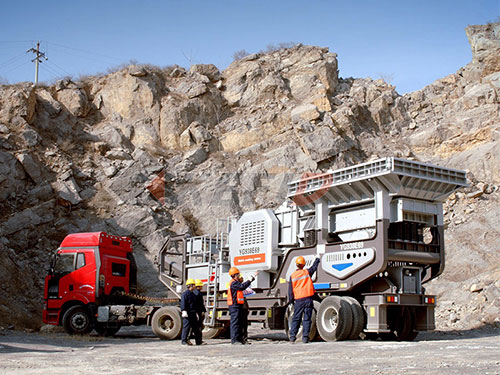
- Process Plant & Equipment (40-50% of TIC): This is the core cost driver. It includes:
- Primary Crusher: Gyratory vs. Jaw Crusher choice depends on capacity (5,000 – 15,000+ tph) and feed size. Prices range from $1 million for a simple jaw crusher setup to over $10 million for a large-capacity gyratory crusher with auxiliary systems.
- Secondary & Tertiary Crushing Circuit: Cone crushers (high-pressure grinding rolls for finer stages). A system can cost $2-$8 million.
- Screening Stations: Vibrating screens of various decks and sizes ($200k – $1.5M each).
- Material Handling System: Conveyors (field conveyors, shiftable/overland conveyors), feeders, and transfer stations. Conveyor costs alone can reach $5-$20 million depending on length, complexity, and lift.
- Dust Suppression & Control Systems: Essential for environmental compliance, including baghouses, sprays, and enclosures ($1-$4 million).
B. Indirect Costs (25-40% of TIC)
- Engineering & Design (8-12%): Fees for feasibility studies, basic and detailed engineering from specialized firms.
- Procurement & Construction Management (6-10%): Costs associated with logistics, expediting, site supervision, and labor.
- Civil Works & Structural Steel (15-25%): Foundation work (massive for primary crushers), earthworks, buildings, and structural support. Highly site-dependent.
- Electrical & Instrumentation (10-15%): Motors, variable frequency drives, switchgear, PLC/SCADA control systems for automation.
- Contingency Allowance (10-15%): A critical budget item for unforeseen challenges during execution.
2. Key Technical Determinants of Price
The plant’s design specifications directly dictate equipment selection and scale.
- Ore Characteristics: Competent hematite requires different crusher liners and power than weathered goethite or abrasive magnetite-taconite ores. Abrasion index (Ai) and work index (Wi) influence wear part costs and motor sizing.
- Plant Capacity & Product Specification: A 2 Mtpa plant for lump ore production is fundamentally different—and less expensive—than an 8 Mtpa plant producing finely crushed ore (-6mm) for pellet feed. Higher capacity demands larger equipment tiers, more robust infrastructure, and greater power supply.
- Circuit Complexity: A simple single-stage primary crushing circuit is far cheaper than a multi-stage closed-circuit system with recirculating loads designed for precise product sizing.
- Site Location & Infrastructure: Greenfield sites in remote regions require massive investment in access roads, power transmission lines (~$1M/km), water supply campsites increasing indirect costs significantly compared to brownfield expansions with existing utilities.
3. The “Private Label” Premium: Customization vs. Standardization
A private label project inherently carries cost implications compared to a standardized package:
- Custom Engineering Costs: Tailored design optimizes long-term operational efficiency but incurs higher upfront engineering fees.
- Proprietary Technology Integration: Incorporating specific automation brands or specialized screening technology adds cost but can offer competitive advantage in yield management.
- Branding & Control: The owner gains complete control over technology selection supply chain intellectual property related to process flow potentially leading to better lifecycle costs but requiring greater internal expertise.
4. Market Dynamics Influencing Capital Expenditure
Macro-factors create price volatility in plant construction:
- Commodity Price of Steel & Components: Crusher housings conveyor frames structural steel are all steel-intensive Prices fluctuate with global steel markets
- Supply Chain & Logistics: Global disruptions port congestion freight rates directly impact delivery costs of major equipment often sourced from Europe China or North America
- Labor Market Conditions: Skilled labor shortages in mining regions can inflate construction wages and schedules
- Currency Exchange Rates: Equipment purchased in EUR or USD subjects projects in other currencies to forex risk
5. Price Ranges: Indicative Capital Expenditure Framework
Given the variables providing a single price is impossible However based on industry benchmarks recent projects indicative ranges can be outlined:
| Plant Capacity |
Circuit Complexity |
Site Conditions |
Indicative Total Installed Cost Range |
| Small Scale 2 – 4 Mtpa |
Simple Primary Secondary |
Brownfield Expansion |
$30 Million – $70 Million |
| Medium Scale 4 – 8 Mtpa |
Multi-Stage Closed Circuit |
Greenfield with Moderate Infrastructure |
$80 Million – $180 Million |
| Large Scale 8+ Mtpa |
Complex Automated Multi-Stage |
Remote Greenfield Significant Infrastructure Required |
$200 Million – $500 Million+ |
Note: These are pre-pandemic indicative ranges Current prices could see premiums of 15-25% due to global inflation supply chain pressures
6. Operational Cost Considerations: The Lifecycle View
A prudent investor must evaluate price through the lens of Lifecycle Cost which includes: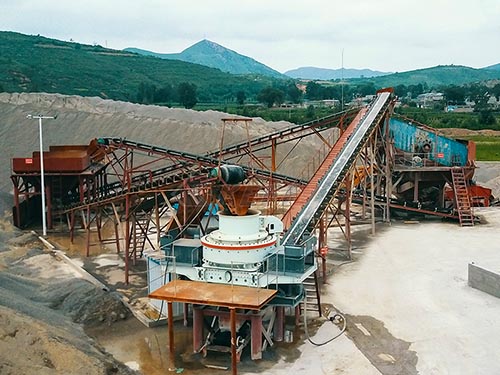
- Capital Expenditure as discussed
- Operating Expenditure: Power consumption wear parts replacement labor maintenance downtime Energy often constitutes ~40% of operating cost
- Cost per Tonne: The ultimate metric calculated by amortizing TIC over plant life adding operating costs A well-designed private label plant may have higher Capex but lower Opex delivering lower cost per tonne over 20+ years
Conclusion
The price tag attached to a private label iron ore crushing plant is not merely an expense but an embodiment of strategic choices regarding ore body life capacity product strategy operational philosophy Ultimately it represents an exercise in optimizing total lifecycle economics While current market dynamics push capital expenditure upwards thorough front-end engineering rigorous feasibility studies value engineering during design remain paramount Investing in high-quality durable equipment robust automation may command premium pricing initially but typically pays dividends through superior availability lower operating costs enhanced product consistency yielding stronger long-term margins Therefore decision-makers must look beyond initial quotations focusing instead on comprehensive financial models that integrate technical specifications market conditions strategic objectives into clear picture true value proposition their private label investment
