
In the highly competitive aggregates, mining, and recycling industries, equipment is not merely a tool; it is the cornerstone of operational efficiency, profitability, and safety. For established distributors, large contractors, or entrepreneurs aiming to carve out a distinct market identity, the path to success often lies beyond simply reselling generic machinery. This is where Private Label Crushing and Screening Equipment Design Service emerges as a sophisticated, strategic business solution. It represents a collaborative partnership between a client with market insight and an Original Equipment Manufacturer (OEM) with engineering prowess, culminating in a line of equipment sold exclusively under the client’s brand.
This service transcends simple badge-engineering. It is a comprehensive, iterative process that transforms a client’s vision into reliable, branded physical assets. This article delves into the intricacies of this service, exploring its phases, key considerations, benefits, inherent challenges, and its pivotal role in modern industrial supply chains.
A robust private label design service is a multi-stage journey involving close collaboration.
1. Conceptualization and Feasibility Analysis
The process initiates with a deep-dive strategic session. The client articulates their target market (e.g., regional quarrying, specialized concrete recycling, compact urban demolition), desired performance parameters (tonnage per hour, final product specifications), and unique brand positioning (premium reliability, modular flexibility, cost-leadership). The OEM’s design team then conducts a feasibility study, assessing technical requirements against market needs. This phase defines the project’s scope: Will the line consist of jaw crushers, cone crushers, impactors? What screening configurations (horizontal, inclined) are optimal? What level of customization is required—from cosmetic changes to proprietary component integration?
2. Collaborative Engineering and Design
This is the core technical phase. Leveraging advanced CAD (Computer-Aided Design) and FEA (Finite Element Analysis) software, engineers develop detailed designs.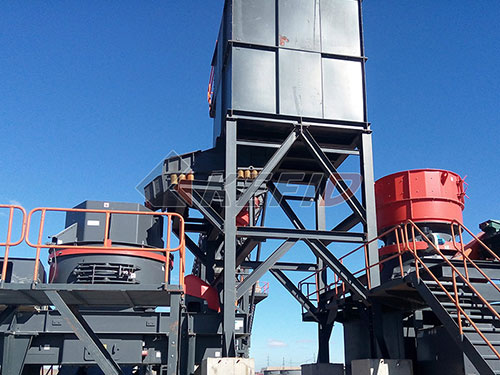
3. Prototyping Testing Validation
Before full-scale production one or more prototype units are built subjected to exhaustive testing. This includes:
4. Production Quality Control Branding
With designs finalized production commences at the OEM’s facility under strict quality control QC protocols—dimensional checks material certifications weld inspections assembly verification. Concurrently client-branded elements are incorporated: nameplates decals manuals software interfaces packaging all reflecting the client’s corporate identity creating a seamless branded experience.
5. After-Sales Support Ecosystem
A successful private label program extends far beyond delivery The OEM provides comprehensive support enabling the client to be a full-service brand:
The investment in a private label design service yields significant long-term strategic benefits:
1. Market Differentiation Competitive Edge: In saturated markets private label equipment allows a company to stand out It can address niche applications or regional preferences that global giants overlook offering tailored solutions rather than generic ones.
2. Enhanced Profit Margins Brand Equity: By moving up value chain from distributor brand owner companies capture greater margin They build tangible brand equity—where customers develop loyalty trust based on performance their branded equipment not just its underlying OEM
3. Supply Chain Control Flexibility: Clients gain greater influence over specifications lead times inventory levels They can adapt designs more responsively local market shifts without being tied standard catalog offerings multinational manufacturer
4. Strategic Focus: The client focuses strengths—sales marketing customer relationships—while leveraging OEM’s core competency engineering manufacturing This symbiotic relationship optimizes resources both parties
While advantageous this path requires careful navigation:
Partner Selection Imperative Success hinges entirely on choosing right OEM partner Criteria must include:
Investment Commitment Significant upfront investment required for design prototyping tooling initial inventory Unlike transactional purchasing this long-term capital commitment must justified by clear business case projected ROI
Balancing Customization Standardization Over-customization can lead spiraling costs complexity supply chain issues maintenance nightmares Wisdom lies leveraging standardized reliable platforms applying strategic targeted modifications add genuine value
Managing Dual Identity Client must effectively manage relationship They market sell as primary brand while relying seamlessly on OEM partner back-end Transparency customers about origin support crucial maintaining trust
Trends shaping industry will further elevate importance private label design services:
Private Label Crushing Screening Equipment Design Service not merely procurement strategy; it deliberate strategic move towards vertical integration brand sovereignty represents deep partnership merging market intelligence with engineering excellence For ambitious companies it pathway escape commoditized competition build durable valuable asset—their own brand promise embodied steel iron innovation Through meticulous planning choosing right partner focusing genuine value-adding customization businesses can leverage this powerful model achieve sustainable growth secure lasting competitive advantage dynamic demanding industrial marketplace Ultimately it about transforming from seller someone else’s tools architect your own tailored solutions future built your name
Lorem ipsum dolor sit amet, consectetur adipisicing elit. Consectetur sequi saepe ut sunt eveniet perferendis excepturi, iste obcaecati. Qui tempore hic sed quia soluta obcaecati vel.