Pegson Crushers: A Legacy of Robust Engineering in the Aggregate and Mining Industries
The name Pegson represents a significant chapter in the history of rock processing equipment. Synonymous with durability, innovative design, and a deep understanding of the crushing and screening challenges faced by quarry operators and miners, Pegson crushers have left an indelible mark on the industry. While the brand has been fully integrated into Terex GB (now part of the Terex Materials Processing portfolio), its machines remain a common and highly respected sight on sites across the globe. This article provides a comprehensive overview of Pegson crushers, delving into their historical context, core product lines, engineering hallmarks, and their enduring legacy in the modern market.
Historical Context and Evolution
The story of Pegson begins in the early 20th century with two separate entities: Samuel Pegg & Son, a Leicester-based foundry established in 1839, and Brown Lenox & Co., a Welsh company with roots dating back to the 1800s. Samuel Pegg & Son transitioned into manufacturing crushing machinery, building a reputation for robust equipment. A pivotal moment came in the post-World War II era with the development of the “Pegson” jaw crusher.
Throughout the latter half of the 20th century, Pegson grew through innovation and acquisition. The company became part of the Powerscreen group in 1996, which was subsequently acquired by Terex Corporation in 1999. This period saw a strategic alignment between Pegson and its sister brand, Terex Finlay. The most significant modern consolidation occurred when Terex merged the engineering and product lines of Pegson with Brown Lenox to form Terex GB. Consequently, while new machines are now branded under the Terex name (e.g., Terex JW Series jaws evolved from Pegson designs), the vast installed base of original Pegson crushers continues to operate efficiently, supported by a robust aftermarket parts and service network.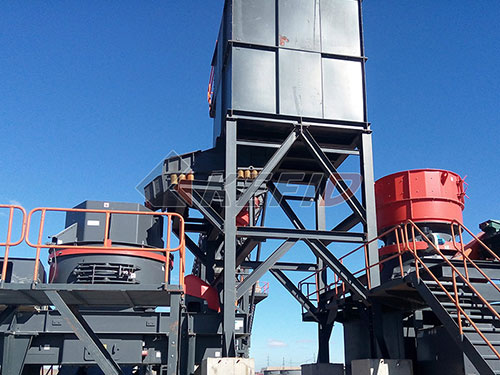
Core Product Lines and Their Applications
Pegson’s strength lay in its comprehensive range of crushers designed to handle various stages of size reduction. The most iconic models fall into several key categories: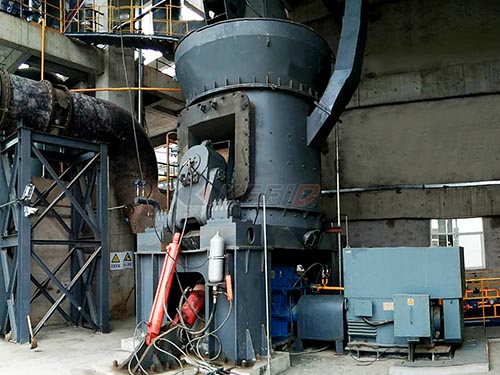
1. Jaw Crushers: The Primary Workhorses
Pegson jaw crushers are perhaps their most celebrated products, renowned for their heavy-duty construction and ability to process exceptionally hard and abrasive materials.
- Pegson XA & XR Series: These series represent the zenith of Pegson’s jaw crusher design. Models like the XA400S and XR400S became industry standards for mid-to-large-scale quarrying and mining operations.
- Design Features: They featured a highly aggressive overhead eccentric jaw crusher action with a steep toggle angle. This design not only promoted a more efficient nip (the gripping action at the entrance of the crushing chamber) but also increased throughput capacity and reduced blockages.
- Chamber Design: The “X” series chambers were engineered to handle large feed material, producing consistent cubical product shapes—a critical requirement for high-quality aggregate in construction applications like concrete and asphalt.
- Applications: Primary crushing of granite, basalt, river gravel, and other hard rock.
2. Cone Crushers: Precision in Secondary Crushing
For secondary and tertiary reduction stages, where product shape and size are paramount, Pegson cone crushers offered advanced solutions.
- Pegson Automax & Autosand Series: The “Automax” was a hallmark of innovation.
- Automax Technology: This cone crusher utilized an advanced control system that constantly monitored crusher load and adjusted the feed rate accordingly via an automatic setting regulation (ASR) system. This ensured optimal performance, protected the machine from tramp metal damage through hydraulic release, and maintained a consistent product grade without manual intervention.
- Autosand Technology: Designed specifically for producing high-quality sand or manufactured fines (“man-sand”), this model operated at high speeds to fracture aggregate through attrition rock-on-rock action rather than compression alone.
- Applications: Secondary crushing after a jaw crusher; production of railway ballast; chipping for asphalt; manufacturing sand for concrete.
3. Impact Crushers: Versatility for Softer Materials
Pegson impact crushers provided an excellent solution for recycling demolition concrete or processing softer, less abrasive materials like limestone.
- Pegson Trakpactor Series: These horizontal shaft impactors (HSI) were known for their versatility.
- Design Features: They offered both hydraulic adjustment of aprons/grinding paths for precise product control and hydraulic assistance for opening the crusher for wear part changes or maintenance.
- Applications: Recycling concrete and asphalt; primary or secondary crushing of non-abrasive quarry rock; producing well-shaped aggregate where compressive strength is not extreme.
4. Additional Equipment
Beyond these core lines, Pegson also manufactured other critical equipment integral to complete processing plants:
- Powerscreen Chieftain & H-Range Screens: While often branded under Powerscreen post-1996 integration.
- Pegson Maxtrak (Mobile Cone Crushers): A highly successful line of track-mounted cones that combined Automax/Autosand technology with mobility.
- Brown Lenox Double Roll & Granulator Crushers: Following integration with Brown Lenox.
Engineering Hallmarks: Why Pegson Crushers Endure
The lasting reputation of Pegson equipment is built on several foundational engineering principles:
- Robustness and Durability: Pegson machines were famously over-engineered for longevity. Heavy-duty fabricated steel frames, high-grade manganese steel wear parts (like jaws and concaves), large diameter shafts supported on heavy-duty spherical roller bearings were standard features designed to withstand years of punishing operation.
- Simplicity of Maintenance: Despite their complexity inside,the designs often prioritized serviceability.Common maintenance points like jaw dies or cone mantles were designed to be replaced with relative ease compared to competitors.Hydraulic systems were used not just for operation but also for safety—such as hydraulically assisted jaw adjustment or clearing tramp metal from chambers—reducing downtime significantly.
- Operator-Focused Design: Control systems were intuitive,and access platforms,ladders,and handrails were thoughtfully integrated,supporting both operational efficiencyand worker safety.The ASR system on cones wasa prime exampleof reducing operator workload while optimizing performance.
- Proven Performance Metrics: Across countless quarries worldwide,Pegsons have consistently demonstrated high throughput capacities,efficient power consumption per tonne crushed,and excellent wear life on critical components.This proven track record instilled confidencein operators making capital investment decisions.
The Modern Legacy: Integration into Terex
Today,the DNAof every classicPegsondesign livesonwithintheTerexMaterialsProcessingportfolio.The evolutionis clear:
- TheTerexJWS eriesofjawcrusherstakesitscore designfromtheiconicPegs onXA&XRmodels,furtherrefinedwithmodernmaterialsandhydraulics .
- TheTere xTCConeseriesdirectlydescendsfromtheP egso nAutoma x&Autosandlines ,incorporatingadvancedautomationlike therel easesystem&chamberclearing .
- TheT ere xTrakpactorHSIrangecontinuesthelegacyoftheoriginalmobileimpactors .
Furthermore,the vast numberof original P egso nmachinesstilloperating globally ensuresa thrivingaftermarket.PartsavailabilityfrombothT erexofficialchannelsandindependentspecialistsis excellent ,guaranteeingthattheseworkhorsescanremainproductiveformanyyearstocome .
Conclusion
In summary,P egso nCrus hersrepresentmorethanjustamachinerybrand ;theyembodyaneraofpractical ,durableengineeringthatprioritizedperformanceandreliabilityaboveallelse.TheirintegrationintothemodernTer exp roductlineisatestamenttotheenduringqualityoftheirfundamentaldesigns.Foranyoperatorinvolvedinaggregateproductionor mining ,understandingthehistoryandcapabilitiesof P egso ncrus hersisnotmerelyanexerciseinnostalgia ;itiscriticalknowledgeforappreciatingtheevolutionofcrushingtechnologyandevaluatingtherobustequipment—whethernewTer exorbearervintage P egso n—thatcontinuestodrivetheindustryforward .
