OEM Stone Crusher Machine Wholesale Price: A Comprehensive Guide for Bulk Buyers
In the global construction, mining, and aggregate industries, the stone crusher machine stands as a cornerstone of productivity. For businesses looking to procure this essential equipment at scale—be it contracting firms, large mining operations, or resellers—understanding the dynamics of OEM (Original Equipment Manufacturer) wholesale pricing is critical. This price is not merely a number on an invoice; it is a complex reflection of engineering quality, market forces, supply chain logistics, and strategic partnerships. This article delves into the multifaceted world of OEM stone crusher wholesale prices, providing a detailed analysis for informed procurement decisions.
Understanding the OEM Advantage
Before dissecting price, one must appreciate the value proposition of an OEM. Unlike aftermarket or generic crushers, an OEM machine is produced by the company that originally designed it. This translates to:
- Guaranteed Compatibility: Precision engineering ensures all components work in harmony.
- Proven Reliability & Durability: Machines are built to original specifications with high-quality materials (e.g., high manganese steel jaws, robust cast steel frames).
- Technical Support & Training: Direct access to factory-trained engineers for installation and troubleshooting.
- Genuine Spare Parts: Assurance of parts that fit perfectly and maintain machine integrity.
- Comprehensive Warranty: Typically more substantial and reliable than third-party offerings.
These factors contribute significantly to the Total Cost of Ownership (TCO), often making an OEM machine more economical in the long run despite a potentially higher initial price point.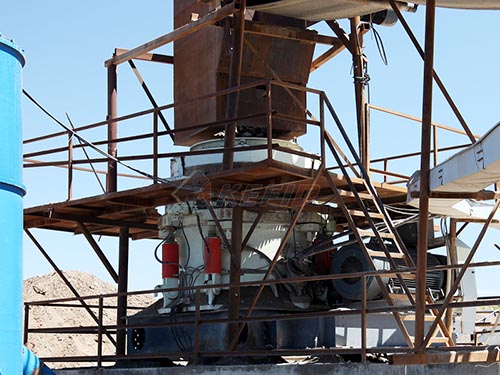
Key Factors Determining Wholesale Price
The wholesale price for an OEM stone crusher is influenced by a confluence of technical and commercial factors.
1. Machine Specifications & Technology:
- Capacity & Size: Jaw crushers, cone crushers, impact crushers, and gyratory crushers each have different price points. A 300-tonnes-per-hour mobile cone crusher will command a vastly different price than a 50-tonnes-per-hour stationary jaw crusher.
- Crushing Stages: Primary, secondary, or tertiary crushing configurations add complexity and cost.
- Automation & Intelligence: Modern machines with PLC (Programmable Logic Controller) systems, automatic setting regulation (ASRi), real-time monitoring, and remote telemetry add premium value.
- Mobility: Track-mounted or wheeled mobile crushers involve additional chassis, engine, and hydraulic system costs compared to stationary plants.
2. Raw Material & Manufacturing Costs:
- Fluctuations in global steel prices directly impact manufacturing costs. The grade and quantity of steel used in the frame, rotors, and wear parts are major cost drivers.
- Advanced components like bearings (often from brands like SKF or Timken), hydraulic systems (Bosch Rexroth), and electric motors (Siemens, WEG) add cost but ensure reliability.
3. Research & Development (R&D):
- Leading OEMs invest heavily in R&D to improve energy efficiency (~15-30% less power consumption in newer models), reduce wear rates, and enhance safety features. This investment is amortized into the machine’s price.
4. Market Dynamics & Competition:
- The presence of established global OEMs (like Metso Outotec, Sandvik, Terex MPS) versus strong regional players (like China-based SBM, Liming Heavy Industry) creates a tiered pricing landscape.
- Global demand cycles in construction and mining sectors influence pricing strategies.
5. Order Volume & Negotiation Leverage:
- True “wholesale” implies bulk purchasing. An order for 10 units will receive a significantly different per-unit price than an order for two units.
- Establishing a framework agreement or becoming a preferred dealer can unlock tiered discounts.
6. Supply Chain & Logistics:
- Incoterms are crucial. An FOB (Free On Board) price from Shanghai differs from a CIF (Cost Insurance Freight) price to Rotterdam or DDP (Delivered Duty Paid) to Nairobi.
- Shipping costs for heavy machinery are substantial and volatile. Containerized shipment for smaller units vs. RORO (Roll-on/Roll-off) for larger plants affects final landed cost.
Price Range Estimates and Structure
Providing exact figures is impractical due to the variables above but outlining ranges offers perspective.
- Entry-Level/Small Capacity Jaw Crushers: For smaller quarries or contractors. Wholesale prices might range from $20,000 to $100,000 per unit depending on size and features.
- Mid-Range Cone/Impact Crushers: The workhorses for medium-scale aggregate production. Prices typically fall between $100,000 to $500,000.
- High-Capacity/Mobile Crushing Plants: Advanced tracked plants with high throughput can range from $500,000 to over $2 million per unit.
A typical wholesale quote will be broken down into:
- Base Machine Price: The core crusher unit.
- Optional Attachments/Modules: Pre-screens, magnetic separators, extended conveyors.
- Spare Parts Package: A standard set of wear parts (jaws/mantles/liners).
- Packaging & Inland Freight to port of export.
- Insurance & International Sea/Air Freight.
Strategic Considerations for Buyers
To navigate this market effectively:
- Define Requirements Precisely: Conduct thorough material testing (abrasion index, moisture content). Over-specifying leads to overpaying; under-specifying leads to poor performance.
- Focus on Total Cost of Ownership (TCO): Calculate cost per tonne over the machine’s lifespan—factor in energy consumption (~30% of operating cost), expected wear part life (~20-30% of operating cost), maintenance labor costs (~15-20%), potential downtime costs (~15-25%), residual value (~10-20% after depreciation). A cheaper machine with higher wear rates can be far more expensive long-term due to increased downtime costs which can be as high as $10k-$50k per day depending on operation scale..
3.Request Detailed Quotations: Compare not just bottom-line figures but warranty terms (standard is often 12 months on parts, but can be negotiated), delivery schedules (typically 60-120 days ex-works, subject to backlog), payment terms (common structure: 30% down payment, 60% before shipment, 10% after commissioning) ,and scope of after-sales support (availability of local service engineers, spare parts inventory location, training programs duration – usually 1-2 weeks onsite*) .
4.*Consider Financing Options: Many OEMs offer financing/leasing through partners which affects cash flow planning differently than outright purchase while potentially offering tax advantages depending on jurisdiction .
5.Build Relationships:* Engage directly with OEM sales engineers rather than relying solely on intermediaries .Visit manufacturing facilities if possible .A strong partnership can yield better pricing ,priority support ,and access to prototype testing .
Conclusion
The wholesale price of an OEM stone crusher machine is a sophisticated synthesis where engineering excellence meets commercial strategy .For bulk buyers ,the pursuit should transcend finding the lowest initial quote .It must be a calculated investment analysis centered on productivity ,reliability ,and minimized lifetime operational expenditure .By thoroughly understanding the factors that constitute this price—from metallurgy grades used in critical components like rotors which experience forces up-to several hundred tons pressure ,to global logistics networks spanning multiple continents —businesses can negotiate from position strength .In capital-intensive industries where equipment uptime directly correlates with profitability typically requiring >90% availability targets ,choosing right OEM partner at competitive wholesale price becomes not just procurement decision but fundamental strategic pillar ensuring sustainable competitive advantage through reliable aggregate production capabilities meeting growing global infrastructure demands estimated at requiring over $90 trillion investment by 2040 according World Bank reports thereby making informed equipment selection absolutely paramount .
