Hammer Crushers: A Comprehensive Technical Overview
Introduction
In the vast and demanding world of material size reduction, hammer crushers stand as one of the most versatile, robust, and widely utilized machines. A cornerstone of industries ranging from mining and cement production to recycling and agriculture, these crushers excel at transforming large, coarse materials into smaller, more manageable granular products. Their operational principle is deceptively simple yet brutally effective, relying on kinetic energy to achieve fragmentation. This article provides a comprehensive technical overview of hammer crushers, delving into their working principles, design configurations, key components, applications across various sectors, advantages, limitations, and essential operational considerations.
1. Fundamental Working Principle
At its core, the operation of a hammer crusher is governed by the direct transfer of kinetic energy. The process can be broken down into a continuous cycle: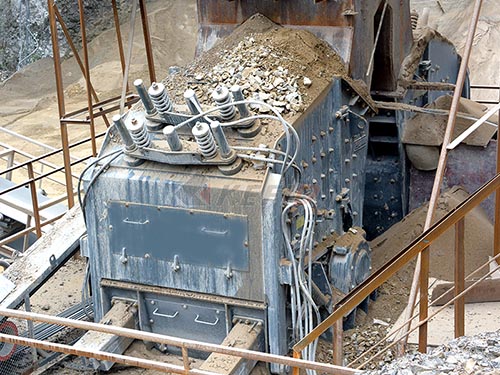
- Feed Introduction: Raw material is fed into the crusher through a top-mounted or side-mounted feed chute.
- Impact and Shattering: Inside the crushing chamber, multiple hammers—pivoted or fixed to a high-speed rotating rotor—strike the incoming feed particles. The tremendous impact force generated upon collision causes the material to shatter along its natural cleavage lines and internal weaknesses.
- Further Fragmentation: The shattered particles are then propelled violently against the internal breaker plates or liners that line the crushing chamber. This secondary impact further reduces the particle size.
- Sizing and Discharge: The repeatedly impacted material continues to fracture until its individual particles are small enough to pass through the openings of a grate or screen (often referred to as a “grizzly” or “cage”) located at the bottom of the crushing chamber. The product size is thus primarily determined by the size of these openings.
This combination of direct hammer impact and subsequent collisions with breaker plates creates a high-degree of size reduction in a single stage, making hammer crushers exceptionally efficient for many applications.
2. Design Configurations and Key Components
Hammer crushers are not monolithic; they come in several design configurations tailored to specific material characteristics and product requirements.
A. Primary Classifications:
- Horizontal Shaft Hammer Crushers: This is the most common design. The rotor shaft is mounted horizontally, and hammers process material in a wide, predictable arc. They are highly versatile and can be used for both primary and secondary crushing duties.
- Vertical Shaft Hammer Crushers (or Impact Crushers): In this configuration, the rotor shaft is mounted vertically. Material is fed into the center of the rotor and is flung outward by centrifugal force into stationary anvils or rock shelves lining the outer chamber. These are often preferred for highly abrasive materials or for achieving a more cubical product shape.
B. Hammer Arrangement:
- Fixed Hammer Crushers: The hammers are rigidly bolted or welded to the rotor. This design offers maximum mechanical strength and is suitable for processing very hard and large lumps of material.
- Swinging Hammer Crushers: The hammers are pivotally mounted on rods passing through the rotor discs. This design offers a crucial safety feature: if an unbreakable object (like tramp metal) enters the chamber, the hammers can swing back or recoil, allowing the object to pass through without causing catastrophic damage to the machine.
C. Key Components:
- Rotor: The heart of the crusher. It is a heavy-duty steel shaft equipped with discs between which the hammer rods are mounted. The rotor’s mass and rotational speed are critical determinants of the kinetic energy imparted to the hammers.
- Hammers: These are the consumable wear parts that directly contact and break the material. They are typically made from high-manganese steel or other wear-resistant alloys with hard-facing welds to extend service life.
- Breaker Plates / Liners: These stationary plates form part of the internal wall of the crushing chamber.
4.Grate / Screen Bars: Positioned at
5.the discharge end
6., these adjustable bars control
7.the final product size
8.. By changing
9.the gap between
10.the bars
11., operators can fine-tune
12.the output gradation
13..
14.Casing / Body: A robust steel enclosure that contains
15.the entire crushing process,
16.providing structural integrity,
17.safety,
18.,and dust containment.
3.Applications Across Industries
The versatility
19.of hammer crushers makes them indispensable in numerous sectors:
- Cement Manufacturing:
20.They are workhorses in cement plants for primary
21.,and secondary crushing
22.of limestone,
23.,marl,
24.,clay,
25.,and shale—the key raw materials for clinker production.
26.Mining and Quarrying:
27.Hammer crushers effectively process medium-hard ores like phosphate,
28.,gypsum,
29.,weathered shales,
30.,and salt.
31.Recycling:
32.They are exceptionally well-suited for processing demolition waste,
33.concrete slabs,
34.asphalt,
35.,and electronic waste (e-waste),
36.facilitating volume reduction
37.,and material liberation for sorting.
38.Coal Processing:
39.In coal-fired power plants
40.,and coke production facilities,
41.hammer mills crush coal to a specific size for efficient combustion.
42.Agricultural & Chemical Industry:
43.They are used for grinding fertilizers,
44.dry chemicals,
45.,and various agri-minerals.
4.Technical Advantages
The widespread adoption
46.of hammer crushers can be attributed to several distinct advantages:
- High Reduction Ratio: Capable of achieving reduction ratios as high as 20:1 in a single stage,making them very space-efficient compared to multi-stage jaw-and-cone systems for certain materials.
- Simplicity of Design & Maintenance: Their mechanical design is relatively straightforward,easier to understand,and maintain than more complex compression-style crushers like cone crushers.Replacing hammers,grate bars,and liners is a routine maintenance task.
- Versatility & Product Control: By simply adjustingthe gap ofthe grate barsor changingthe rotor speed,a wide rangeof product sizescan be produced fromthe same machine.This flexibilityis highly valuedin operations processing multiple materials.
- Tolerance to Moisture & Clays: While not immune,Swinging-hammer designs can handle materials witha moderate amountof moistureor claybetter than jawor cone crusherswhichare proneto clogging(choking).
- Cost-Effectiveness: Lower initial capital cost comparedto many other primarycrusher types,and their mechanical simplicity often translatesinto lower maintenance labor costs.
5.Inherent Limitations & Challenges
Despite their strengths,hammermills have inherent limitations that must be carefully considered during equipment selection:
- High Wear Rate: In abrasive applications,the rapid wearof hammers,grate bars,and liners leads to high operating costsfor spare partsand significant downtimefor replacements.This makes them less suitablefor processing highly abrasive rockslike graniteor quartzitecomparedto cone crusherswiththeir slower-wearing mantlesand concaves.
- High Energy Consumption: Generatingthe high kinetic energy requiredfor impact crushing demands substantial power,input especiallywhen processing hard materials.This can make them less energy-efficientthan compression-basedcrushersin certain contexts.
- Fines Generation & Dust Control: The violent impact process inherently producesa higher percentageof fines(material smallerthanthe desired product)and dust.This necessitates robust dust collection systems(baghouses)to meet environmental standardsand protect worker health.It also may not be idealif acoarse productwith minimal finesis desired.
- Sensitivity to Silica Content & Hardness: Extremely hard,tough,and/or silica-rich materials will accelerate wear exponentially,making operation economically unviable.The abrasion indexofthe feed materialis acritical parameterin selection decisions.Uncrushable objectslike tramp metalcan cause severe damageif not protectedby modern electronic monitoringor physical traps.
6.Critical Operational Considerations
To ensure optimal performance,efficiency,and longevityofa hammercrusher,the following operational aspects must be meticulously managed:
1.Feed Control (Choke Feeding vs.Gravity Feeding):
Consistent feedingis paramount.Choke feeding—wherethe crushing chamberis kept fullof material—promotesa rock-on-rock crushing actionin additionto hammer impact.This cushioning effectcan reduce wearon hammersand improve overall efficiency.In contrast,trickle feeding leadsto excessivehammer wearas hammers beat against each otherwith minimalmaterial resistance,increasing metal-to-metal contact.
2.Rotor Speed & Tip Speed:
The tip speedofthe hammers(calculated as π × Rotor Diameter × RPM)is adirect measureofthe kinetic energy imparted.Higher tip speedsresultin finerproductbut increasedwear.Optimal speed must be calibratedbasedon material characteristicsand desired output.
3.Maintenance Regimen:
A proactive maintenance scheduleis non-negotiable.Regular inspectionandreplacementof worn partsbeforethey fail catastrophicallyis crucial.Monitoringhammer weightloss helps predict replacement intervals.Rotor balancing afterhammer replacementis essentialto prevent destructive vibrations.Ultimately,the Total Costof Ownership(TCO),factoringin initial cost,labor,downtime,and part consumption,must guide decision-making over merely consideringthe purchase price alone.In conclusion,hammermills remain an indispensable toolin comminution circuits.Their unique combinationof high reduction ratio,vast versatility,and mechanical simplicity ensures their continued relevance across global industries.A thorough understandingoftheir operating principles,inherent trade-offs,and critical operational parametersenables engineersand operatorsto deploy them effectively,maximizing productivitywhile minimizing lifecycle costs.As technology advances,further improvementsin wear-resistant materials,predictive maintenance sensors,and automated control systemswill only enhancethe performanceandreliabilityofthese stalwart machinesinthe years
