ODM Iron Ore Crushing Plant Prices: A Comprehensive Analysis of Cost Drivers and Market Dynamics
In the global mining and mineral processing industry, the procurement of an Iron Ore Crushing Plant is a capital-intensive and technically complex decision. For mining companies, contractors, and investors, understanding the pricing structure of an ODM (Original Design Manufacturer) Iron Ore Crushing Plant is crucial for accurate budgeting, feasibility studies, and strategic planning. Unlike standard catalog equipment, an ODM solution is custom-engineered to specific ore characteristics, capacity requirements, and site conditions. Consequently, its price is not a single figure but a spectrum influenced by a multifaceted array of technical, commercial, and logistical factors. This article provides a detailed, objective analysis of the components that dictate ODM iron ore crushing plant prices.
1. Defining the ODM Model in Heavy Mining Equipment
First, it is essential to distinguish the ODM model from OEM (Original Equipment Manufacturer) or EPC (Engineering, Procurement, Construction) approaches. An ODM provider doesn’t merely supply off-the-shelf crushers; they offer a completely customized design service. They take the client’s core requirements—ore properties (abrasiveness, hardness via Work Index, moisture content, silica percentage), required throughput (tph), product size specifications (lump vs. fines ratio), and site constraints—and design a complete crushing circuit from scratch or by heavily adapting modular platforms.
This model offers significant advantages: optimized plant performance for specific ore bodies, integration of innovative solutions for efficiency and dust control, and single-point accountability for the design-manufacture package. However, this customization is the primary driver of cost variability. The price reflects not just hardware but intensive engineering man-hours.
2. Core Technical Determinants of Price
The plant’s technical configuration forms the backbone of its cost.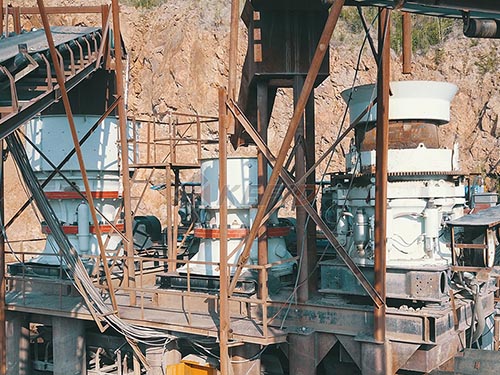
- Crushing Circuit Design: A basic single-stage primary crushing setup for direct shipping ore (DSO) is far less expensive than a complex multi-stage circuit involving primary jaw crushers, secondary cone crushers, and tertiary high-pressure grinding rolls (HPGR) or vertical shaft impactors (VSI) to achieve fine liberation. Each additional stage adds major equipment costs.
- Equipment Selection and Sizing: The choice between gyratory vs. jaw for primary crushing, or between different cone crusher technologies (e.g., hydraulic adjustment systems), carries substantial price differences. The physical size and power rating needed to meet throughput targets are exponential cost factors; a 1,000 tph plant is not simply twice the price of a 500 tph one.
- Material Handling Systems: Conveyors are often an underestimated cost component. Lengths widths belt specifications idler quality transfer points dust suppression systems on each conveyor add up significantly In-pit mobile or semi-mobile crushing systems with massive shiftable conveyors represent another high-cost tier compared to fixed plant installations
- Automation and Control Systems: The level of sophistication in the PLC/SCADA system for automated control motor monitoring chute blockage detection and predictive maintenance analytics can vary widely A state-of-the-art digital twin-integrated system with remote monitoring capability commands a premium over basic local control panels
- Wear Parts Material Specification: The choice of materials for liners blow bars and screen decks directly impacts both initial cost and long-term operational expense Premium alloys like TeroTite or specialized ceramics are more expensive upfront but can offer dramatically better life in abrasive ores reducing downtime which is factored into the ODM’s lifecycle cost analysis presented to clients
3. Commercial Project Scope Factors
The “O” in ODM stands for “Original,” but what exactly is included in the delivered package?
- Scope of Supply: Does the quoted price include:
- Basic engineering vs detailed fabrication drawings?
- All structural steel platforms walkways chutes?
- Electrical switchgear motors cabling?
- Dust collection systems baghouses?
- Erection supervision commissioning spares?
A bare-bones FOB (Free On Board) price for major equipment only will be orders of magnitude lower than a CIF (Cost Insurance Freight) site-delivered package with full erection commissioning services
- Modularization vs Field Fabrication: A growing trend is highly modularized design where the plant is built in skid-mounted or containerized modules in a controlled factory environment This reduces on-site construction time risk but increases factory labor fabrication complexity and thus upfront cost It represents a trade-off between capital expenditure CAPEX speed-to-production
- Intellectual Property Technology Licensing: If the ODM incorporates proprietary technology such as advanced liner designs unique crushing chamber geometries or patented automation algorithms this R&D cost will be amortized into the plant price
4. Market Logistics Macroeconomic Influences
ODM prices do not exist in a vacuum they are sensitive to broader market forces
- Raw Material Steel Costs: As heavy steel fabrications constitute over 50% of plant mass fluctuations in global steel plate structural steel prices directly impact manufacturing costs Periods of high demand trade tariffs disrupt supply chains as seen post-2020 lead to volatile quotations
- Component Supply Chain Costs: Crushers rely on heavy-duty bearings gearboxes large motors hydraulic units Global availability lead times for these specialized components from suppliers like SKF Siemens etc affect pricing OEMs often have long-term contracts mitigating volatility smaller ODMs may face spot-market pressures
- Global Shipping Freight Rates: Transporting several hundred tons of equipment from manufacturing hubs China Europe USA to mine sites often in remote inland locations Australia Pilbara Brazil Carajás West Africa involves multi-modal logistics Ocean freight rates bulk carrier availability port congestion inland heavy haulage costs are significant line items subject to geopolitical fuel price fluctuations
- Labor Market Conditions: Skilled engineering design welding labor costs in country manufacture directly feed into final price Regional differences here are substantial
*Currency Exchange Rates: Most major ODM projects are quoted USD Euro Transactions involve currency conversion between client currency manufacturer’s costs local currency Fluctuations introduce risk often hedged adding to cost
5. Price Range Estimations Contextualizing Figures
Providing exact figures is impractical due to aforementioned variables however indicative ranges can be established based on industry project benchmarks circa 2023-2024 For greenfield installations:
- Small Scale Mobile/Modular Plant 250-500 tph capacity basic two-stage crushing might range from $5 million to $15 million USD depending on mobility features automation level
Medium Scale Fixed Plant 1000-2000 tph standard three-stage circuit with moderate automation could span $25 million to $60 million USD
Large Scale Mega Project 4000-6000 tph+ complex circuit with HPGR advanced automation dust control full material handling from pit-to-process could easily exceed $150 million to $300+ million USD
It critical note these are total installed cost estimates inclusive major equipment structural electrical basic controls Delivery erection commissioning typically add 20-40% atop FOB equipment-only prices Furthermore ongoing operational expenditure OPEX including energy consumption ~$10-15/ton crushed wear parts maintenance must be evaluated alongside CAPEX during vendor selection
Conclusion: Beyond Sticker Price – The Value Proposition of ODM
Ultimately evaluating an ODM Iron Ore Crushing Plant solely on its initial purchase price can be misleading The true metric should be total cost per ton crushed over lifecycle asset which factors reliability maintainability energy efficiency final product yield An intelligently designed albeit slightly higher-priced ODM solution that optimizes flow reduces bottlenecks minimizes wear part consumption integrates seamlessly with downstream processing can deliver far superior return investment ROI than cheaper less-suited alternative Therefore procurement process must involve detailed technical-commercial discussions where client shares comprehensive ore data operational goals enabling ODM partner develop value-engineered proposal Transparent dialogue about all cost drivers—from metallurgical testwork results desired automation level terms payment—is key arriving at fair competitive price that ensures project long-term success competitive position global iron ore market where marginal efficiency gains translate hundreds millions dollars annual revenue
