
In the vast and complex ecosystem of modern mining, efficiency, reliability, and cost-effectiveness are paramount. At the very heart of the comminution process—the reduction of large solid materials into smaller, more manageable fragments—lies a piece of equipment so fundamental that its operation dictates the productivity and viability of the entire downstream processing chain: the mining stone crusher. Far from being a single machine, “stone crusher” is a collective term for a range of heavy-duty equipment engineered to perform primary, secondary, tertiary, and even quaternary crushing stages. This article provides a comprehensive overview of these mechanical titans, exploring their types, operational principles, applications within the mining cycle, technological advancements, and critical considerations for selection and operation.
Before delving into the machinery itself, it is crucial to understand its place in the mining workflow. Run-of-Mine (ROM) ore, as it is hauled directly from the pit or underground mine face, is heterogeneous and can range from fine dust to massive boulders several meters in diameter. This raw material is unsuitable for subsequent processes like milling, beneficiation, or leaching for several reasons:
Therefore, the primary objective of a stone crusher in mining is to reduce the size of ROM ore to a predetermined product size that facilitates efficient handling and further processing.
Crushers are systematically deployed in stages to achieve progressive size reduction efficiently.
1. Primary Crushers
Located at the mine face or at a central primary crushing station, these machines are designed to handle the largest and hardest ROM material. Their key characteristic is high capacity and robustness rather than producing a finely shaped product.
2. Secondary Crushers
The output from primary crushers (typically 150-300 mm) is fed to secondary crushers for further reduction (down to 20-50 mm). These units focus on producing a more uniform product size.
3. Tertiary & Quaternary Crushers
For applications requiring very fine product sizes before milling (e.g., <10 mm), tertiary or quaternary crushing stages are employed.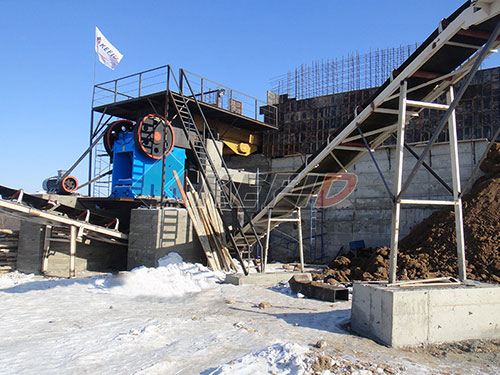
The evolution of stone crusher technology has been driven by demands for greater efficiency, lower operating costs (especially energy consumption), enhanced reliability through predictive maintenance capabilities known as “smart crushing,” which involves embedding sensors on critical components like bearings rotors liners etc These sensors monitor parameters such as pressure temperature vibration providing real-time data analytics platforms This allows operators predict component failure schedule maintenance proactively optimize performance parameters reducing unplanned downtime significantly automation control systems modern plants use sophisticated programmable logic controllers PLCs supervisory control data acquisition SCADA systems automate entire crushing circuits ensuring optimal choke-fed conditions preventing equipment damage maximizing throughput power draw monitoring coupled variable frequency drives VFDs allow motors adjust speed power consumption based load leading substantial energy savings advanced materials metallurgy development ultra-durable alloys manganese steel ceramics liners wear parts dramatically extends service life reduces frequency costly replacements downtime
Selecting appropriate stone crushing equipment strategic decision influenced numerous factors ore characteristics determining factor hardness abrasiveness measured indices Bond Work Index Wi Abrasion Index Ai dictate choice between compression impact crushing extremely hard abrasive ores typically necessitate robust jaw cone gyratory designs sticky moist materials prone cause clogging may require special feeder designs specific types capacity requirements plant’s target hourly annual production rate dictates size model number units needed final product specifications required particle size distribution shape influence selection tertiary stage whether use fine-cone VSI site specific considerations space constraints topography mobility need semi-mobile units modular designs relocation life mine plan capital expenditure CapEx versus operating expenditure OpEx tradeoff must evaluated while initial cost important total cost ownership TCO including energy consumption maintenance downtime spare parts availability crucial
operation stone crushers presents significant environmental health safety challenges must rigorously managed dust emission major concern continuous crushing generates vast amounts respirable crystalline silica dust poses serious health risk workers silicosis effective dust suppression control imperative using water spray systems foam suppression enclosing transfer points installing high-efficiency baghouse filtration systems noise pollution another significant issue generated metal-on-rock contact high-speed rotors requires acoustic enclosures barriers protect operators surrounding communities physical safety paramount given massive forces moving parts strict lockout tagout LOTO procedures guarding essential prevent accidents regular inspection maintenance non-negotiable ensuring structural integrity machinery
Mining stone crushers far simple brute force devices they sophisticated highly engineered components integrated mineral processing value chain evolution from basic mechanical designs intelligent connected systems reflects broader trend industry digitalization sustainability understanding diverse types operational principles application contexts enables mining engineers managers make informed decisions optimize comminution circuit enhance overall operational profitability continuous innovation materials science automation data analytics promises further elevate role these indispensable workhorses ensuring they remain cornerstone efficient resource extraction foreseeable future
Lorem ipsum dolor sit amet, consectetur adipisicing elit. Consectetur sequi saepe ut sunt eveniet perferendis excepturi, iste obcaecati. Qui tempore hic sed quia soluta obcaecati vel.