Luxury Quarry Ballast Crushing Equipment Specification: Engineering Excellence for Premium Infrastructure
In the realm of high-end construction and critical infrastructure, the term “ballast” transcends its basic function of providing drainage and stability. For luxury projects—be it prestigious private rail networks, meticulously landscaped driveways of exclusive estates, or the foundational layers for monumental architectural landmarks—the quality of ballast is paramount. This demand for perfection cascades directly to the equipment used to produce it. Luxury Quarry Ballast Crushing Equipment is not merely about size reduction; it is an integrated engineering philosophy focused on producing precisely graded, cubical, and clean aggregate with unmatched consistency, efficiency, and operational sophistication. This specification details the core requirements for such premium machinery.
1. Defining “Luxury” in Ballast Production
Before detailing equipment, one must understand the product spec. Luxury-grade ballast typically adheres to stringent standards (e.g., AREMA #24, #25, or bespoke gradations). Key characteristics include:
- High Cubicity & Low Flakiness: Particles must be equidimensional to interlock securely, providing exceptional load-bearing capacity and resistance to deformation.
- Precise Gradation: Tight control over particle size distribution (e.g., 1½” to ¾”) is non-negotiable. Minimal fines (typically <1% passing a #200 sieve) are critical for optimal drainage.
- Superior Cleanliness & Strength: Aggregate must be free of clay, dirt, and organic contaminants, with high Aggregate Crushing Value (ACV) and Los Angeles Abrasion (LAA) values.
- Consistency: Batch-to-batch uniformity in all above parameters is essential.
The equipment must be engineered to deliver these material properties reliably.
2. Core Equipment Specifications: The Crushing Circuit
A luxury ballast production line is a synchronized system. The specification breaks down as follows:
A. Primary Crushing Station: Robustness & Scalping
- Equipment Type: Heavy-Duty Jaw Crusher or Gyratory Crusher.
- Key Specifications:
- Jaw Crusher: Must feature a robust, stress-relieved fabricated frame. A deep crushing chamber and an aggressive toggle plate kinematics are required for high reduction ratio and throughput. Hydraulic adjustment systems for closed-side setting (CSS) are mandatory for quick product size changes without downtime.
- Gyratory Crusher: Preferred for very high-capacity (>800 tph) luxury quarries. Must have a constant feed-opening capability and automated control of mantle position for consistent output.
- Common Features: Integrated automatic lubrication systems with temperature monitoring. Wear parts made from premium austenitic manganese steel with possible ceramic inserts in high-abrasion zones. Vibration isolation mounts to minimize structural stress.
B. Secondary & Tertiary Crushing: The Art of Cubicity
This stage is where cubicity is engineered.
- Equipment Type: Cone Crushers are unequivocally the standard for luxury ballast.
- Key Specifications:
- Model: Hydraulic Cone Crushers with advanced crushing chamber designs (e.g., optimized cavity profiles).
- Crucial Systems:
- Automated Control System: Must include an integrated Variable Frequency Drive (VFD) to precisely control crusher speed/throw for optimal particle shape.
- Hydraulic Adjustment & Clearing: Full hydraulic system for CSS adjustment under load and automatic tramp release/clearing.
- Wear Compensation: Automatic wear compensation logic to maintain CSS despite liner wear, ensuring consistent gradation over longer periods.
- Monitoring Sensors: Real-time monitoring of power draw, pressure, CSS, cavity level, and bearing temperature.
C. Screening & Fines Removal: Precision Grading
Producing clean ballast requires multiple stages of precise separation.
- Equipment Type: Multi-Deck High-Frequency Inclined Screens and Dedicated Fines Removal Screens.
- Key Specifications:
- Screen Box: Robust, vibration-isolated design with high-G-force excitation for efficient stratification and screening of damp material.
- Deck Media: Top decks with rubber or polyurethane modular panels; bottom decks with precision wire mesh or punch plate tailored to exact cut points (e.g., 1½”, 1″, ¾”). Quick-change tensioning systems are essential.
- Fines Removal: A dedicated rinsing screen or a sand washing plant may be specified if feed material contains problematic silt/clay.
D. Conveying & Transfer Points: Minimizing Degradation
Luxury handling means preserving particle integrity from crusher to stockpile.
- Specifications: Belt conveyors with impact beds at all loading zones to absorb energy and protect belts/idlers. Strategic use of rubber-lined chutes with controlled flow dynamics to minimize drop height and particle-on-particle impact that creates unwanted fines.
3. The Control System: The “Brain” of Luxury Operation
This differentiates standard from luxury equipment.
- Architecture: A centralized PLC/SCADA system with touch-screen HMIs in a sound-proofed control room.
- Core Functions:
- Automated Process Control (APC): Algorithms that adjust feeder rates based on crusher power draw (“cavity level control”), optimizing throughput while preventing choke or stall conditions.
- (Semi-)Automatic Calibration: Automated calibration routines for CSS measurement on cone crushers via laser or ultrasonic sensors.
- *(Semi-)Automatic Wear Compensation: As mentioned earlier
- *(Semi-)Automatic Product Changeover: Pre-set recipes allow switching between different ballast specifications at the touch of a button
5.*Comprehensive Telematics: Remote monitoring capabilities via secure cloud platforms provide real-time OEE data predictive maintenance alerts based on trend analysis
4 Material Flow Optimization
The entire plant layout must be designed as an integrated system not just a collection of machines Key considerations include
Closed-Circuit Design Secondary tertiary cone crushers operate in closed circuit with screens Oversize material (+ballast top size) is efficiently recirculated ensuring final product does not contain oversize particles
Surge Capacity Adeptly sized surge bins between crushing stages decouple operations preventing downstream bottlenecks ensuring consistent feed to cone crushers which is critical for shape optimization
Dust Suppression Enclosure Luxury implies environmental stewardship High-pressure misting systems at transfer points combined with partial enclosure ensure minimal dust emission protecting machinery longevity operator health
5 Operational Maintenance Specifications
Luxury equipment prioritizes total cost ownership through designed-in serviceability
Modular Component Design Major assemblies like crusher heads should be replaceable as modules minimizing downtime during major overhauls
Centralized Lube Greasing Points Automated lubrication systems extend bearing life Manual points should be easily accessible from safe walkways
Diagnostic Ports Predictive Analytics Integration Equipment should support integration vibration analysis sensors oil condition monitoring feeding data into predictive maintenance schedules preventing unplanned stoppages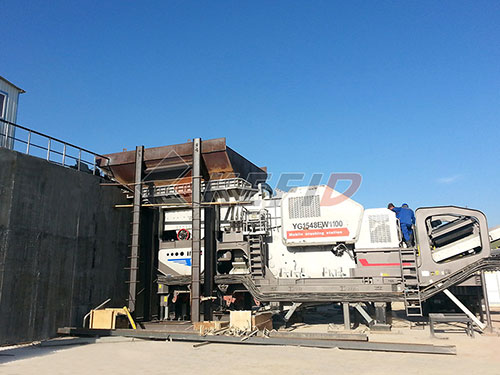
Conclusion Beyond Machinery
Specifying luxury quarry ballast crushing equipment ultimately defines commitment uncompromising quality It represents capital investment into precision engineering automation sustainability By selecting machinery that excels not just breaking rock but sculpting aggregate precise geometric forms operators secure their position as suppliers most demanding infrastructure projects world where foundation literally everything else built must perfect
