The Integrated Value Chain: How Design Services are Redefining the Role of Limestone Mining Wholesalers
The global limestone industry, a cornerstone of construction, agriculture, and industrial manufacturing, has long operated on a traditional model: miners extract the rock, processors crush and screen it, and wholesalers distribute the resulting aggregate or powder to end-users. However, in an increasingly competitive and specification-driven market, a significant evolution is underway. The most forward-thinking limestone mining wholesalers are no longer mere intermediaries in the supply chain; they are transforming into integrated solution providers by incorporating sophisticated Design Services directly into their value proposition. This integration represents a paradigm shift, adding immense value for clients and creating a powerful competitive advantage for the wholesalers who master it.
This article will explore the multifaceted nature of this emerging “Design Service” model, detailing its components, benefits for various stakeholders, and its implications for the future of the limestone industry.
Deconstructing the “Design Service” in Limestone Wholesaling
At its core, the “Design Service” offered by progressive limestone wholesalers is a consultative, technical, and value-engineering function. It moves beyond simply selling a bulk commodity to collaborating with clients on the optimal application of limestone products for their specific projects. This service can be broken down into several key components:
1. Geological and Material Science Consultation:
This is the foundational layer of the design service. It leverages the wholesaler’s intrinsic connection to the source—the quarry. Expert geologists and material scientists work to fully characterize the limestone from a specific deposit.
- Chemical Composition Analysis: Determining precise levels of Calcium Carbonate (CaCO₃), Magnesium Carbonate (MgCO₃), silica, clay, and other impurities. This is critical for industrial applications like flue gas desulfurization (where high purity is mandatory) or steel manufacturing.
- Physical Property Testing: Assessing characteristics such as hardness (on the Mohs scale), density, abrasiveness, porosity, and compressive strength. These properties directly influence the suitability of limestone for use as railroad ballast, concrete aggregate, or roofing granules.
- Color and Consistency Profiling: For dimension stone and architectural applications, consistent color and texture from one shipment to the next are paramount. Design services include meticulous quarry-face planning to ensure visual homogeneity over time.
By providing certified data sheets and technical reports from this analysis, the wholesaler transitions from a vendor to a trusted technical advisor.
2. Application-Specific Product Engineering:
Armed with deep material knowledge, wholesalers can now engineer their raw product into specialized formulations tailored for specific end-uses.
- Agricultural Lime Optimization: Rather than selling generic ag-lime, design services involve analyzing a farmer’s soil test results. The service then recommends a product with a specific particle size distribution (fineness) and Calcium Carbonate Equivalent (CCE) to most efficiently neutralize soil acidity and deliver calcium/magnesium nutrients.
- Concrete Aggregate Blending: For ready-mix concrete producers, the shape, size, and cleanliness of aggregate significantly impact concrete workability, strength, and durability. Design services can involve creating custom blends of coarse and fine aggregates that optimize particle packing density, reduce cement paste requirement (a cost-saving measure), and meet stringent project specifications (e.g., for dams or bridges).
- Environmental Sorbent Formulation: In air pollution control systems like scrubbers in coal-fired power plants or waste incinerators (Flue Gas Desulfurization – FGD), limestone must react rapidly with sulfur dioxide. Design services focus on grinding raw limestone to a precisely controlled particle size that maximizes surface area and reactivity while minimizing unreacted residue.
3. Logistics and Supply Chain Integration Design:
A bulk material is only as good as its delivery system. A sophisticated design service extends into logistical planning.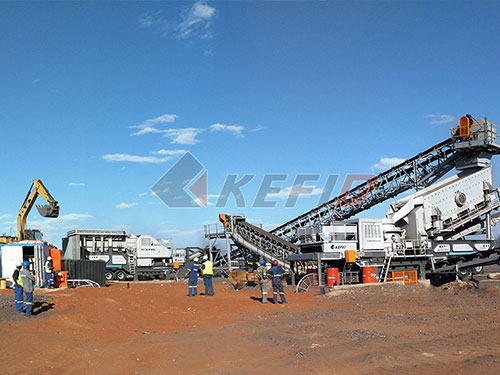
- Just-in-Time (JIT) Delivery Scheduling: For large-scale construction projects or continuous industrial processes like glass manufacturing or sugar refining (which uses lime for purification), downtime is catastrophic. Wholesalers design integrated supply chain solutions that synchronize quarry production with transport (trucking trains) to ensure a seamless flow of material without overburdening the client’s storage facilities.
- Packaging Solutions: While much limestone is shipped in bulk hoppers or by barge/railcar; some applications require packaging—from 25kg bags for small-scale farming to one-ton super-sacks for controlled handling in water treatment plants.
- Site-Specific Handling Analysis: The service may include advising clients on optimal storage pile management to prevent segregation of aggregate sizes or contamination.
The Compelling Value Proposition: Benefits Across the Board
The integration of design services creates tangible benefits for all parties involved in the limestone value chain.
For End-User Clients:
- Enhanced Performance & Efficiency: Clients receive a product scientifically matched to their needs—leading to better crop yields from optimized ag-lime; stronger concrete; more efficient pollution control; higher quality steel.
- Risk Mitigation: Technical data provided by the wholesaler de-risks procurement decisions.
- Cost Savings: While designed products may carry a slight premium upfront,
they often lead to significant savings through reduced waste,
lower dosage requirements,
improved process efficiency,
,and extended equipment life.
- Simplified Procurement: The client gains a single point of contact for both technical expertise
,and material supply,
streamlining their operations
,and reducing administrative overhead.
For The Wholesaler:
- Differentiation in Commodity Markets: In an industry where price is often king,
design services create an unassailable moat
.It becomes difficult
,if not impossible,
,for low-cost competitors without these capabilities
,to compete on value rather than just price per ton.
- Increased Customer Loyalty & Stickiness: When clients integrate your technical specifications into their core processes
,or rely on your JIT delivery system
,switching suppliers becomes highly disruptive
.This creates long-term
,stable partnerships.
- Higher-Margin Revenue Streams: Expertise commands a premium
.Clients are willing to pay more for products that deliver superior results
,and solve complex operational challenges.
- Market Expansion: A deep understanding of material science allows wholesalers to identify new applications
,and enter niche markets previously inaccessible through bulk sales alone
For Mining Operations:
The close collaboration between wholesaler-designers
,and miners allows quarries to optimize their own operations based on market demand signals
Challenges
Implementing this model is not without its hurdles:
1.Significant Investment: Building an in-house team requires hiring geologists chemists logistics experts which represents substantial overhead
2.Cultural Shift: Transitioning from sales-focused culture engineering solution-focused one requires strong leadership change management
3.Data Management: Centralizing vast amounts geological chemical performance data critical success requires robust IT systems
4.Client Education: Must invest time resources educating market about tangible ROI these enhanced services especially traditional price-sensitive buyers
Conclusion
The emergence comprehensive Design Services within realm Limestone Mining Wholesaling marks maturation industry It signifies move away transactional relationships towards strategic technology-driven partnerships By leveraging deep material science application engineering logistical expertise leading wholesalers no longer just sell rock they sell performance reliability optimized outcomes This integrated approach not only future-proofs their businesses but also elevates entire industry driving innovation sustainability efficiency across countless sectors depend upon versatile essential mineral As demand higher-performing specialized materials grows those who master art science design will undoubtedly lead market defining next chapter global limestone trade
