The Logistics of Heavy Industry: A Deep Dive into the Supply Chain for JC5000 Jaw Crusher Producers
The production of industrial machinery like the Terex Finlay (or similar OEM’s) JC5000 Jaw Crusher—a high-capacity, robust primary crushing unit designed for quarry, mining, and recycling applications—represents a pinnacle of heavy engineering. However, its journey from raw steel to an operational site is a monumental logistical undertaking. The logistics for JC5000 producers is not merely about transportation; it is a complex, multi-modal orchestration of heavyweight freight, precision scheduling, international compliance, and risk management that forms the backbone of capital goods supply chains. This article delves into the intricate logistics ecosystem surrounding the production and delivery of such mega-machines.
1. Inbound Logistics: Sourcing the Components of a Giant
A JC5000 Jaw Crusher, weighing approximately 50-60 tonnes in its base configuration, is an assembly of massive components: a fabricated steel frame, a hefty eccentric shaft (often forged), high-grade manganese steel jaw dies, large bore spherical roller bearings, heavy-duty flywheels, and sophisticated hydraulic systems and PLC controls.
- Supplier Network & Global Sourcing: Producers rarely manufacture all components in-house. Specialized forgings may come from Europe or Asia, premium-grade manganese steel from specific foundries globally, bearings from Sweden or Germany, and hydraulics from dedicated system integrators. Inbound logistics must manage this global network.
- Heavy-Duty Transport: Raw materials like steel plate arrive via bulk carrier ships and are transported to fabrication plants by rail or barge. Finished sub-assemblies (like a several-tonne shaft) move via specialized flatbed trucks or container ships. The key challenges are dimensional constraints (oversize loads) and securing cargo against damage.
- Just-in-Time (JIT) vs. Just-in-Case (JIC): Given the high value and size of components, pure JIT is risky. Producers often employ a hybrid model. Critical, long-lead items (forged shafts) are held in stock (JIC), while fabricated parts may be sequenced for JIT delivery to the assembly line to minimize inventory costs on the vast factory floor.
2. Production Logistics & Assembly Line Flow
The assembly plant itself is a logistical challenge.
- Internal Material Handling: Moving multi-tonne sub-assemblies between welding bays, machining centers, paint shops, and final assembly requires industrial cranes (often overhead bridge cranes with capacities exceeding 100 tonnes), specialized transporters, and rigorous planning.
- Line-Side Logistics: Ensuring that all nuts, bolts, hydraulic hoses, electrical harnesses, and smaller components are kitted and available at the precise workstation when the main structure is in place is crucial to avoid costly downtime in assembly.
- Pre-Delivery Testing: Once assembled, the crusher undergoes rigorous testing (often with run-in material). This requires logistical coordination to supply test aggregate and remove it afterward.
3. Outbound Logistics: The Main Event
This is where logistics for a JC5000 becomes most visible and complex. The crusher is often shipped partially disassembled to meet road/rail/shipping regulations.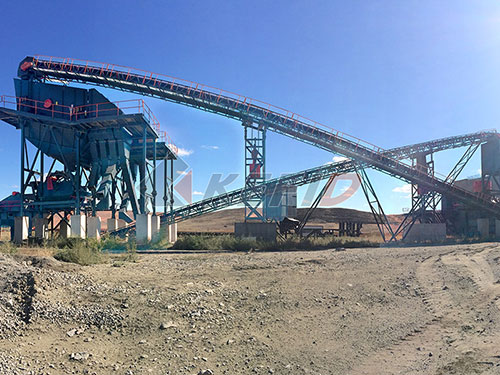
-
Modularization & Packing: The machine is broken into major modules: the main chassis with mounted jaw stock, the rear frame section (if modular), flywheels/guards removed separately,
the power unit (electric motor or diesel engine), and conveyor systems.
- Each module is meticulously crated or skidded on heavy-duty timber or steel frames.
- Critical surfaces (machined faces) are coated with protective compounds.
- Hydraulic lines are capped; electrical components are sealed against moisture.
-
Mode Selection & Multi-Modal Solutions:
-
Road Transport: For continental deliveries within regions like Europe or North America. This involves planning for abnormal load/oversize transport. A single JC5000 module can easily exceed standard width (2.55m) and height (4-4.5m) limits.
- Requires route surveys to check bridge heights, road widths,camber,and power line clearances.
- Needs police escorts,pilot cars,and permits from every jurisdiction traversed—a process taking weeks.
- Specialized trailers like multi-axle extendable low-loaders or modular trailers are used.
-
Sea Freight: For international exports,the primary mode.Modules are loaded as Break Bulk cargo or onto Flat Rack containers.
- Break Bulk: Individual modules are lifted by port cranes directly into the ship’s hold.This requires precise stowage planning for vessel stability.Susceptible to weather delays during loading/unloading.
- Flat Rack Containers: Modules are secured onto open-top metal frames that can be stacked on container ships.This offers better protection,speed,and tracking but has size limitations.Waterproof wrapping(lashed tarpaulins)is critical.
- Incoterms like FOB(Free On Board)or CIF(Cost Insurance Freight)are carefully defined between producer and buyer,delineating responsibility at each stage.
-
Rail Transport: Highly efficient for long land hauls where possible(e.g.,across China,Australia,N.America).Requires access to industrial spurs at both ends.Capacity constraints on railcar dimensions must be managed.
-
Documentation & Compliance: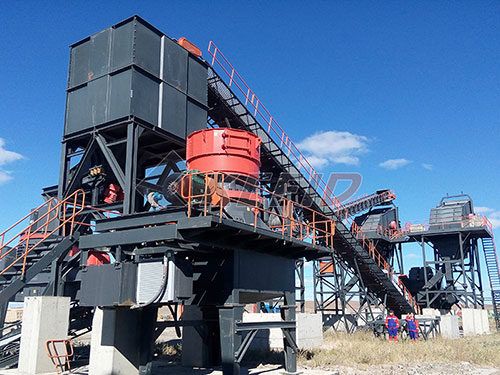
- A mountain of paperwork accompanies each shipment: commercial invoices,
packing lists,certificates of origin,material safety data sheets(for paints/lubricants),
dangerous goods declarations(for batteries),
and detailed weight/dimension certificates for freight calculations.
- Customs clearance requires accurate HS(Harmonized System) codes,tariff management,and knowledge of import duties on capital equipment in the destination country.
4. Specialized Challenges & Risk Management
- Insurance: High-value shipments require specialized marine cargo insurance covering “All Risks,” including theft,pilferage,nondelivery,bad stowage,jettison(casting overboard during storms),and fresh water damage.The premium reflects the high risk profile.
- Port Capabilities & Last-Mile Delivery: Not all ports can handle heavy-lift break bulk.The producer’s freight forwarder must confirm availability of suitable cranes(Shearleg cranes or floating derricks).The final leg from port to quarry site may be as challenging as an ocean crossing,involving remote roads not designed for such loads.This often requires local subcontractors with regional expertise.
- Lead Time Variability:
Unlike containerized goods,the schedule for project cargo like a JC5000 is fluid.Permit delays,
weather windows for ocean transport,and port congestion can stretch delivery timelines.Managing customer expectations through proactive communication is vital.
5.The Role of Technology & Strategic Partners
Modern producers rely heavily on technology:
- Enterprise Resource Planning(ERP)
systems integrate procurement,
production scheduling,and shipping.
Transport Management Systems(TMS)
optimize carrier selection
and track shipments in near real-time using GPS
for road movements
and AIS(Automatic Identification System)
for ocean vessels.Digital twins
of logistics processes help simulate
complex loading sequences
and identify bottlenecks.
Crucially,
success depends on strategic partnerships:
reliable heavy-lift freight forwarders
with global project cargo networks,
specialized haulage companies,
and experienced marine insurers.A trusted forwarder acts as an extension
of the producer’s logistics team,
navigating local regulations
and solving unforeseen problems—
like arranging a barge transfer if a bridge en route cannot be crossed.
Conclusion
The logistics behind delivering a single JC5000 Jaw Crusher encapsulates
the immense hidden effort required
to power global infrastructure development.It transforms physical manufacturing prowess into global market reach.For producers,mastering this labyrinthine process—
where meticulous planning meets brute-force transport—
is as critical as engineering excellence itself.An efficient,cost-effective,
and reliable logistics operation directly enhances competitiveness by reducing total landed cost,
ensuring on-time project commissioning,
and safeguarding brand reputation through damage-free delivery.In essence,the journey of this colossal machine from factory floor to rock face stands as a testament not only to mechanical innovation but also to human ingenuity in coordination,solving one massive puzzle after another across continents
