
The realm of mineral processing, aggregate production, and construction demolition hinges on the fundamental process of primary size reduction. At the heart of this stage, where robust reliability and raw power are non-negotiable, sits the jaw crusher. Among these mechanical titans, the JC5000 Jaw Crusher stands out as a paradigm of heavy-duty engineering, designed not merely to crush, but to dominate the most demanding applications with efficiency and longevity. This article delves into the design philosophy, manufacturing intricacies, technical specifications, and operational advantages that define the JC5000 as a cornerstone in modern crushing circuits.
The JC5000 is unequivocally a primary crusher, engineered for the first stage of comminution. Its design mandate is to accept large feed material—up to 400mm (16”) or more depending on configuration—and reduce it to a manageable product size for secondary processing. It finds its home in:
The overarching philosophy behind its manufacturing is over-engineering for reliability. Every component is sized not for the average load but for peak stresses and unforeseen tramp metal events. This results in a machine with exceptional uptime and a total cost of ownership that favors long-term operation over initial purchase price.
Manufacturing a crusher of this caliber involves precision fabrication, high-integrity castings, and rigorous quality control.
1. Frame and Structure:
The foundation is a heavy-duty welded steel frame, often constructed from high-tensile strength plate. Critical stress areas are reinforced with additional ribs and gussets. The frame is not merely a housing; it is a load-bearing structure designed to absorb immense cyclical forces without fatigue or deformation over decades of service. Advanced manufacturing techniques like stress-relieving heat treatments ensure dimensional stability after welding.
2. Crushing Chamber Dynamics:
The chamber’s geometry is optimized for both capacity and reduction ratio.
Typical JC5000 Specifications:
3. Toggle System & Safety:
A hallmark of robust jaw crusher design is its toggle system. The JC5000 employs either:
4. Drive System:
Power transmission is via V-belts from an electric motor to a flywheel-equipped drive pulley. The flywheels store energy on the return stroke of the jaw, smoothing out power demand peaks and contributing significantly to crushing efficiency during the power stroke.
Compared to smaller single-toggle crushers often used in secondary roles,the JC5000’s double-toggle mechanism typically offers lower wear rates per ton crushed on hard ,abrasive rock . Against gyratory crushers which compete directly in this size class ,jaw crushers like JC5000 generally have lower installation height ,simpler maintenance procedures,and better handlingof slabby material . However gyratories may offer slightly higher throughputsfor similar feed openingsin certain continuous-feed scenarios .
The manufacturing ofthe JC5000 Jaw Crusher representsa commitmentto brute-force engineering refinedby decadesof practical experience . Itisnotan experimentalor nicheproduct ;itisa provenworkhorsebuiltfornon-stopoperationunder punishingconditions . Fromthe metallurgicalchoicesinitscastings,tothe precisionmachiningofitsbearingsurfaces,andthe thoughtfuldesignofitschambergeometry ,everyaspectisoptimizedforone purpose : transformingmassive,intractablefeedmaterialintoa consistentflowofprimarycrushedproduct .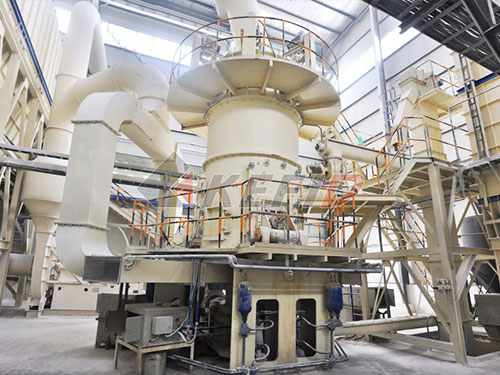
For any operationwhereprimarycrushingcapacityformsbottleneck,the selectionofa robustreliablemachineisthe mostcriticalcapitaldecision . Inthisarena,theJC5000standsasan embodimentofdependability –amachinethatdoesnotmerelyfunction,butperformsyearafteryear,makingitafoundationalassetinthe valuechainofresourceextractionandconstructioninfrastructureworldwide . Itscontinuedpresenceinhard-rockminesandmajorquarriestestifiestoitsenduringdesignphilosophy : thatintherealmofton-per-hourproduction ,thereisnosubstituteforover-builtqualityandsimplicityofpurpose
Lorem ipsum dolor sit amet, consectetur adipisicing elit. Consectetur sequi saepe ut sunt eveniet perferendis excepturi, iste obcaecati. Qui tempore hic sed quia soluta obcaecati vel.