The JC5000 Jaw Crusher: A Detailed Examination of a High-Capacity Laboratory and Pilot Plant Powerhouse
In the demanding worlds of mining, metallurgy, and construction materials research, the process of primary sample reduction is a critical first step. The integrity, representativeness, and efficiency of this initial size reduction directly impact the quality of all subsequent analysis and processing. For operations that require robust, high-capacity crushing of hard, large, and abrasive materials at a laboratory or pilot plant scale, the JC5000 Jaw Crusher stands as a benchmark in engineering excellence. This article provides a comprehensive examination of the JC5000, delving into its design philosophy, technical specifications, operational advantages, and its pivotal role in modern mineral processing and research workflows.
1. Design Philosophy and Core Application
The JC5000 is not merely a scaled-down version of an industrial quarry crusher; it is a purpose-built machine designed for a specific niche: high-throughput primary crushing in controlled environments. Its core design philosophy revolves around three key principles: robustness, reliability, and repeatability.
- Robustness: Engineered to handle continuous duty cycles with hard materials like granite, basalt, iron ore, and metallurgical slags that would quickly degrade lesser machines.
- Reliability: Built with heavy-duty components to minimize unplanned downtime—a critical factor in time-sensitive pilot plants and research projects where schedules are tight.
- Repeatability: The precision engineering ensures consistent gap settings, which translates to consistent product size distribution over time. This is paramount for generating representative samples for chemical assay or physical testing.
The primary application of the JC5000 lies in stationary laboratory and pilot plant operations. It serves as the first stage of size reduction for materials that are too large for fine-grinding mills to handle directly. Typical feed sizes can be as large as 250mm (10 inches), which it reduces down to a nominal product size of 10mm (3/8″) in a single pass, depending on the jaw setting.
2. Technical Specifications: A Deep Dive into its Capabilities
Understanding the technical specifications of the JC5000 reveals why it is considered a heavyweight in its class.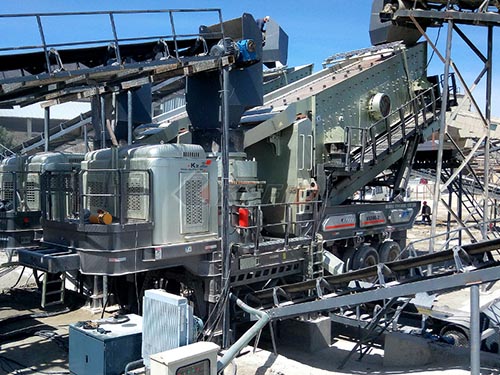
- Feed Opening: A substantial 500mm x 300mm (20″ x 12″) feed opening allows it to accept large lump samples directly from the mine face or stockpile without requiring pre-breaking with a hammer.
- Power Unit: It is typically driven by an 11 kW (15 HP) electric motor. This provides ample torque to crush even the most challenging ores without stalling.
- Crushing Mechanism: The JC5000 employs an aggressive elliptical crushing motion with a high eccentric throw. This action ensures positive bite, efficient fragmentation on the down-stroke, and rapid discharge of crushed material on the up-stroke, preventing choke-feeding and minimizing wear.
- Jaw Plates: A critical component of any jaw crusher. The JC5000 features massive jaw plates made from high-quality manganese steel. These are reversible and replaceable, significantly extending service life and reducing long-term operating costs.
- Throughput Capacity: Depending on the material characteristics (hardness, density) and the closed-side setting (CSS), the JC5000 can achieve throughputs ranging from 2 to 7 tonnes per hour. This high capacity makes it suitable not only for sample preparation but also for small-scale continuous pilot plant operations.
- Dust Extraction Point: An integrated dust extraction point allows for connection to a dust collection system. This is essential for maintaining a clean laboratory environment protecting operator health especially when processing silica-rich materials.
3. Key Features Driving Operational Excellence
Beyond its raw specifications, several key features distinguish the JC5000 from its competitors.
A) Heavy-Duty Frame Construction:
The crusher’s frame is constructed from heavy-duty steel plate, often with integral lifting points for safe and easy relocation within a plant or laboratory. This rigid construction absorbs the immense crushing forces without flexing ensuring alignment is maintained which protects bearings extends component life.
B) Advanced Safety Systems:
Safety is paramount when dealing with powerful machinery:
- Toggle System: Many models feature a robust toggle plate that acts as a mechanical fuse In case of an uncrushable object entering chamber this plate designed to fracture protecting more expensive components like eccentric shaft bearings from catastrophic failure
- Guarding: Full safety guards enclose flywheels drive belts providing essential protection operators
- Emergency Stop: Easily accessible emergency stop buttons are standard
C) Ease Maintenance Adjustment:
Designed with serviceability mind:
- Jaw Gap Adjustment: The closed-side setting CSS adjusted easily via hydraulic toggle ram mechanical shims allowing operators quickly change product size distribution meet specific requirements
- Accessible Components: Bearings lubrication points other wear parts readily accessible routine maintenance checks replacements minimizing downtime
D) Standardization Consumables:
As part larger family jaw crushers often shares common design elements consumable parts other models within manufacturer’s range simplifies inventory management reduces spare parts costs operations running multiple units
4. Comparative Advantage in Sample Preparation Workflow
In sample preparation chain integrity paramount avoid contamination ensure final analysis representative original bulk sample The excels this context:
- It accepts coarse heterogeneous sample producing more homogeneous mass crushed material
- Its ability produce consistent product size means subsequent splitting dividing processes more accurate
- By reducing entire large sample smaller fragments rather than just taking small sub-sample from surface eliminates potential sampling bias
For pilot plants simulating full-scale production circuit provides reliable predictable first-stage comminution data engineers use scale processes industrial levels confidence
5 Operational Considerations Potential Limitations
While exceptionally capable machine important acknowledge operational considerations ensure optimal performance:
- Requires stable foundation due significant weight dynamic forces generated during operation
- Generates significant noise dust necessitating appropriate personal protective equipment PPE engineering controls enclosures
- Initial capital investment higher than smaller less capable laboratory crushers making most suitable organizations serious commitment quality throughput
- Not designed ultra-fine grinding; output typically requires secondary tertiary crushing milling achieve analytical fineness
Conclusion
The Jaw Crusher represents pinnacle engineering dedicated laboratory pilot scale primary crushing Its combination brute strength precision control reliability makes indispensable tool modern mineral processing metallurgical chemical industries By enabling efficient reduction hard abrasive materials consistent repeatable manner lays foundation accurate analysis successful process development For any operation serious about high-capacity robust reliable sample preparation stands proven choice delivering long-term value operational excellence
