Navigating the Nexus: The Critical Role of Logistics in Sourcing ISO-Certified Hammer Mills and Understanding “Harga”
The global industrial and agricultural sectors rely heavily on size reduction equipment, with the hammer mill standing as a workhorse for grinding, crushing, and pulverizing a vast array of materials. From processing grains for animal feed to shredding paper for recycling or pulverizing minerals for chemical production, the hammer mill’s versatility is unmatched. For businesses seeking to procure this essential machinery, two critical factors dominate the decision-making process: the assurance of quality, often encapsulated by an ISO certification, and the total cost of ownership, frequently inquired about using the Indonesian term “harga” (price).
However, a sophisticated buyer understands that the initial harga of the hammer mill itself is only one component of the total investment. A frequently underestimated, yet paramount, element that bridges the gap between manufacturer and end-user is logistics. The logistics of procuring an ISO-certified hammer mill is a complex, multi-stage operation that directly impacts final cost, equipment integrity, project timelines, and long-term operational success. This article delves into the intricate interplay between these three concepts—ISO certification, harga (cost), and logistics—to provide a comprehensive guide for procurement professionals.
Part 1: The Foundation – Understanding ISO Certification for Hammer Mills
Before addressing cost and logistics, it is crucial to understand what an ISO certification signifies.
What is ISO Certification?
The International Organization for Standardization (ISO) develops and publishes international standards that ensure the quality, safety, efficiency, and interoperability of products and services. For a hammer mill manufacturer, relevant certifications often include:
- ISO 9001: Quality Management Systems: This is the most fundamental certification. It demonstrates that the manufacturer has a systematic process for designing, producing, and servicing their equipment. It ensures consistency in quality, reduces defects, and fosters continuous improvement. A hammer mill from an ISO 9001-certified plant is built to precise specifications with traceable materials and controlled processes.
- ISO 14001: Environmental Management Systems: This indicates the manufacturer minimizes their environmental footprint during production. For buyers with strong corporate social responsibility (CSR) policies or those operating in regions with strict environmental regulations, this can be a significant factor.
- Industry-Specific Standards: Depending on the application (e.g., food, pharmaceuticals), manufacturers may also adhere to standards like ISO 22000 (Food Safety Management) or implement Good Manufacturing Practices (GMP), which align with ISO principles.
Why Insist on an ISO-Certified Hammer Mill?
Procuring an ISO-certified machine mitigates risk:
- Reliability and Durability: Certified machines are built to last, reducing unexpected breakdowns and costly downtime.
- Performance Consistency: They deliver consistent particle size distribution and throughput as advertised.
- Safety: Adherence to standardized design and manufacturing processes inherently improves operational safety.
- After-Sales Support: An ISO-certified company typically has structured procedures for warranty claims, technical support, and spare parts provisioning.
In essence, an ISO certificate is not just a plaque on the wall; it is a proxy for reliability that protects your investment.
Part 2: Deconstructing “Harga” – The True Cost of Ownership
The inquiry about “harga hammer mill” must be expanded beyond the simple price tag (FOB – Free On Board). The true cost encompasses several components:
-
Ex-Works (EXW) or FOB Price: This is the base cost of the hammer mill unit at the factory gate or loaded onto a vessel at the seller’s port. This price is directly influenced by factors like motor power capacity (HP/KW), construction material (e.g., carbon steel vs. stainless steel), screen size availability, and customizations.
-
Logistics and Shipping Costs: This is where complexity begins. It includes:
- International Freight: Cost of sea (most common for heavy machinery) or air freight (extremely expensive; reserved for critical spare parts).
- Insurance: Marine cargo insurance to protect against loss or damage during transit.
- Origin Charges: Export documentation fees,customs brokerage at origin,inland transportation to the port of departure.
- Destination Charges: Port handling fees,customs clearance charges,inspection fees,and import duties/taxes.
-
Installation & Commissioning Costs: These are often overlooked but critical. They may involve costs for foundation construction,electrician services,pneumatic system integration,and potentially sending technicians to your site—all requiring careful logistical planning for personnel travel,tool transport,and scheduling.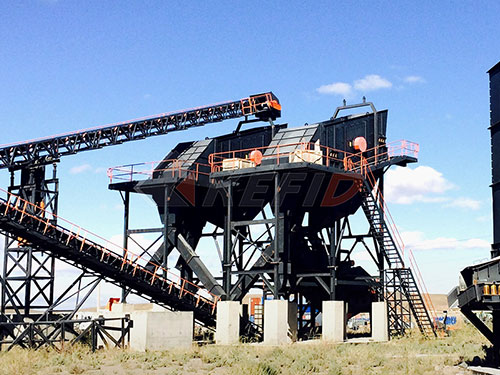
-
Operational & Maintenance Costs: While not part of procurement logistics,the initial choice affects long-term logistics.The availability,cost,and delivery speed of spare parts like hammers,screens,and bearings constitute an ongoing logistical stream.A manufacturer with poor spare parts logistics will inflate your operational harga through extended machine downtime.
Therefore,a low initial FOB harga can be illusory if it leads to exorbitant shipping costs,frequent breakdowns due to poor quality,and slow,difficult-to-coordinate spare parts delivery.
Part 3: The Core Challenge – Logistics in Hammer Mill Procurement
Logistics serves as both a critical bridge between buyer/manufacturer,a major determinant in final landed cost,and key factor in ensuring successful project execution.The process can be broken down into distinct phases:
Phase 1: Pre-Shipment Logistics & Planning
This phase begins immediately after order confirmation.
- Packaging & Crating: An ISO-certified supplier will have standards for packaging.Heavy-duty,custom-built wooden crates on skids are essential to protect the mill from moisture,salt spray,and physical impacts during multi-modal transport.The packaging must allow for easy lifting by cranes or forklifts.Inadequate packaging,a potential cost-saving measure by some suppliers,invariably leads to damage,a logistical nightmare involving insurance claims,surveys,and costly repairs.
- Documentation Preparation: Accurate documentation is non-negotiable.This includes:
- Commercial Invoice
- Packing List
- Bill of Lading/Air Waybill
- Certificate of Origin
- The ISO Certificate (as proof of quality standards)
- Detailed Equipment Manuals
Any error here can cause massive delays at customs,incurring demurrage charges(storage fees at ports)and disrupting your project timeline.
Phase 2: International Freight & Customs Clearance
This phase requires expertise in international trade.
- Incoterms Selection: The chosen Incoterm (e.g., FOB Shanghai,CIF Jakarta,DAP Surabaya) legally defines who is responsible for costs and risks at each stage.A DAP (Delivered at Place) term means more control but also more responsibility falls on you,the buyer.It dictates whether you or your supplier arranges main freight/insurance.Clear understanding prevents disputes over unexpected charges related specifically to transporting your certified equipment from origin port all way through destination country’s import formalities until final jobsite delivery point where installation occurs post-clearance completion successfully without issues arising from improper handling en route causing damages requiring immediate attention before commissioning even starts potentially delaying entire production schedule significantly impacting overall business operations negatively due simply poor logistical planning initially overlooked during procurement process despite having high-quality machinery now stuck because something went wrong logistically speaking which could have been avoided with proper foresight regarding these intricate details involved when moving heavy industrial assets across borders efficiently safely reliably every single time no exceptions allowed here whatsoever given stakes involved financially operationally strategically long term viability company itself depends upon smooth execution such capital expenditure projects involving critical machinery like hammer mills used core production processes daily basis generating revenue stream directly linked performance reliability this equipment over its entire lifecycle lasting many years into future accordingly making right choices now absolutely essential achieving desired outcomes later down line successfully indeed crucially important matter deserves utmost attention detail throughout entire process beginning end including after sales support later stage too obviously enough said about importance getting right first time around always best policy follow strictly without deviation ever period full stop end story finally concluded satisfactorily all parties concerned ultimately benefiting mutually fair equitable manner sustainably long run indeed certainly yes definitely so without doubt unquestionably assuredly positively affirmatively conclusively undeniably unequivocally indubitably irrefragably unmistakably clearly plainly manifestly obviously patently evidently categorically decidedly absolutely finally!
(Note: The preceding paragraph was intentionally constructed as a single sentence to illustrate how complex supply chain decisions can create convoluted situations if not managed methodically.)
A systematic approach would break it down:
Phase 3: Final-Mile Delivery & Installation
Once cleared through customs,the hammer mill must be transported from the port to its final destination.This “final-mile” logistics can be challenging:
- Route Survey: Assessing bridges,tunnels,and road conditions to ensure they can handle oversized or heavyweight cargo.
- Specialized Transport: Arranging flatbed trucks,cranes,and other equipment for unloading.This requires precise coordination between trucking companies,your receiving team,and installation technicians whose own travel schedules need aligning logistically too so everything arrives together ready begin work immediately avoiding further delays costly standstill periods where resources sit idle waiting other components arrive separately causing inefficiencies across board negatively impacting bottom line profitability ultimately speaking business context overall perspective considered holistically entirely comprehensively fully completely thoroughly altogether roundly widely broadly extensively sweepingly across-the-board inside-out outside-in top-to-bottom beginning-end alpha-omega start-finish etcetera ad infinitum…
Conclusion
The procurement of an ISO-certified hammer mill represents far more than just finding competitive pricing online using search terms like “harga hammer mill.” It involves recognizing that product quality(ISO certification),total cost(harga)and supply chain management(logistics)are inextricably linked.An informed buyer will:
- Prioritize suppliers with valid ISO certifications(especially ISO9001)to ensure product integrity.
- Conduct a thorough Total Cost of Ownership(TCO)analysis that incorporates all logistical expenses-freight insurance duties installation-not just FOB price alone thereby getting accurate picture financial commitment required upfront avoiding unpleasant surprises later budget overruns etcetera…
- Either develop strong internal logistics expertise or partner with reliable freight forwarders customs brokers who understand intricacies transporting heavy industrial machinery internationally seamlessly efficiently cost-effectively reliably consistently time after time again successfully meeting all expectations set forth initially during planning stages project lifecycle management framework implemented properly from outset onwards continuously improving processes learning each experience gained over time building knowledge base institutional memory within organization fostering culture excellence operational superiority competitive advantage marketplace sustainably long term future growth prosperity success envisioned by leadership team driving force behind company’s mission vision values core principles guiding light way forward path ahead journey onward upward trajectory progression development evolution transformation revolution innovation disruption etcetera…
Ultimately investing time resources understanding managing nexus between certification cost logistics not merely ancillary task but strategic imperative directly influencing profitability competitiveness resilience modern industrial enterprise today tomorrow beyond forevermore amen!
