
Iron Ore Crushing Plant Producer Datasheet: A Comprehensive Technical and Operational Overview
An Iron Ore Crushing Plant Producer is a specialized industrial entity responsible for the primary and secondary size reduction of mined iron ore into a granular, conveyable product suitable for downstream beneficiation processes. This datasheet provides a detailed, objective analysis of the core components, operational parameters, technological considerations, and industry benchmarks that define a modern, efficient producer in this sector. The role of these plants is critical in the mineral processing chain, as effective crushing directly influences the efficiency of grinding, separation (magnetic or gravity), pelletizing, and ultimately, the quality and cost of steel production.
The fundamental purpose of an iron ore crushing plant is to reduce large run-of-mine (ROM) ore, which can measure up to 1.5 meters in diameter, to a fine particle size typically under 25-30mm (depending on downstream requirements). This process liberates valuable iron-bearing minerals (e.g., magnetite, hematite) from gangue material (silica, alumina), preparing the ore for further concentration. A producer’s capability is measured by its capacity (tons per hour), product size consistency, operational availability (>90% target), and overall cost per ton crushed.
A standard plant follows a multi-stage crushing circuit:
A producer’s datasheet would highlight these measurable parameters: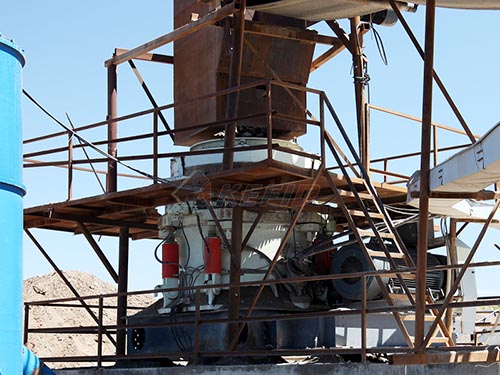
| Parameter | Specification Range / Description | Importance |
|---|---|---|
| Design Capacity | 1,000 – 10,000+ TPH (Tons Per Hour) | Defines plant scale and capital investment. |
| Feed Size (ROM) | 0 – 1500 mm | Dictates primary crusher selection. |
| Product Size (P80) | 80% passing 25mm to 12mm | Key contract specification for downstream processes. |
| Ore Characteristics | Abrasion Index (Ai), Work Index (Wi), Moisture Content,Silicous vs. Clayey Gangue | Determines wear rates, crusher type selection,and potential for clogging/choking. |
| Power Draw | Primary Crusher: 200-1000 kW; Entire Plant: Multiple MWs | Major operational cost driver; efficiency is paramount. |
| Availability / Uptime | Target >90% (excluding planned maintenance) | Measure of reliability and effective maintenance planning. |
| Wear Part Consumption | Manganese steel liners (mantle/concave), screen meshes | Directly impacts operating costs; linked to ore abrasiveness.A key differentiator among producers is their wear management strategy |
Leading producers differentiate themselves through technology adoption:
Producers must consistently manage several challenges:
1.Variable Ore Hardness & Feed Grade: Geological variation can cause fluctuations in crusher loadand product yield.Solution:Blending in stockpile/feed hopperand APC systems that reactto power draw changes.
2.High Abrasion & Wear Costs: Iron oreis notoriously abrasive.Solution:Useof premium-grade,micro-alloyed wear materials;optimized liner profilesfor better nip anglesand reduced sliding;modular designsfor faster liner changes.
3.Moisture & Clay Content: Wet/sticky orecancause pluggingin chutes,screens,and crusher cavities.Solution: Adequate hopper designwith vibratorsor air cannons;selectionof non-clog screens;in extreme cases,drying circuitsmay be considered.
4.System Reliability: The failureof onecritical component(e.g.,primarycrusheror main conveyor)stopsentireplant.Solution:Robust redundancydesign(e.g.,dual feed conveyors),comprehensivepreventive maintenance schedules,and ample spare parts inventoryon-site.
The business modelofan ironorecrushingplant produceris capital-and energy-intensive.Capital Expenditure(CAPEX)coversland acquisition,civil works,crushers,screens,materialhandling systems,and electrical infrastructure.The trendis towardprefabricatedmodular plantsto reduce onsite construction timeand cost.
Operating Expenditure(OPEX)is dominatedby:
•Power consumption(~30-40%of OPEX)
•Wear part replacement(~20-30%)
•Laborandmaintenance
•Dust suppressantsand other consumables
Producersaimto minimize totalcostper toncrushedthroughscale,efficiency gains,and long-term service contractsforwear parts.
An Iron Ore Crushing Plant Producer operates at the vital intersectionof miningand metallurgy.The modern produceris not merelyan operatorof heavy machinerybutatechnology-integrator focusedon deliveringconsistentproduct specificationatthe lowestpossiblecostwiththe highestavailabilityande nvironmental stewardship.Key success factorsinclude selectingtherightcrushingcircuitforthe specificorebody geology ,investinginrobustautomationandcontrolsystems ,and implementingapredictive ,data-drivenmaintenancephilosophy .Asdownstreamsteelmakers demandmore precisefeedmaterialfor theirblast furnacesand directreductionplants ,the roleofthe crushingproducerbecomesincreasinglystrategic ,withperformance directlyimpactingthe efficiencyofthe entireironandsteelvaluechain .
Lorem ipsum dolor sit amet, consectetur adipisicing elit. Consectetur sequi saepe ut sunt eveniet perferendis excepturi, iste obcaecati. Qui tempore hic sed quia soluta obcaecati vel.