
Iron ore is the fundamental raw material for global steel production, the backbone of modern infrastructure. Before this vital commodity can be fed into a blast furnace or direct reduction plant, it must undergo a series of rigorous physical and metallurgical processes to upgrade its iron content and ensure consistent quality. The Iron Ore Crushing and Processing Plant is the critical first link in this value chain. This datasheet provides a detailed, objective technical overview of a standard plant designed to transform run-of-mine (ROM) iron ore into a saleable product, typically lump ore and sinter or pellet feed.
The primary objective of an iron ore processing plant is to increase the iron (Fe) grade and reduce the concentration of impurities (primarily silica, alumina, phosphorus, and sulfur) through physical separation methods. The design is governed by the ore characteristics (hematite vs. magnetite, liberation size, hardness/abrasiveness, moisture content) and the target product specifications.
Key Design Parameters:
A conventional plant follows a multi-stage sequence of size reduction and beneficiation.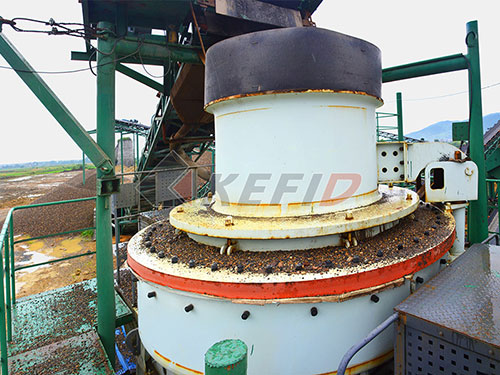
Located near the mine pit, this station handles the initial size reduction.
This closed-circuit system further reduces ore size for optimal liberation.
The core where waste material (gangue) is separated from valuable iron minerals.
For Hematite Ores:
For Magnetite Ores:
Concentrate must be dewatered for transport and handling.
| Equipment | Type | Key Function | Typical Specifications |
|---|---|---|---|
| Primary Crusher | Gyratory Crusher | Initial size reduction | Feed opening: 60-140 cm; Capacity: >5,000 tph; Power: ~450-1,000 kW |
| Secondary Crusher | Cone Crusher | Closed-circuit crushing | Max feed: 250mm; CSS: 25-60mm; Power: ~300-500 kW |
| Tertiary Crusher | Short Head Cone/HPGR | Fine crushing/grinding | HPGR Roll Diameter: up to 2.8m; Power: up to 2 x 4,500 kW |
| Vibrating Screen | Banana/Multi-slope | Size classification | Size: up to 3m x -10m; Decks: -4; Separation cut: -12mm |
| Ball Mill | Overflow/Grate Discharge | Fine grinding (magnetite) | Diameter/Length: up to -8m x -14m; Power: up to -20 MW |
| Magnetic Separator (LIMS) | Drum Type (Wet) | Recovers magnetite&nbpsp;-&nbpsp;-&nbpsp;-&nbpsp;-&nbpsp;-&nbpsp;-&nbpsp;-&nbpsp;- | – Drum diameter:~1200 mm ; Background field:~3000 Gauss | |
| Spiral Concentrator | Trough profile ; Number of turns:~5–7 ; Feed rate per start:~2 tph | ||
| High Rate Thickener | Diameter:~45 m ; Drive torque:~1–000 kNm ; Underflow density:~50–65% solids | ||
| Hyperbaric Disc Filter | Filter area:~300 m² ; Operating pressure:~6 bar ; Cake moisture:<9% |
Modern plants are highly automated using a Distributed Control System (DCS)and Programmable Logic Controllers (PLCs)
• Process Control:Optimizes crusher CSS power draw mill charge density thickener bed level etc
• Expert Systems:Use historical dataand AIfor predictive maintenanceand grade control
• Metal Detection&Tramp Removal:Magnetsand metal detectorsprotect downstream equipment
• Power Supply:A large plant requiresa dedicated HV substationwith consumption rangingfrom~15to~50 kWhper tonneof ore processed
• Water Supply:Significant wateris required(~2–4 m³per tonne);recirculationfrom thickenersis criticalminimizing fresh water intake
• Dust Suppression:Comprehensive systemincluding wet dust suppressionat transfer points baghousesand covered conveyors
• Tailings Management:Tailings slurryis pumpedtoa secure tailings storage facility(TSF)for disposaland water recovery
• Dust Emissions:Controlledvia enclosure suppression systemsand filtration meeting particulate matter(PM10 PM2·5)standards
• Noise Control:Crushers millsandscreensare housedin acoustically treated buildingswith hearing protection zones
• Water Management:Zero liquid discharge(ZLD)designsare increasingly standardpreventing contaminationof local waterways
• Safety Systems:Isolation lock-out/tag-out(LOTO)guarding emergency stopsand comprehensive gas monitoringin confined spaces
• Plant Availability:>90%(excluding planned maintenance)
• Overall Equipment Effectiveness(OEE):>82%for critical equipment streams
• Iron Recovery:Hematite plants:~70–85%; Magnetite plants:~90–98%
• Product Quality Consistency:>95%of shipmentswithin target Fe gradeand silica specifications
• Spectific Energy Consumption:kWh/tprocessed monitored continuouslyfor optimization
An iron ore crushingand processing plantis a complex integrated systemof comminution classificationand separation technologies Its designis meticulously tailoredto the specific mineralogyofthe deposit balancing capital expenditurewith operational efficiencyandrecovery The evolutiontowards more automated energy-efficientand water-conscious designsdriven by digitalizationandsustainability imperatives continues tomake these plantsmore resilient productiveandenvironmentally responsible As global steel demand evolves these facilities remainthe indispensableenginefortransforming natural mineral resourcesintothe refined materialsessentialfor economic development
Lorem ipsum dolor sit amet, consectetur adipisicing elit. Consectetur sequi saepe ut sunt eveniet perferendis excepturi, iste obcaecati. Qui tempore hic sed quia soluta obcaecati vel.