Iron Ore Crushing Plant OEM Factory Specification: A Comprehensive Technical Guide
In the global mining and mineral processing industry, the efficiency and reliability of an iron ore crushing plant are paramount. As a critical first step in the beneficiation chain, the crushing plant’s design and specifications directly influence downstream processes, operational costs, and overall project economics. This article provides a detailed, objective examination of the specifications and considerations for an Original Equipment Manufacturer (OEM) factory producing iron ore crushing plants. We will delve into the core components, design philosophies, technical parameters, and evolving industry standards that define these complex industrial systems.
1. Introduction: The Role of Crushing in Iron Ore Processing
Iron ore, as mined, exists in large, irregularly shaped lumps that can be over 1.5 meters in diameter. The primary objective of crushing is to reduce this run-of-mine (ROM) ore to a manageable size suitable for subsequent grinding, separation (magnetic or gravity), and pelletizing or sintering. An OEM factory specializing in these plants does not merely supply machinery; it delivers an integrated system engineered for maximum availability, energy efficiency, and product consistency. The factory’s specifications are a blueprint for achieving these goals under specific geographical, geological, and logistical constraints.
2. Core Components & Their OEM Specifications
A turnkey iron ore crushing plant from a reputable OEM typically consists of several stages—primary, secondary, tertiary, and sometimes quaternary crushing—each with meticulously specified equipment.
A. Primary Crushing Station:
- Crusher Type: Primarily uses Gyratory Crushers for high-capacity operations (>5,000 t/h) or Jaw Crushers for smaller capacities.
- OEM Specifications:
- Feed Opening: Must accommodate the maximum expected ROM lump size with a safety margin (e.g., 1.5x the largest lump).
- Main Shaft & Mantle: Forged from high-strength alloy steel (e.g., ASTM A668). Specifications include hardness (Brinell), yield strength (>700 MPa), and impact toughness values.
- Drive System: Includes motor power rating (often 500-1500 kW), type (high-voltage squirrel cage), starting method (soft starter/VSD), and gear rating.
- Hydraulic System: Specifies pressure range (for setting adjustment and overload relief), accumulator size, and fail-safe protocols.
- Structural Frame: Fabricated from heavy-duty steel plate (e.g., S355JR), designed for dynamic loads exceeding 3x static weight.
B. Secondary & Tertiary Crushing Stages:
- Crusher Type: Almost exclusively Cone Crushers (hydraulic adjustment). High-Pressure Grinding Rolls (HPGR) are increasingly specified for energy-efficient tertiary duty.
- OEM Specifications:
- Chamber Design: Optimized profile (standard, coarse, fine) for feed size from primary stage and desired product P80 (80% passing size).
- Eccentric Throw & Speed: Precisely defined to control throughput capacity and product gradation.
- Liner Material: Manganese steel grades (e.g., ASTM A128) or composite liners with chrome white iron for extreme abrasion resistance. Liner thickness profiles are critical.
- Automation & Control: Integration with sensors for power draw, cavity level (CSS), pressure, and temperature for real-time optimization via the plant’s PLC/SCADA system.
C. Auxiliary Systems with Critical Specs:
- Feed Hoppers & Apron Feeders: Specified by pan width, length, flight material thickness (abrasion-resistant steel), chain tensile strength, and drive torque capacity to handle direct dump from large haul trucks.
- Conveying System: Belts are specified by width (>1200mm common), carcass strength (ST rating >2000 N/mm), cover grade (minimum DIN 22102 Grade Y for high abrasion), idler spacing/sealing class (IP66/67), and pulley shaft diameter/deflection limits.
- Dust Suppression & Collection: High-pressure misting systems with nozzle type/sizing specification; baghouse filters with fabric type (PTFE-coated for moisture resistance) and air-to-cloth ratio.
3. Foundational Design Philosophy & Engineering Standards
An OEM factory’s offering is governed by overarching design principles:
- Availability & Reliability: Targets >92% mechanical availability. This drives specifications like dual lubrication systems on crushers with redundant pumps/filters/motors.
- Maintainability: All major components have defined maintenance access clearances per ISO standards. Modular design allows liner changes or shaft replacement within specified downtime windows.
- Energy Efficiency: Crusher motors must meet IE3/IE4 efficiency classes per IEC 60034-30-1 specifications. System design minimizes idle running of conveyors through VFD control logic.
- Process Flow Flexibility: The plant layout allows for bypassing certain crushers or changing between open/closed circuit configurations via specified chute work with diverter gates.
Engineering adheres to international standards:
- Structural Design: ISO 5049-1 (Mobile equipment) or relevant local codes like AS4100/DIN 18800.
- Machinery Safety: ISO 13849 / IEC 62061 for safety-related control systems; guarding per ISO 14120.
- Vibrating Equipment: Dynamic load calculations per ISO 10816 for vibration limits.
4. Key Technical Parameters in Factory Specification Documents
A typical OEM proposal includes exhaustive data sheets: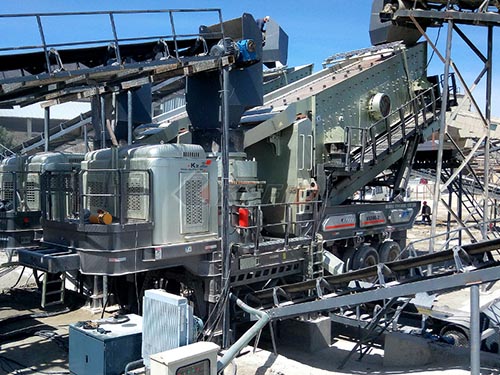
- Capacity Rating: Defined as metric tons per hour (t/h) under stated conditions of material characteristics—specifically Bulk Density (~2.4-2.8 t/m³ for iron ore), Moisture Content (<5% typically), Abrasion Index (<0.6 Bond Abrasion Index is soft; >0.8 is highly abrasive), Work Index (~10-14 kWh/t).
- Product Size Distribution: Guaranteed P80/P100 sizes after each stage presented as full sieve analysis curves meeting downstream mill feed requirements.
- Power Consumption: Total connected load vs. operating load; specific energy consumption in kWh/t is a key performance guarantee.
- Noise Emission Levels: Guaranteed dB(A) at specified distances per ISO 4871.
- Design Life & Duty Ratings: Major structural components often have a minimum design life of 25+ years under defined duty cycles; mechanical components have L10 bearing life ratings exceeding 60,000 hours.
5.The Modern Imperative: Digitalization & Sustainability
Contemporary OEM specifications extend beyond hardware:
- Digital Twin & Simulation: Plants are modeled using Discrete Element Method (DEM) software to predict flow dynamics before fabrication begins—a key selling point from advanced OEMs.
- IIoT Integration: Specification of sensor networks feeding data to cloud platforms enables predictive maintenance based on vibration analysis trends rather than fixed-hour schedules.
Water Recycling Systems: Closed-loop water circuits are standard spec due to environmental regulations requiring zero process water discharge at site boundaries.
Conclusion
The specification sheet from an iron ore crushing plant OEM factory represents a complex synthesis of mechanical engineering excellence materials science process metallurgy automation technology environmental compliance It is not merely list parts but comprehensive performance contract that balances capital expenditure against decades operational cost Through relentless focus durability efficiency integration modern digital tools leading OEMs provide mining companies robust foundation upon which entire value chain built As iron ore grades decline deposits become more remote challenging these specifications will continue evolve demanding even greater innovation precision from manufacturing partners Understanding these details essential any stakeholder involved planning procurement operation modern mineral processing facility
