The Affordable Iron Ore Crushing Plant: A Strategic Guide for Cost-Effective Operations
In the fiercely competitive and cyclical mining industry, the pursuit of affordability in capital expenditure (CAPEX) and operational expenditure (OPEX) is not merely a goal but a necessity for survival and profitability. For project developers and mining companies, especially small to mid-tier operators or those in emerging markets, the concept of an “affordable iron ore crushing plant” is paramount. This article delves into the multifaceted approach to achieving a cost-effective, reliable, and efficient crushing circuit without compromising on the fundamental requirements of throughput, product quality, and long-term viability.
1. Defining “Affordability” in Crushing Plant Context
Affordability transcends the initial purchase price. A truly affordable iron ore crushing plant is one that optimizes the Total Cost of Ownership (TCO). This encompasses: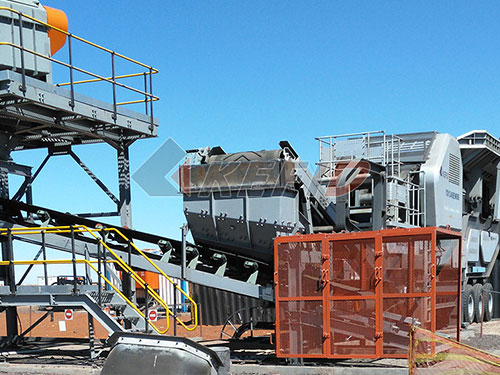
- Capital Costs (CAPEX): Procurement of equipment, civil works, structural steel, electrical infrastructure, and engineering.
- Operational Costs (OPEX): Power consumption, wear parts (liners, blow bars, mantles), labor, maintenance downtime, and consumables.
- Lifecycle Costs: Includes major overhauls, potential upgrades, and decommissioning.
The objective is to design a plant that balances these factors to deliver the lowest cost per ton of crushed material over its operational lifespan.
2. Core Strategies for Achieving an Affordable Plant Design
A. Right-Sizing and Simplicity of Flow Sheet
The most common source of unnecessary cost is an over-designed plant. A meticulous analysis of the ore body (competence, abrasiveness, silica content), required product sizes (lump vs. fines), and annual throughput is essential.
- Modular and Pre-Assembled Plants: These have revolutionized affordable plant construction. Modules are built in controlled factory environments, reducing on-site labor costs, construction time, weather delays, and engineering overheads. They offer predictability in both budget and schedule.
- Two-Stage Crushing vs. Three-Stage: While a three-stage (primary, secondary, tertiary) circuit offers superior reduction ratios and product shape control, a well-configured two-stage circuit can be perfectly adequate for many iron ore applications. Eliminating one entire crushing stage drastically reduces CAPEX in equipment, conveyors, dust suppression systems, and structural supports.
- Open Circuit vs. Closed Circuit: Running secondary or tertiary crushers in open circuit (without a screening return loop) simplifies design but offers less control over product size. A detailed trade-off study between the added cost of screens and conveyors for closed-circuit operation versus the potential premium earned for tightly sized product or the downstream processing costs must be conducted.
B. Strategic Equipment Selection
Choosing the correct type of crusher is critical for both performance and operating costs.
- Primary Crushing: For affordable setups with large feed sizes from mining faces,
- Gyratory Crushers offer high throughput but at a high CAPEX; typically justifiable only for very large-scale operations.
- Jaw Crushers are often the most cost-effective primary option for medium-scale plants due to their lower initial cost relative to gyratories at smaller capacities (<1000 tph), mechanical simplicity leading to easier maintenance by local teams.
- Secondary/Tertiary Crushing:
- Cone Crushers are standard for hard/abrasive iron ores due to their robust design; however they have higher liner costs than impactors.
- High-Pressure Grinding Rolls (HPGR) present an interesting case: while their CAPEX is high compared to cone crushers they can offer significant OPEX savings through dramatically lower energy consumption (~20-30% less) as well as potential downstream benefits like improved liberation which can reduce grinding energy if further processing is required.
- The choice hinges on long-term energy prices versus available capital.
C. Embracing Technology for OPEX Reduction
Modern technology enhances affordability through efficiency gains:
- Automation & Process Control: Basic PLC-based systems with variable frequency drives (VFDs) on feeders allow load-based operation preventing choke feeding or running empty saving power reducing wear optimizing throughput per unit energy consumed – all contributing directly towards lower OPEX while requiring modest investment compared with overall plant cost .
- Condition Monitoring: Simple vibration temperature sensors installed on crushers screens conveyors enable predictive maintenance preventing catastrophic failures extending component life scheduling downtime efficiently avoiding costly unplanned stoppages which cripple production especially critical when operating with minimal redundancy .
3.The Role of “Plant Makers” in Delivering Affordability
A reputable plant maker or engineering procurement construction management firm does not simply sell equipment; they deliver solutions focused on lifecycle economics:
1.Integrated Design Philosophy: They ensure all components from dump hopper through stockpile are harmonized eliminating bottlenecks ensuring smooth material flow maximizing utilization minimizing idle time .
2.Wear Part Optimization: Partnering with crusher manufacturers offering advanced metallurgy manganese steel martensitic chrome alloys can extend liner life significantly reducing change-out frequency labor costs associated downtime .
3.Localization Strategy: An affordable plant maker will advocate sourcing non-critical components structural steel fabrication locally where possible cutting transport costs import duties supporting local economy building community relations which often translates into smoother project execution .
4.Lifecycle Support Packages: Offering guaranteed performance contracts fixed-price maintenance agreements spare parts kits help operators budget accurately manage cash flow avoiding financial surprises .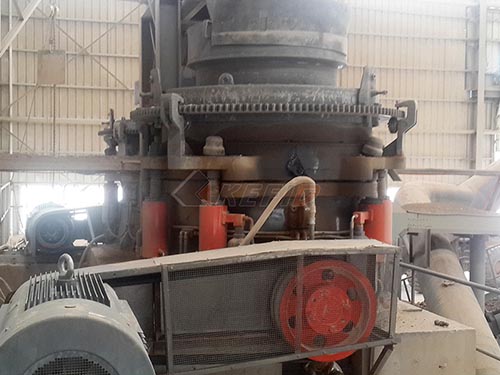
4.Economic Considerations Beyond Equipment
- Site Layout & Infrastructure: Minimizing conveyor runs distances between crushing stages reduces both CAPEX belt replacement costs power needed drive them . Utilizing natural topography gravity feed where possible saves considerable energy .
- Energy Efficiency: As power constitutes ~40-50% OPEX selecting high-efficiency motors designing systems minimize no-load running investing renewable sources like solar hybrid systems viable long-term strategy despite higher upfront investment .
- Labor & Training: Designing maintainable plants accessible safe reduces specialized labor requirements lowering long-term salary expenses . Comprehensive training local crew ensures optimal operation quick troubleshooting .
Conclusion: A Holistic Approach to Value
Building an affordable iron ore crushing plant requires moving beyond simplistic price comparisons toward sophisticated value engineering . It involves collaborative partnership between mine owner engineer where clear understanding operational parameters financial constraints established early . Key lies adopting holistic view total cost ownership embracing modular designs appropriate technology strategic equipment selection supported by robust lifecycle planning from reputable maker .
Ultimately most affordable plant one reliably meets production targets consistently low operating costs over decades thereby ensuring project remains viable even during downturns commodity price cycles . By focusing simplicity efficiency maintainability miners can secure competitive advantage turning challenge affordability into cornerstone sustainable profitable operation . In today’s market where margins scrutinized every dollar saved crushing circuit flows directly bottom line making pursuit affordability not just technical exercise but fundamental business imperative .
