
The iron ore industry forms the backbone of global steel production, and at the heart of its upstream processing lies the critical operation of crushing. An iron ore crushing plant is a complex system of heavy-duty machinery designed to reduce mined ore from large run-of-mine (ROM) fragments to a finely crushed product suitable for further beneficiation. The export market for these plants is a sophisticated, high-value segment of the mining equipment industry, dominated by specialized engineering firms. The cost of such a system is not a simple sticker price but a multi-variable equation reflecting engineering complexity, logistical challenges, and strategic market positioning.
The global market for iron ore crushing plants is oligopolistic, with a handful of major players holding significant market share due to their technological prowess, extensive experience, and financial capacity to execute large-scale projects.
Metso Outotec (Finland) & Sandvik (Sweden): These Nordic giants are arguably the leaders in this space. They offer complete, integrated plant solutions from design to commissioning. Their strength lies in proprietary crusher technology (like Metso’s HPGRs and cone crushers or Sandvik’s hybrid rolls) known for high efficiency, reliability, and automation readiness. They cater primarily to large-scale mining corporations (e.g., Vale, Rio Tinto, BHP) requiring high-capacity (5,000 – 10,000+ tph), highly automated systems.
FLSmidth (Denmark): Another European powerhouse with deep roots in minerals processing. FLSmidth provides robust plant designs featuring their gyratory and jaw crushers, often focusing on total cost of ownership and energy efficiency. They are strong in both greenfield projects and modernizations.
ThyssenKrupp Industrial Solutions (Germany): Renowned for their massive gyratory crushers, which are often the primary crusher of choice for the world’s largest open-pit iron ore mines. Their plants are engineered for extreme duty and maximum throughput.
Chinese Manufacturers: Companies like NFLG (NanFangLuoGong), SBM Machinery, and Shanghai Zenith have become formidable exporters in recent decades. They compete aggressively on cost, offering competent technology at significantly lower capital expenditure (CAPEX). While historically perceived as following technological trends, leading Chinese firms now invest heavily in R&D. They dominate markets in Africa, Southeast Asia, and parts of South America where initial budget constraints are a primary concern.
Specialized Regional Players: Firms like Australia’s Bradken (now part of Hitachi) excel in wear parts and modular designs but typically do not supply full turnkey plants like the majors.
The cost of an exported iron ore crushing plant can range from several million USD for a small modular setup to over $100 million for a massive turnkey facility for a mega-mine. The breakdown is complex:
1. Equipment Costs (The Core Capital Expenditure – CAPEX):
2. “Soft” Costs & Engineering: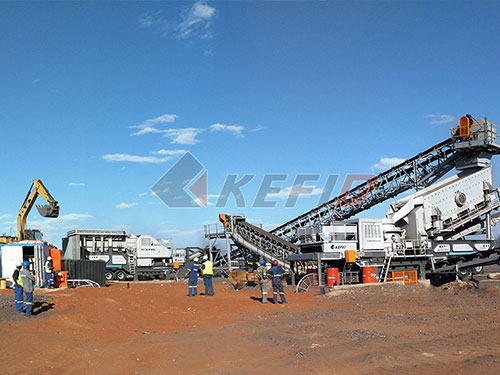
3. Site-Specific Factors Drastically Influencing Cost:
How the plant is purchased dramatically affects the quoted price:
Smart buyers evaluate Total Cost of Ownership (TCO):
The export market for iron ore crushing plants is characterized by a clear dichotomy between premium technology providers offering high-efficiency integrated solutions at elevated CAPEX versus value-focused manufacturers offering competitive core technology with lower upfront costs.
Ultimately,the “cost”is not merely an invoice figure.It represents an investment decision balancing initial capital outlay against decades-long operational performance.The choice between exporters hinges on project-specific factors:the mine’s scale,lifetime,funding structure,and strategic priorities regarding automation,sustainability,and operational resilience.As iron ore grades decline globally,pushing demand toward more complex processing,the trend favors exporters who can deliver not just hardware,but intelligent,sustainable,and energy-optimized systems that minimize TCO over an asset’s entire lifecycle.This ensures that while purchase negotiations may focus on price,the true determinantof success lies intheplant’s long-term contributionto profitableand sustainableore production
Lorem ipsum dolor sit amet, consectetur adipisicing elit. Consectetur sequi saepe ut sunt eveniet perferendis excepturi, iste obcaecati. Qui tempore hic sed quia soluta obcaecati vel.