
The global steel industry, a fundamental pillar of modern infrastructure and manufacturing, is built upon a continuous and efficient supply of iron ore. Before this critical raw material can be smelted into steel, it must undergo a series of rigorous size reduction and beneficiation processes. At the heart of this preparatory stage lies the Iron Ore Crushing Plant – a complex assembly of heavy-duty machinery designed to transform raw, mined ore into calibrated feedstock for blast furnaces or direct reduction plants. The role of the Iron Ore Crushing Plant Exporter, therefore, transcends mere equipment sales; it represents the transfer of core industrial capability, engineering excellence, and operational reliability to mining regions worldwide. This article provides a detailed examination of this niche yet vital sector within the global mining equipment market.
An iron ore crushing plant is not a single machine but an integrated system, or “circuit,” designed for specific ore characteristics and product requirements. The primary objective is to reduce large run-of-mine (ROM) ore, which can be up to 1.5 meters in diameter, down to a finely crushed product typically under 30mm, often as fine as 6mm for pellet feed.
A standard circuit follows a multi-stage process:
The design philosophy hinges on factors like ore hardness (measured by Bond Work Index), abrasiveness, moisture content (sticky ores pose unique challenges), and required final product specifications.
A top-tier Iron Ore Crushing Plant Exporter operates as a full-service solution provider rather than just a manufacturer. Their value proposition is built on several pillars:
A. Engineering & Design Expertise:
Leading exporters maintain sophisticated engineering teams capable of process design, flow sheet development, and plant layout optimization using advanced simulation software (e.g., Bruno®, DEM). They offer both stationary plants (for long-life mines) and modular/semi-mobile designs that reduce on-site civil works and expedite commissioning—a key advantage in remote locations.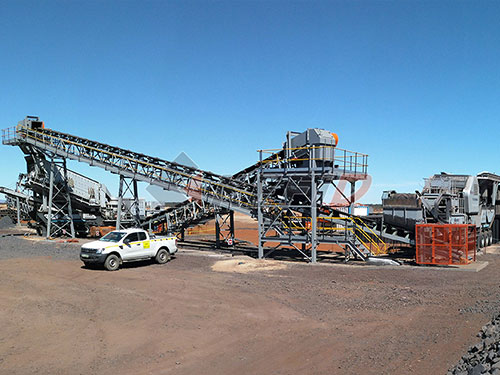
B. Technology & Innovation:
The competitive edge lies in technology. Exporters differentiate through:
C. Project Management & Logistics:
Exporting a complete plant is a mega-project exercise. It requires meticulous management of manufacturing schedules, international shipping of oversized components (like crusher frames), customs clearance, inventory management for spare parts, and technical documentation.
D. After-Sales Support & Service:
Given the capital investment and critical nature of these plants in continuous mining operations, comprehensive after-sales support is non-negotiable. This includes expert commissioning crews stationed on-site for months, readily available spare parts networks globally (often via regional hubs), remote monitoring services, and lifecycle support agreements.
The market is dominated by established industrial clusters with deep roots in mining technology:
Exporters navigate a complex landscape shaped by several forces:
Drivers:
Challenges :
1 .Cyclical Market : Heavy dependence on mining Capex makes business highly volatile
2 .Logistical Complexities : Transporting massive structures across continents incurs high costs risks delays
3 .Intense Competition : Price competition especially from Asian manufacturers pressures margins necessitates differentiation through technology service
4 .Local Content Requirements : Many importing nations impose rules mandating local manufacturing partnerships employment complicating export models
5 .**Geopolitical Risks :Trade tariffs sanctions political instability target markets disrupt supply chains payment flows
When mining company evaluates potential exporter decision based far beyond initial price tag Key considerations include :
Proven ability deliver turnkey project time budgetAssurance partner will exist support plant decadesAbility work effectively client’s team local workforceFuture iron ore crushing plant export will characterized increased intelligence integration Sustainability imperative will push adoption technologies such :
Machine learning algorithms optimize real-time crusher settings feed rates maximizing throughput minimizing energy consumption predicting failures before occurIncorporation battery storage renewable energy sources diesel-electric drives reduce fuel dependency emissions particularly off-grid minesFor arid regions dry processing solutions magnetic separation advanced classifiers reduce eliminate water usage tailings damsFurther evolution skid-mounted pre-assembled modules drastically reduce site installation time cost riskConclusion
The role Iron Ore Crushing Plant Exporter foundational yet dynamic It sits intersection heavy mechanical engineering process metallurgy international commerce Successful exporters understand they deliver not just collection machines but guaranteed productive outcome—flow calibrated consistent feed downstream operations Their expertise enables resource-rich nations convert geological wealth tangible economic development As industry evolves towards greener smarter more efficient paradigms those exporters lead technological innovation coupled unwavering commitment reliability after-market support will continue shape infrastructure global steel production years come The sector remains critical albeit often unseen link chain connecting natural resources modern world built steel
Lorem ipsum dolor sit amet, consectetur adipisicing elit. Consectetur sequi saepe ut sunt eveniet perferendis excepturi, iste obcaecati. Qui tempore hic sed quia soluta obcaecati vel.