The Engine of Efficiency: A Deep Dive into R&D in the Iron Ore Crushing Plant
In the vast, interconnected chain of global steel production, the iron ore crushing plant operates as a critical, yet often overlooked, foundational node. It is here that mined raw material—ranging from direct shipping ores to complex, low-grade magnetite and hematite deposits—begins its transformation into a feedstock suitable for blast furnaces or direct reduction plants. While the image of massive crushers and conveyor belts might suggest brute force as the primary operational principle, the true driver of performance, sustainability, and profitability is a sophisticated and continuous Research and Development (R&D) function. The R&D dedicated to iron ore crushing is a multidisciplinary endeavor focused on optimizing the entire comminution circuit for maximum efficiency, minimal cost, and reduced environmental footprint.
The Core Mandate: From Geology to Geometry
The primary objective of crushing plant R&D is to bridge the gap between inherent ore characteristics and desired product specifications. This journey begins long before the first tonne is processed.
-
Ore Characterization and Pre-Processing: Advanced R&D starts with exhaustive geometallurgical analysis. Using tools like QEMSCAN (Quantitative Evaluation of Minerals by Scanning Electron Microscopy) and XRD (X-Ray Diffraction), researchers map not just the chemical composition but the mineralogy, texture, hardness (measured by Bond Work Index, JK Drop Weight Test), abrasiveness (as per ASTM G65), and moisture content of the ore body. This data is crucial for predictive modeling. R&D teams run simulations using software like JKSimMet or PlantDesigner to design flowsheets even before ground is broken. A key area of innovation is in pre-processing technologies such as sensor-based ore sorting (using XRF, laser, or electromagnetic sensors). By rejecting waste rock early in the process, R&D can dramatically reduce energy consumption in downstream crushing and grinding, a significant step toward “mine-to-mill” optimization.
-
Comminution Circuit Innovation: The heart of crushing plant R&D lies in optimizing the comminution (size reduction) circuit itself. The traditional three-stage crushing (primary, secondary, tertiary) is constantly being re-evaluated.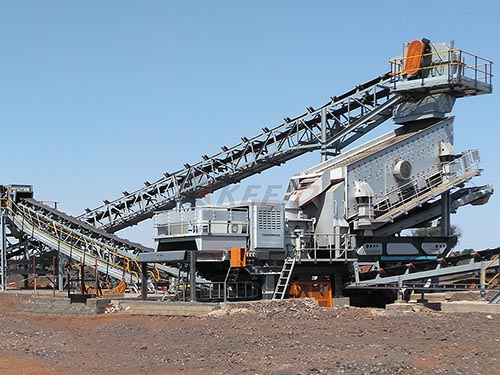
- Equipment Design & Selection: R&D collaborates closely with equipment manufacturers to develop next-generation crushers. This includes refining cavity designs for cone crushers to improve particle-on-particle breakage (inter-particle comminution), enhancing impact crusher rotors for better shape control, and developing high-pressure grinding rolls (HPGR) as a more energy-efficient alternative to tertiary cone crushers or even ball mills for fine crushing. HPGR research focuses on roll wear surfaces, pressure optimization algorithms, and feeding systems.
- Process Control & Automation: Modern R&D is deeply entwined with digitalization. Developing advanced process control (APC) systems that use real-time data from sensors (e.g., power draw, chamber pressure, online particle size analyzers like VisioRock® or Outotec PSI®) is paramount. Machine learning algorithms are trained to optimize crusher settings (e.g., closed-side setting, speed) dynamically in response to feed variability, maximizing throughput while maintaining product size distribution. The goal is autonomous operation that targets key performance indicators (KPIs) like specific energy consumption (kWh/t).
-
Energy Efficiency: The Paramount Challenge
Comminution can consume over 50% of a mine site’s total energy budget. Therefore, reducing specific energy consumption is arguably the single most important driver of crushing plant R&D.
- Circuit Re-engineering: Replacing traditional circuits with HPGR-stirred mill combinations for fine ores has been a major R&D-led shift.
- Wear & Liner Technology: Crusher liners are not just consumables; their design is a science. R&D into new manganese steel alloys, composite materials with ceramic inserts,and optimized liner profiles extends service life directly reducing downtime maintenance costs,and indirectly saving energy by maintaining optimal cavity geometry for efficient breakage
- Drive Systems: Investigating variable frequency drives VFDs high-efficiency motors,and even novel drive trains that recover kinetic energy during idling
-
Product Quality & Downstream Integration
The crushing plant does not operate in isolation.RD must ensure its product—the crushed ore—optimizes performance in subsequent processes
- Size Distribution & Shape: Blast furnace efficiency demands specific lump/fine ratios and high mechanical strength.RD focuses on producing more cubicle particles from cone crushers via chamber optimization which improves permeability in the blast furnace burden.Similarly pelletizingand sintering plants require finely crushed concentrate with precise surface area characteristics
- Moisture Control: For materials handling especially in cold climates RD into dewatering screens dust suppression systems that minimize water additionand thermal drying technologies using waste heat recoveryis essential
-
Sustainability Environmental & Social License
Modern RD extends beyond pure economics
- Dust Noise & Vibration Mitigation: Developing improved encapsulation systems low-noise liner materialsand predictive models for dust generation are key research areas
- Water Recycling: Designing closed-circuit water systems within the plant minimizing fresh water use
- Circular Economy: Investigating the use of renewable power sourcesfor example solar micro-grids to power auxiliary systemsand researching applicationsfor crusher by-productslike fines used in construction materials
The Structure of an Effective RD Department
A company’s RD function for crushing is typically structured around complementary teams:
- Process Engineering Team: Focuses on flowsheet design simulationand continuous improvement projects on-site
- Metallurgy & Geochemistry Team: Provides foundational ore knowledgeand analyzes how mineralogical changes affect crushability
- Mechanical & Reliability Engineering Team: Works on equipment health monitoring predictive maintenance modelsand wear material development
- Automation & Data Science Team: Develops control algorithms data pipelinesand AI/ML models for predictive optimization
This structure fosters collaboration between specialists who understand both theoretical rock mechanicsand practical operational constraints.
Case Studies in Innovation
- HPGR Adoption in Iron Ore: Pioneering work by companies like Polysius now ThyssenKrupp Polysius Metso Outotec now Metsoand others transformed fine iron ore processing.HPGRs operating at high pressure create micro-cracks within particles leading to substantial energy savings ~20%in downstream grinding Their implementation was driven by years of collaborative RD between mining companies equipment vendorsand research institutions
- Mine-to-Mill Optimization Programs: Comprehensive RD initiatives that treat mining blastingas part of the comminution circuit By optimizing blast fragmentationto produce a finer more consistent feedcrushing plant throughput can increaseby 15-20% while lowering overall energy cost This requires integrated data collectionfrom blasts through processinga hallmarkof advanced RD culture
Future Frontiers
The futureof iron ore crushingplantRD liesin deeper integration intelligenceand sustainability:
- Digital Twins & Hybrid Modeling: Creating dynamic virtual replicasof the entire physical plant fedby real-time IoT sensor data These twins allowfor off-line testingof new strategies failure mode simulationand operator training without risk
- Advanced Robotics& Drones: For autonomous liner changeoutsin hazardous confined spacesor drone-based inspectionof stockpilesand equipment structures using LiDAR/thermography
- Alternative Breakage Technologies:
4RD continues to explore technologieslike microwave-assisted breakage where targeted heating induces thermal stress fractures potentially reducing grinding energy Electrodynamic fragmentationis another areaof long-term research
5 Sustainable Binders& Alternative Products: Researchinto using ultra-fines currentlya waste streamas feedstockfor novel construction materialsor carbon sequestration mediums aligningwith broader decarbonization goals
Conclusion
The ironorecrushingplantis farfroma static installationof mechanical hardware Itisa dynamic process systemwhoseperformanceis directly proportionaltothe investment sophisticationandeffectivenessofthecompany’sRDfunction Inan erawheremarginsaretight regulatorypressuresarehighandsustainabilityimperativesarenon-negotiableRDistheleverthatdeliverscompetitiveadvantage Throughrelentlessfocusonenergyreduction processintegration digitaltransformationandenvironmentalstewardshiptheR Dteamensures thatthecrushingplantnotonlyservesasthereliableworkhorseoftheminingoperationbutalsoasakeystrategicassetdrivingtheindustrytowardamoreefficient resilientandsustainablefuture
