Industrial Stone Crusher Plant: A Comprehensive Technical Overview
Introduction
An Industrial Stone Crusher Plant is a permanently established facility designed for the high-volume reduction of large rocks, boulders, and quarry stone into specific, graded aggregate products essential for construction and infrastructure. Unlike mobile or portable crushers, these plants are engineered for long-term operation at a fixed location, typically integrated with quarries, major construction projects, or aggregate supply yards. They represent the backbone of the aggregates industry, transforming raw geological resources into the fundamental materials that build our world—from concrete and asphalt to railroad ballast and erosion control structures.
This article provides a detailed examination of industrial stone crusher plants, covering their core components, operational processes, key configurations, technological advancements, and critical considerations for efficiency and environmental compliance.
Core Components and System Architecture
A modern industrial crushing plant is a complex interconnection of subsystems, each with a specialized function.
-
Primary Crushing Station: This is the first point of contact for run-of-quarry (ROQ) material. It typically features a robust jaw crusher or gyratory crusher. Jaw crushers apply compressive force via a fixed and a movable jaw plate, creating a “V” cavity where rock is crushed. Gyratory crushers consist of a conical head gyrating within a larger conical bowl, offering very high capacity for abrasive materials. The primary crusher’s goal is to reduce material from sizes often exceeding 1 meter down to 100-250 mm.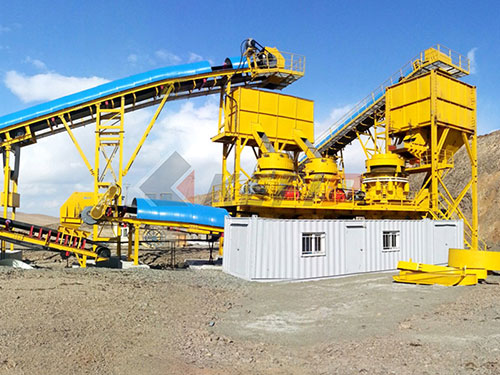
-
Material Handling System: This network ensures continuous material flow.
- Feeders: Apron feeders (heavy-duty, for large slabs) or vibrating grizzly feeders (which can scalp out fine material before the primary crusher) regulate the feed rate to prevent choking.
- Conveyors: A series of belt conveyors transport material between crushing stages and to screening units. Design considerations include belt width, speed, incline, and dust containment.
- Hoppers and Bins: Surge bins between stages act as buffers, decoupling processes to ensure downstream equipment runs at optimal capacity without being starved or flooded.
-
Secondary and Tertiary Crushing Stations: For producing finer aggregates (e.g., for asphalt or concrete), further reduction is necessary.
- Cone Crushers are predominant here. They operate on a similar principle to gyratory crushers but are smaller, faster-rotating, and designed for higher reduction ratios in intermediate (secondary) and fine (tertiary/quaternary) stages.
- Impact Crushers (Horizontal Shaft Impactors – HSI or Vertical Shaft Impactors – VSI) use high-speed rotors with hammers or impellers to throw rock against anvils or crushing chambers. They excel at producing cubical-shaped aggregates and are often used for softer stone or recycling applications.
-
Screening House: This is the quality control center of the plant. Multi-deck vibrating screens (inclined or horizontal) separate crushed material into precise size fractions (e.g., 0-5mm sand, 5-10mm chips, 10-20mm aggregate). Oversize material is recirculated via closed-circuit conveyors back to the appropriate crusher for further reduction.
-
Control System & Automation: The nerve center of a modern plant is an integrated Programmable Logic Controller (PLC)-based system with a Human-Machine Interface (HMI). It monitors motor amps, conveyor speeds, bin levels, and crusher parameters (like pressure and power draw), allowing for remote operation, automated sequencing, and real-time optimization.
-
Ancillary Systems:
- Dust Suppression & Collection: Critical for health, safety, and environmental compliance. Systems include water spray nozzles at transfer points and high-efficiency baghouse filters connected to crusher inlets/outlets.
- Power Supply: Requires substantial electrical infrastructure to drive motors ranging from tens to thousands of horsepower.
- Maintenance Facilities: On-site workshops with overhead cranes are essential for servicing heavy components like mantles concaves in cone crushers or rotor assemblies in impactors.
Operational Process Flow
The process follows a logical sequence:
- Feed Intake: Quarry trucks dump ROM material into the primary crusher’s feed hopper.
- Primary Crushing & Scalping: The feeder delivers material to the primary crusher. A grizzly section may remove sub-100mm fines beforehand.
- Primary Stockpiling: Crushed material is conveyed to an intermediate stockpile or surge bin.
- Secondary/Tertiary Crushing & Screening: Material is drawn from the surge bin into secondary crushers in closed circuit with screens. Screens send oversize back; correctly sized product proceeds.
- Final Sorting & Stockpiling: Sized aggregates are conveyed via sorting conveyors to dedicated stockpiles (e.g., #57 stone, manufactured sand).
- Load-out: Front-end loaders reclaim from stockpiles to load trucks or railcars for dispatch.
Plant Configurations: Open vs Closed Circuit
- Open Circuit: Material passes through each crushing stage only once without recirculation of oversize from screens back to the crusher feed.This configuration yields less control over final product shape/size but has lower capital cost.Suitable when product specifications are not stringent.
- Closed Circuit: Oversize from screens returns via conveyor loops (“closed”) back into the same crushing stage.This allows precise control over top particle size improves particle shape by providing additional crushing events,and increases overall yield of specification product.It requires more conveyors,screens,and sophisticated controls but represents industry best practice
Technological Advancements Driving Efficiency
Modern plants leverage technology far beyond basic mechanical crushing:
- Automation & Process Control Systems: Advanced PLCs can optimize feed rates based on real-time power draw preventing overload while maximizing throughput.They also enable automatic setting adjustments on cone crushers via hydraulic systems maintaining consistent product gradation
- Wear Monitoring Technology: Wireless sensors embedded in liner wear plates provide accurate remaining life data enabling predictive liner changes minimizing unplanned downtime
- Drone Surveying Stockpile Management: Drones equipped with LiDAR create precise volumetric models of feed stockpiles finished product piles improving inventory accuracy production planning
- Energy Efficiency Improvements: Variable Frequency Drives VFDs on major motors allow soft starts reducing mechanical stress electrical demand peaks while optimizing energy consumption during partial load conditions
Critical Considerations For Design And Operation
Designing operating an efficient compliant plant involves balancing multiple factors:
- Feed Material Characteristics: Hardness abrasiveness moisture content clay content dictate equipment selection e.g.,jaw/cone vs impactor wear metallurgy settings
- Production Capacity Product Mix Requirements: Plant layout must be designed around required tons per hour TPH target product size fractions flexibility needed change recipes quickly market demands shift
- Site Topography Layout Optimization: Utilizing natural slope gravity flow between stages reduces conveyor lifts saves energy Civil engineering foundations massive static dynamic loads crucial long term stability
- Environmental Compliance Regulatory Permitting Key considerations include noise mitigation dust emissions visible fugitive dust water runoff management stormwater permits wildlife habitat disturbance visual impact assessments often requiring extensive berms tree buffers enclosures around noisy equipment like screens
Conclusion The Engine Of Infrastructure Development
Industrial stone crusher plants sophisticated engineered systems far more than simple collections machinery They represent significant capital investment embody decades mechanical engineering innovation process control integration Their role transforming inert bedrock vital economic commodity cannot overstated As global infrastructure demands continue grow alongside heightened environmental social governance ESG expectations future evolution these plants will focus greater automation digitalization connectivity Internet Things IoT predictive analytics further reduce energy consumption water usage emissions Ultimately industrial crushing plant stands testament human ingenuity ability harness raw natural forces compression impact shear create precisely graded materials form literal foundation modern built environment
