Industrial Crushing and Screening Equipment Customization: Engineering Efficiency for Unique Material Processing Challenges
In the dynamic landscape of modern mining, aggregate production, construction, and recycling, the one-size-fits-all approach to equipment selection is often a recipe for inefficiency, excessive wear, and suboptimal output. Industrial Crushing and Screening Equipment Customization has therefore evolved from a niche service into a fundamental engineering discipline, essential for operations seeking to maximize profitability, ensure plant reliability, and meet specific material processing goals. This process involves the deliberate modification, configuration, and sometimes complete re-engineering of standard machine platforms to address unique site conditions, material characteristics, and production requirements.
The Imperative for Customization: Beyond Standard Catalog Specs
Standard crushing and screening units are designed around generalized parameters for common materials like granite or limestone. However, real-world applications present a myriad of variables that standard machines may not accommodate optimally: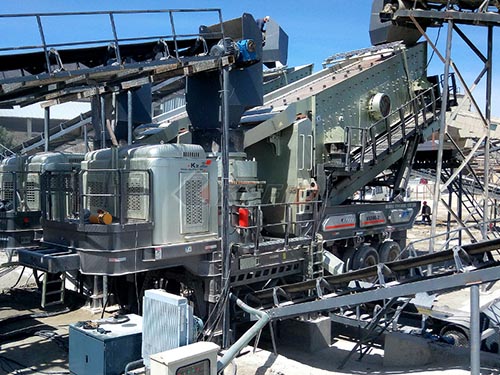
- Material Characteristics: Beyond hardness (compressive strength), factors like abrasiveness (e.g., quartz content), stickiness (clay-bound ores), moisture content, bulk density, and feed gradation dramatically impact equipment performance. A crusher configured for hard, abrasive granite will struggle with wet, sticky iron ore without specific modifications to chamber geometry, rotor speed, or wear protection.
- Site-Specific Constraints: Physical limitations such as available footprint (especially in underground mining or urban recycling plants), elevation affecting engine performance, extreme ambient temperatures (Arctic or desert operations), and stringent dust or noise emission regulations necessitate tailored solutions.
- Production Objectives: The desired end product dictates the entire flow sheet. A quarry producing railway ballast requires different crushing stages and screen apertures than one producing manufactured sand for concrete or ultra-fine fillers. Customization ensures each machine in the circuit is precisely tuned for its specific duty.
- Integration and Automation: Modern plants are increasingly automated and data-driven. Customization includes integrating sensors (for wear monitoring, load tracking), designing chutes and transfer points to minimize spillage and dust generation, and ensuring compatibility with centralized PLC/SCADA systems for seamless operation.
Key Areas of Customization in Crushing Equipment
Crusher customization targets enhanced performance, longevity, and control over product size.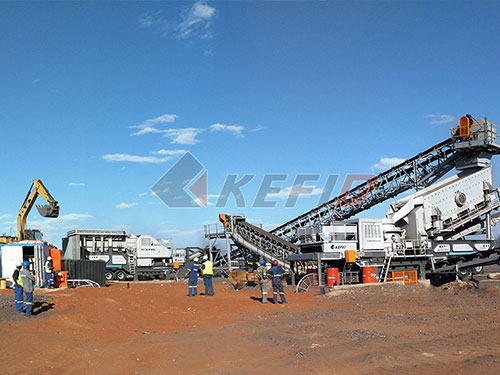
- Jaw Crushers: Modifications often focus on the kinematics of the crushing chamber. This includes adjusting the nip angle (the angle between the fixed and moving jaw) to better handle slabby material or increase throughput. The selection of jaw plate profiles (straight, curved) and metallurgy (manganese steel grades with specific work-hardening properties) is highly customized based on abrasiveness. Feed opening dimensions can be altered to accept larger feed blocks common in primary demolition applications.
- Cone Crushers: As secondary/tertiary crushers where product shape is critical, cone customization is sophisticated. Liner profile design—the geometry of the mantle and concave—is paramount. Different cavity profiles (standard coarse/fine) can be selected or even hybrid-designed to achieve a specific product curve or improve reduction ratio. Automation systems like Automatic Setting Regulation (ASR) are calibrated specifically for the crusher’s duty to maintain closed-side settings consistently under varying feed conditions.
- Impact Crushers (Horizontal Shaft Impactors – HSI & Vertical Shaft Impactors – VSI): These are highly customizable for shaping aggregates or fine grinding. For HSIs, the number of blow bars (hammers), their metallurgy/composite design (high chrome vs. ceramic inserts), rotor speed/diameter adjustments directly influence reduction ratio and product shape. VSIs are tuned by adjusting rotor tip speed through variable frequency drives (VFDs) and selecting appropriate anvil ring designs or rock-on-rock configurations to produce premium-shaped aggregates or industrial sands.
- Gyratory Crushers: In large-scale mining primary stations customization involves spider arm design for feed acceptance capacities as well as mantle/concave profiles optimized for specific ore types including high clay content ores where non-choking configurations are required.
Key Areas of Customization in Screening Equipment
Screening efficiency is vital for overall plant capacity; bypassed oversize material can cause downstream crusher overloads.
- Screen Media Selection & Configuration: This is the most critical aspect. Beyond choosing between wire mesh panels polyurethane modular panels rubber screen decks manufacturers offer custom aperture shapes sizes deck layouts Multi-slope screens banana screens feature varying inclination angles along their length customized based on feed rate particle distribution desired separation efficiency
- Vibration Mechanism & Dynamics: The type amplitude frequency vibration stroke can be engineered Linear circular elliptical motion patterns chosen based on material stratification needs fine sticky materials often require high-frequency low-amplitude settings while coarse scalping duties need long-stroke linear motion Drive power motor mounts counterweights adjusted match heavy-duty applications
- Structural & Environmental Modifications: For harsh environments screens equipped with extra-heavy-duty frames hot-climate operations feature upgraded bearings cooling systems Dust-tight enclosures special sealing systems designed meet stringent environmental health safety standards Noise suppression kits also common customization request
The Customization Process: A Collaborative Engineering Workflow
Successful customization follows a structured collaborative process between equipment supplier end-user:
- Application Analysis & Data Collection: Engineers gather comprehensive data: material test reports samples desired final product specifications hourly annual tonnage targets site layout diagrams existing infrastructure
- Flow Sheet Development & Simulation: Using advanced simulation software engineers model entire crushing screening circuit test different machine configurations virtually predict outputs power consumption wear rates identify bottlenecks before any metal cut
- Design & Engineering Phase: Detailed mechanical electrical pneumatic designs produced modifications may involve Finite Element Analysis FEA ensure structural integrity new load conditions Computational Fluid Dynamics CFD optimize dust extraction chute designs
- Manufacturing & Prototyping: Specialized components manufactured using specified materials heat treatments Wear parts cast using proprietary alloys foundries Assembly done controlled environment quality checks each stage
- Commissioning & Performance Validation: Upon installation supplier’s engineers commission equipment fine-tune operational parameters VFDs feeder speeds screen angles validate performance against guaranteed metrics provide operator training
- Post-Installation Support & Optimization: Continuous remote monitoring data analytics allow ongoing optimization Wear part consumption tracked refine replacement schedules further tweaks made based real-world operating data
Economic Justification & Return on Investment
While custom solutions carry higher initial capital expenditure CAPEX they deliver superior return investment ROI through:
- Increased Uptime Availability: Machines designed withstand specific stresses experience fewer unplanned breakdowns
- Higher Quality Consistent Product Output: Meeting precise specification opens premium markets reduces waste
- Lower Operating Costs OPEX: Optimized wear part life reduced energy consumption per ton lower manpower requirements automation translate significant long-term savings
- Extended Equipment Lifecycle: Properly applied machines endure less fatigue operate within ideal parameters lasting decades proper maintenance
Future Trends: Digital Twins & AI-Driven Customization
The future lies hyper-customization driven digital technologies Digital twin technology creates virtual replica physical plant allowing endless “what-if” scenarios tested without risk Artificial intelligence AI machine learning algorithms analyze operational data predict failures recommend real-time adjustments optimal settings changing feed conditions This moves customization from static one-time event dynamic continuous improvement process throughout asset’s life
Conclusion
Industrial Crushing Screening Equipment Customization represents convergence deep mechanical engineering expertise materials science practical process knowledge It transforms standard machinery into integrated high-performance systems solving unique industrial problems As raw materials become more complex market demands more stringent role customization will only grow more central It strategic investment not merely purchase enabling resource-intensive industries achieve new levels efficiency sustainability profitability truly fit-for-purpose processing solution
