
In the realm of aggregate production for construction, mining, and infrastructure development, the 250-300 Tons Per Hour (TPH) stone crushing plant represents a critical benchmark in industrial-scale processing. This capacity range strikes an optimal balance between high-volume output and manageable operational complexity, making it a preferred choice for large quarry operations, major road projects, and concrete/asphalt production facilities. This article provides a detailed, professional examination of such a plant, focusing on its assembly, core components, process flow, and key operational considerations.
A 250-300 TPH stationary crushing and screening plant is a capital-intensive, permanently installed industrial facility designed for continuous, high-yield operation. Its primary function is to transform blasted raw feed (typically limestone, granite, basalt, or river gravel) into precisely sized aggregate products such as base course, aggregates for concrete (e.g., ¾”, ½”), asphalt chips, railway ballast, and manufactured sand.
The strategic importance of this capacity lies in its ability to service large-scale demands. It can produce approximately 6,000 to 7,200 tons of aggregate per 24-hour operating day—enough to supply major highway segments or large ready-mix concrete plants. The design philosophy emphasizes robustness, process efficiency, automation, and ease of maintenance to ensure maximum uptime and return on investment.
The plant is a synchronized system of interconnected machinery. A standard 250-300 TPH configuration typically follows a three-stage crushing circuit with integrated screening.
A. Primary Crushing Station (Jaw Crusher):
B. Secondary Crushing Station (Cone Crusher):
C. Tertiary/Final Crushing Station (Cone or Impact Crusher):
D. Screening Station:
E. Material Handling System:
F. Power & Control System:
The assembly of such an industrial plant is a multi-phase engineering project:
Phase 1: Site Preparation & Foundation Engineering
This is the most critical physical step Engineers conduct geotechnical surveys Design reinforced concrete foundations with precisely embedded anchor bolts steel plates Vibration isolation pads may be used Foundations must cure fully often for weeks before equipment mounting
Phase 2: Major Component Erection
Using large-capacity cranes components are placed in sequence:
1 Primary feeder & jaw crusher frame
2 Primary conveyor tunnels & transfer towers
3 Secondary & tertiary crushing stations on their platforms
4 Screening towers
5 Conveyor galleries & stackers
Precision alignment using laser levels ensures machinery shafts are perfectly level parallel preventing premature wear belt misalignment
Phase 3: Mechanical & Electrical Integration
Conveyors are tensioned fitted with pulleys idlers Crushers have their internal liners mantles concaves installed Lubrication systems hydraulic power packs PLC panels switchgear are installed Cables are laid in trays connected Motors are aligned with couplings using dial indicators
Phase 4: Dust Suppression & Environmental Controls
A baghouse filter system—a massive array of fabric filter bags—is assembled alongside ductwork connecting all dust generation points spray mist systems at transfer points Water sedimentation ponds perimeter fencing noise barriers may also be constructed
Phase 5: Dry Commissioning & Wet Commissioning
First systems are run without material checking rotation direction bearing temperatures vibration levels Then controlled feeding begins starting at low rates ramping up gradually over days All settings CSS on crushers screen angles conveyor speeds—are fine-tuned Product samples are taken analyzed gradation adjusted until all specifications are met
Running a plant at this scale requires disciplined protocols: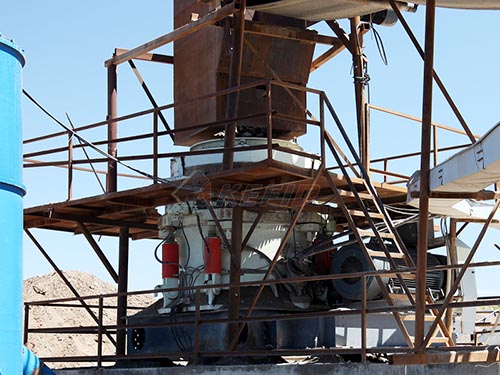
The capital expenditure for such a plant ranges from several million dollars upwards depending on automation level environmental controls The ROI hinges on consistent throughput reliable operation access to markets Environmentally modern plants must manage noise dust water runoff Many incorporate hybrid power solar supplementation water recycling circuits significantly reducing their ecological footprint
An industrial-grade stone crushing plant represents the pinnacle of applied mechanical process engineering Its successful assembly commissioning operation demand meticulous planning deep technical expertise rigorous maintenance culture When executed correctly it becomes not just a production facility but the reliable economic engine driving large-scale infrastructure development transforming raw geological resources into the fundamental building blocks of modern society
Lorem ipsum dolor sit amet, consectetur adipisicing elit. Consectetur sequi saepe ut sunt eveniet perferendis excepturi, iste obcaecati. Qui tempore hic sed quia soluta obcaecati vel.