Stone Quarry Crushing Plant: A Comprehensive Guide to Optimizing Cost and Value
The quest for the “best price” in a stone quarry crushing plant is a complex endeavor that extends far beyond comparing initial capital expenditure on equipment. In the aggregates industry, where profit margins are often defined by operational efficiency and product yield, the true “best price” represents an optimal balance between upfront investment, long-term operating costs, maintenance expenses, and final product profitability. This detailed analysis explores the multifaceted components of a crushing plant’s value proposition, providing a professional framework for making informed purchasing and operational decisions.
1. Deconstructing “Best Price”: Total Cost of Ownership (TCO)
A myopic focus on the lowest bid for equipment is a common and costly mistake. The professional approach centers on Total Cost of Ownership (TCO), which encompasses:
- Capital Expenditure (CAPEX): The purchase price of crushers, screens, feeders, conveyors, and control systems.
- Operating Costs (OPEX): Energy consumption (the single largest ongoing cost), wear parts replacement (liners, mantles, blow bars), labor, and lubricants.
- Maintenance & Downtime Costs: Planned maintenance expenses and the devastating cost of unplanned downtime, which halts production and delays revenue.
- Product Yield & Quality: A plant that optimally produces a high percentage of in-specification, premium-priced products (e.g., concrete aggregate, asphalt chips) from the same feed generates more revenue than one creating excess waste or low-value filler.
A plant with a 20% higher CAPEX but 30% lower energy use, 40% longer wear part life, and 15% better yield of premium products will have a vastly superior TCO and deliver the genuine “best price” over a 5-10 year period.
2. Core Components Dictating Performance and Cost
A. Primary Crushing Station: The Foundation
The choice here sets the tone for the entire process chain.
- Jaw Crushers: Robust, reliable machines ideal for hard, abrasive rock. Their simplicity often translates to lower initial cost and easier maintenance. Best price considerations include toggle plate design and frame strength.
- Gyratory Crushers: Higher CAPEX but significantly higher capacity and lower cost-per-ton in large-scale quarries (>1,000 tph). They offer continuous crushing action and are more energy-efficient at scale.
- Primary Impact Crushers: Excellent for softer, less abrasive rock like limestone. They offer high reduction ratios in a single stage but incur higher wear costs in abrasive applications.
B. Secondary & Tertiary Crushing: Shaping the Product
This stage defines product gradation and shape.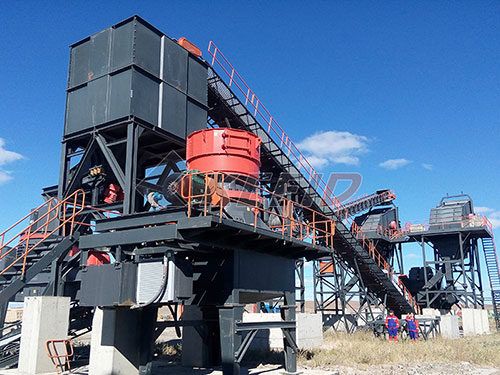
- Cone Crushers: The industry standard for secondary/tertiary duties. Key differentiators include hydraulic setting adjustment (crucial for quick product changes), chamber design (for optimal shape), and anti-spin systems to reduce wear. A more advanced cone may have a higher price tag but produce superior cubical aggregate critical for asphalt mixes.
- Horizontal Shaft Impact (HSI) Crushers: Unrivaled for producing highly cubical products from medium-hard rock. Wear part cost management is paramount here.
C. Screening & Material Handling: The Efficiency Multipliers
A perfectly sized crusher fed inconsistently or forced to process already-sized material (“circulating load”) is wasteful.
- Vibrating Screens: Proper sizing (deck area) and selection (wire mesh vs. polyurethane panels) are critical to efficiency. Scalping before primary crushing protects equipment; closed-circuit screening with crushers is essential for tight product control.
- Conveyors: Often underestimated, proper conveyor design (width, speed, idler quality) minimizes spillage, reduces energy loss from friction, and ensures reliable material flow.
D. Mobility & Plant Layout
- Stationary Plants: Lowest CAPEX per ton of capacity for long-life reserves (>15 years). Offer maximum stability and optimization potential.
- Portable/Track-Mounted Plants: Higher CAPEX per unit but offer unparalleled flexibility to follow reserves or serve multiple sites. Eliminate dump truck haulage from the face to a fixed primary crusher, reducing fuel and labor costs.
3. Technological Integration: The Modern Price/Performance Lever
Modern automation and control systems are not luxuries but essential tools for achieving the best operational price.
- PLC-Based Control Systems: Enable single-start/stop sequences, monitor power draw,and provide operational data.
- Advanced Process Control: Systems like Metso’s IC™ or Sandvik’s ASRi automatically adjust crusher settings in real-time based on load conditions,maximizing throughput,efficiency,and wear part life.This technology delivers a rapid return on investment(ROI).
- Predictive Maintenance Tools: Sensors monitoring bearing temperature,vibration,and hydraulic pressure can forecast failures,scheduling maintenance during shifts rather than causing catastrophic unscheduled downtime.
4. Strategic Sourcing: Obtaining Competitive Quotations
To secure genuine value,follow a disciplined procurement process:
- Define Detailed Specifications: Provide potential suppliers with precise data on feed material(abrasiveness,Bond Work Index),required capacities,and final product gradations.More detail yields more comparable quotes.
2.Evaluate Lifecycle Cost Estimates: Require vendors to provide projected wear parts consumption(grams/ton),energy usage estimates,and recommended maintenance schedules alongside their capital quote.
3.Consider Financing & Support Packages: Evaluate vendor-offered financing,loyalty programs for wear parts,and guaranteed performance contracts.Sometimes,a slightly higher price from a vendor offering exceptional local service support,a comprehensive parts depot,and expert field technicians provides greater long-term value than a bare-bones quote from a distant supplier.
5.Operational Philosophy:The Ultimate Price Determinant
The most technologically advanced plant can be rendered inefficient by poor operation.Best practices that drive down cost-per-ton include:
- Consistent Feed:A well-managed loading pattern ensuring crushers are constantly fed at their optimal capacity level(choke-fed for cones)is fundamental
- Proactive Maintenance:A schedule based on inspected condition rather than arbitrary hours run prevents major failures
- Data-Driven Optimization:Regularly reviewing production reports,screen analysis,and power charts to fine-tune settings
- Investing in Workforce Training:An operator who understands cause-and-effect within the crushing circuit is invaluable
Conclusion
In conclusion,the “best price”for stone quarry crushing plant is not found on an invoice’s bottom line but in meticulous engineering analysis strategic planning holistic evaluation.The optimal solution harmonizes robust appropriately sized equipment with intelligent automation disciplined operation all underpinned by lifecycle cost awareness.For quarry operators this means shifting perspective from seeking cheapest equipment investing instead system engineered minimize cost per ton over lifespan reserve thereby securing not just competitive pricing sustainable profitable future aggregates business
