Importing Iron Ore Crushing Plants: A Comprehensive Guide for Bulk Procurement
The global mining and construction industries are witnessing a significant surge in demand for efficient, high-capacity mineral processing equipment. Among the most critical investments is the Iron Ore Crushing Plant, a complex system designed to reduce mined ore into a uniform, transportable size for further beneficiation and smelting. For large-scale mining operations, steel producers, or major contractors, placing a bulk order for such plants represents a strategic capital expenditure with profound implications for long-term operational efficiency, cost management, and production output. This detailed guide explores the technical, commercial, and logistical facets of importing iron ore crushing plants in bulk quantities.
1. Technical Specifications and Plant Configuration
An iron ore crushing plant is far more than a collection of crushers. It is an integrated material handling system engineered for extreme abrasion, high throughput, and continuous operation.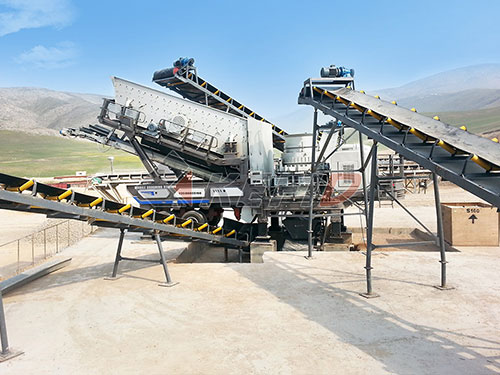
Core Components in a Bulk Order Context:
- Primary Crushers: Typically, jaw crushers or gyratory crushers that handle the initial reduction of run-of-mine (ROM) ore, which can be up to 1.5 meters in size. For bulk orders, customization based on the specific hardness (e.g., Banded Iron Formations vs. hematite) and moisture content of the ore is paramount.
- Secondary & Tertiary Crushing Stages: Cone crushers are standard here, providing further reduction to a size suitable for milling. A bulk procurement package often includes multiple units configured in parallel for redundancy or in series for finer product control.
- Screening Units: Vibrating screens (grizzlies, scalpers, double-deck screens) are integrated at various stages to separate sized material and improve overall circuit efficiency. Ordering these in bulk ensures compatibility and spare part commonality.
- Material Handling System: This includes robust conveyor belts (with high-wear resistant covers), feeders (apron, vibrating), transfer points, and dust suppression systems. In bulk imports, standardized conveyor widths and motor specifications simplify maintenance.
- Power & Control Systems: A centralized electrical distribution system and a modern Programmable Logic Controller (PLC)-based automation suite are crucial. Bulk orders allow for the standardization of control hardware and software across all plant modules.
- Structural Steel & Platforms: All modules require heavy-duty support structures, walkways, and safety systems. Pre-fabricated, modular designs are highly advantageous for bulk importation and rapid site assembly.
2. Key Drivers for Bulk Import Procurement
Placing a single order for multiple crushing plants or modular units offers distinct advantages:
- Economies of Scale: Significant cost reductions per unit are achievable through negotiated pricing on equipment, engineering services, and shipping.
- Standardization: Ensures operational consistency across multiple sites or expansion phases. Operators require less varied training, and spare parts inventory management becomes more efficient.
- Unified Project Timeline: Coordinating engineering design, fabrication, testing, and delivery for multiple plants under one contract streamlines project management and can accelerate overall deployment.
- Enhanced Supplier Relationship & Support: A large order elevates the buyer to a strategic partner status with the manufacturer, often guaranteeing prioritized technical support, more favorable warranty terms,and access to dedicated engineering teams.
3. The Procurement Process: From Inquiry to Commissioning
Phase 1: Pre-Tender Preparation
This internal phase defines the project’s backbone:
- Feasibility Study & Capacity Planning: Determine total required throughput (e.g., 5 plants each at 2,500 tonnes per hour). Define final product size specifications.
- Site-Specific Analysis: Document climate conditions (arctic vs. tropical), topography,fuel/power availability,and water access for dust control at all intended locations.
- Drafting Technical Specifications (Tech Spec): Create a comprehensive document detailing every performance metric,material grade requirement (e.g., wear liners), safety standards (ISO,SIL ratings),and emission/noise level limits.
Phase 2: Supplier Identification & Tendering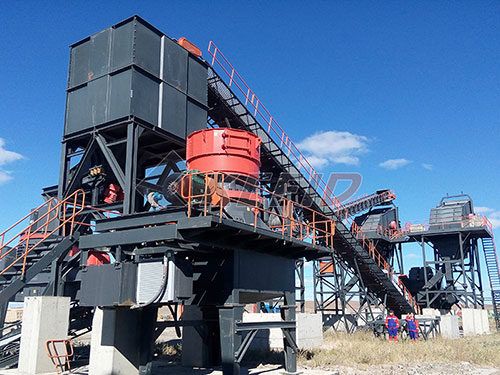
- Global Market Scan: Key manufacturing hubs include China(offering competitive pricing),Germany(high-precision engineering),Finland(Arctic expertise),and Australia(mining-focused design).
- Request for Quotation (RFQ): Issue detailed RFQ packages including Tech Specs,bulk quantity requirements,and delivery schedule.Invite bids from shortlisted,suppliers with proven references in similar bulk projects.
- Technical & Commercial Evaluation: Rigorously assess proposals not just on capital cost,but on life-cycle cost analysis(LCCA),including energy consumption,wear part life,and predicted maintenance downtime.Supplier financial stability is critical for long-term support.
Phase 3: Contract Negotiation & Finalization
A bulk order contract is complex,must cover:
- Supply Scope(Incoterms): Clearly define responsibilities(e.g.,FOB Shanghai Port,CIF Durban Port).For bulk shipments,FOB terms are common,giving the importer control over main freight logistics.
- Payment Terms: Typically structured as milestones(10-20% down payment;60-70% upon shipment;10-15% after successful commissioning;5-10% retention after warranty period).
- Performance Guarantees & Warranties: Enforceable guarantees on throughput,total power consumption,and final product gradation.Warranties should cover defects in materials/workmanship(typically12 months from commissioning).
- Penalties & Liquidated Damages(LDs): Define LDsfor delayed delivery or failure to meet guaranteed performance metrics after commissioning.
Phase 4: Manufacturing,Oversight,& Logistics
- Expediting & Quality Surveillance(QS): Hire third-party inspection agencies(SGS,Bureau Veritas)to conduct Factory Acceptance Tests(FAT)at key manufacturing stages.This is especially criticalforbulk orders to ensure consistency before shipment.
- Packaging & Shipping Strategy: Given the oversized nature of components(crusher frames,tanks),break-bulk or flat-rack container shipping is common.Bulk orders may justify chartering semi-submersible vesselsfor heavy-lift modules.Detailed packing lists per container/unit are essentialfor customs clearance.
Customs Clearance: Engage experienced freight forwarders familiar with mining equipment.The importer must prepare all documents:Certificateof Origin,Billsof Lading,Packing Lists.Commercial Invoice,and any specific import permits(e.g.,for electrical equipment).Thoroughly research destination country duties,taxes(VAT/GST),and any local content requirements.
Phase 5: Delivery,Erection,& Commissioning
The supplier typically provides supervisory engineersfor site assembly.Successful Site Acceptance Tests(SAT)and performance tests markthe final handover.Bulk orders benefit from staggered commissioning where lessons learnedfromthe first plant can be appliedto subsequent units.
4.Risk Mitigation Strategies
Bulk international procurement carries inherent risks that must be managed:
Technical Risk: Mitigated by rigorous FATs,pilot testing if possible,and clear specification of OEM-grade components forbearings,motors,and PLCs.Supplier visitsare essential
Logistical Risk: Use experienced project freight forwarders.Comprehensive marine insurance covering”All Risks”is non-negotiable.Planfor port congestion delays
Financial Risk: Secure payment instruments like Lettersof Credit(L/Cs)to protect both parties.Hedge against currency fluctuations if payment currency differsfrom operating currency
Geopolitical/Force Majeure Risk: Include robust force majeure clauses.Continuously monitor trade policies between exportingand importing countries
Conclusion
Importing iron ore crushing plants viaa bulk orderisa monumental undertaking that demands meticulous planning,cross-functional expertise,and strategic partner selection.When executed correctly,the benefits—cost savingsoperational standardizationand accelerated project timelines—are substantial.It transformsa capital equipment purchase intoa long-term strategic investmentin production capacityand reliability.The process underscoresa fundamental principlein heavy industry:the upfront rigorof procurement directly dictates the decades-long performanceofthe asset.Ultimately,a successfulbulk import program delivers not just machinery,buta foundational capabilityto efficiently harness mineral resourcesonaglobal scale
