
In the global aggregates, mining, and recycling industries, impact crushers stand as critical equipment for reducing medium-hard to hard materials like limestone, concrete, and asphalt. Their efficiency in producing a well-shaped, cubical end product makes them indispensable. Consequently, the procurement process for these machines is a significant capital decision. The phrase “Impact Crushers Sourcing Agent Cheap” encapsulates a common but complex procurement goal: leveraging intermediary expertise to acquire equipment at a low cost. This article delves into the multifaceted world of sourcing impact crushers through agents, critically examining the meaning of “cheap,” the value proposition of agents, and the strategic considerations for a successful acquisition.
Before discussing sourcing, one must appreciate what an impact crusher entails. Unlike jaw or cone crushers that utilize compression, impact crushers use high-speed rotors with blow bars to throw material against breaker plates, achieving fragmentation through impact. Key types include:
The core components—rotor assembly, blow bars/hammers, impact aprons/curtains—are subject to intense wear. Therefore, build quality, metallurgy, engineering design (e.g., open or closed rotor), and ease of maintenance are not just specifications but determinants of Total Cost of Ownership (TCO).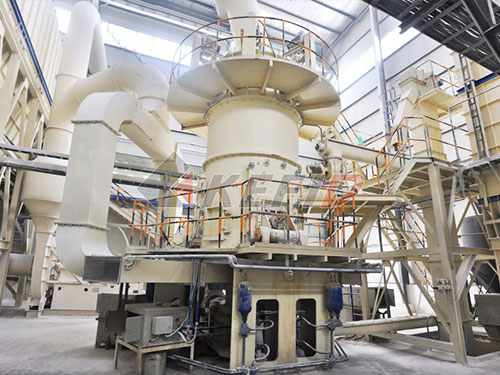
The pursuit of “cheap” is the most critical pitfall in heavy machinery procurement. In this context, “cheap” can have two diametrically opposed meanings:
A machine with a 30% higher initial price but 50% longer wear life, 15% lower energy use, and proven reliability offers a vastly cheaper TCO. The primary role of a good sourcing agent is to guide clients toward optimal TCO, not just the lowest invoice.
A sourcing agent specializing in heavy industrial equipment is not merely an order-forwarder; they are a project manager, technical auditor, negotiator, and logistics coordinator rolled into one. Their functions include:
1. Market Intelligence & Supplier Identification:
Agents have deep networks beyond Alibaba listings. They know established brands (like Metso Outotec/Anvil™ VSI parts , Sandvik Mobiles , Hazemag ) and can identify competent second-tier or regional OEMs in markets like China (where companies like LiuGong , SBM , and smaller specialized foundries operate), Turkey (BORATAŞ), or India who offer better value propositions without compromising core integrity.
2. Technical Due Diligence & Quality Assurance:
This is their most crucial role. A professional agent will:
3. Negotiation & Contract Safeguarding:
Agents understand commercial terms incoterms® 2020). They negotiate not only on price but on payment terms (e.g., 10-80-10 structure with holdback), warranty conditions (covering both parts AND labor?), and penalties for late delivery. They ensure technical specifications are part of the binding contract.
4. Logistics & Customs Coordination:
Shipping a 20-ton crusher requires expertise in Ro-Ro shipping container breakbulk handling). Agents handle documentation customs clearance duties/taxes minimizing delays at ports.
An agent whose sole mandate is to find the lowest price becomes a liability:
To navigate this process successfully businesses should adopt a structured approach:
Phase 1: Internal Preparation
Phase 2: Agent Selection & Briefing
Phase 3: Supplier Shortlisting & Evaluation
Phase 4: Commercial & Legal Finalization
Sourcing impact crushers through an agent can be a highly effective strategy unlocking access to global supply chains mitigating risks and achieving significant cost savings However conflating cost savings with chasing the cheapest initial price is a recipe for operational failure catastrophic downtime and higher long-term expenses
The true value of a professional sourcing agent lies in their ability to translate technical requirements into commercial reality while safeguarding the buyer’s interests throughout the machine’s lifecycle They help identify options where smart compromises can be made—perhaps on brand prestige or optional features—without sacrificing core durability performance
Ultimately procuring an impact crusher should be viewed as acquiring years of future production capacity Therefore partnering with an agent who understands that cheap is expensive unless it refers to Total Cost of Ownership transforms this complex procurement from a risky transaction into a strategic investment driving profitability and competitive advantage for years to come
Lorem ipsum dolor sit amet, consectetur adipisicing elit. Consectetur sequi saepe ut sunt eveniet perferendis excepturi, iste obcaecati. Qui tempore hic sed quia soluta obcaecati vel.