Impact Crushers: The Engine of Modern Aggregate Processing
Introduction
Impact crushers represent a cornerstone technology in the modern aggregate, recycling, and mining industries. As a category of size reduction equipment, they utilize the fundamental principle of dynamic impact to fracture materials. Unlike compressive crushers (like jaw or cone crushers) that apply gradual pressure, impact crushers deliver high-speed kinetic energy to incoming feed, causing it to break along natural fissures and weaknesses. This results in a highly cubical product—a critical specification for high-quality concrete and asphalt—and offers unparalleled versatility in processing a wide range of materials, from soft limestone to recycled concrete and asphalt (RCA), and even some industrial minerals. For manufacturers, articulating this technological prowess through comprehensive brochures is not merely salesmanship; it is a vital channel for education, specification, and trust-building with engineers, quarry managers, and contractors.
Core Operating Principles and Design Evolution
At the heart of every impact crusher lies the rotor, the primary engine of destruction. This high-inertia, precision-balanced assembly houses fixed or pivoting hammers (blow bars) that spin at high rotational speeds (typically 500-800 RPM for horizontal shaft models). Feed material is directed into the crushing chamber where it is struck by the blow bars and hurled against adjustable impact aprons or breaker plates. This primary impact event initiates fracture. Subsequently, material is rebounded back into the path of the blow bars for secondary impact or into the curtain of incoming feed for inter-particle collision—a highly efficient method of comminution.
Modern impact crushers are primarily categorized into two configurations:
- Horizontal Shaft Impactors (HSI): The most common design for primary and secondary crushing applications. The horizontal rotor allows for a larger feed size and is exceptionally effective in producing a consistent, cubical product. Modern HSI designs often feature hydraulic adjustment of aprons and fully accessible service doors.
- Vertical Shaft Impactors (VSI): Operating on a different principle, VSI crushers use a high-speed rotor that accelerates material outward from the center to an outer anvil ring or rock shelf. This “rock-on-rock” or “rock-on-steel” crushing action is ideal for producing finely shaped aggregates (sand), achieving high reduction ratios, and are often used in tertiary or quaternary crushing stages for manufactured sand production.
The evolution from rigid, welded designs to modular systems with hydraulic assistance marks a significant leap. Today’s leading manufacturers focus on designs that maximize serviceability—such as pivotable breaker plates and hydraulically opened housings—and adjustability, allowing operators to fine-tune product gradation without stopping the machine.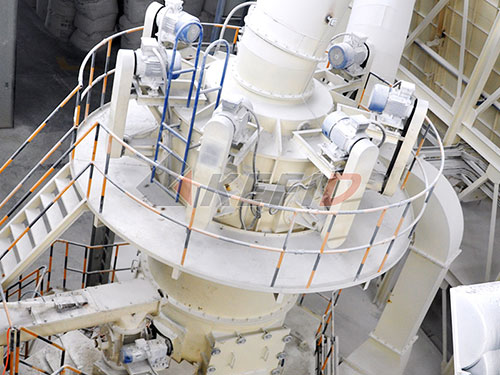
Key Performance Advantages: Why Choose an Impact Crusher?
A manufacturer’s brochure must compellingly detail these inherent advantages:
- Superior Product Shape: The dominant benefit. The controlled impact forces produce more equidimensional, cubical particles with fewer elongated flaky pieces (“slivers”) compared to compressive crushers. This enhances load-bearing capacity in concrete and improves compaction and durability in asphalt.
- High Reduction Ratios: Capable of reducing large feed (e.g., 40-inch limestone) to millimetre-sized product in a single stage, simplifying circuit design.
- Versatility in Feed Material: From soft to moderately abrasive minerals (limestone, dolomite) to brittle materials like coal. Their ability to handle low-density materials like wood waste in C&D recycling is unmatched.
- Efficiency in Recycling: The premier choice for processing C&D debris, asphalt slabs, and reinforced concrete. Features like overload protection and tramp iron release mechanisms prevent damage from uncrushable objects common in recycling streams.
- Relatively Lower Operating Costs: While wear part consumption (blow bars, apron liners) can be higher than cone crushers on abrasive stone, their simpler mechanical design often translates to lower initial purchase costs per tonne of capacity and easier maintenance.
Critical Technical Specifications & Selection Criteria
A professional brochure transcends marketing fluff by providing actionable engineering data:
- Rotor Design & Diameter/Width: The heart of the machine. A solid monobloc rotor offers robustness for heavy primary duty, while segmented rotors aid in blow bar changeout. Rotor dimensions directly dictate feed size acceptance and throughput capacity.
- Feed Opening & Crushing Chamber Geometry: Dimensions must accommodate maximum expected feed size without bridging. Optimized chamber design ensures proper material trajectory for efficient impact events.
- Drive System & Power Rating: Direct drive via V-belts or direct coupling offers different efficiency profiles. Motor power (kW/HP) must be matched to application severity; underpowering leads to poor performance and premature wear.
- Adjustment Systems: Hydraulic vs mechanical apron adjustment systems offer varying degrees of precision control over product top size during operation or while stopped.
- Wear Parts Metallurgy & Access: Detailing proprietary alloys (high-chrome iron martensitic steels), ceramic composites for extreme abrasion resistance demonstrates engineering depth.Easy-access doors,lifting tools,and reversible/wear-part optimization features reduce downtime.
Beyond the Machine: Value-Added Engineering & Support
Today’s discerning buyer invests not just in steel but in a performance partnership.The brochure must highlight:
- Application Engineering Support: Pre-sale analysis of feed material samples,crusher circuit simulation software,and site-specific recommendations.
- Advanced Automation & Control Integration: Compatibility with modern PLC systems,vibration monitoring sensors,wearing part tracking,and remote telematics platforms that enable predictive maintenance,fault diagnosis,and performance optimization from anywhere.
- Comprehensive Wear & Spare Parts Logistics: Guaranteed OEM quality parts,a global distribution network,and guaranteed inventory programs ensure sustained uptime.
- Service & Training Programs: Detailed documentation(including 3D interactive manuals),on-site commissioning by factory-trained technicians,and operator/maintenance training courses empower customers to maximize their investment’s lifespan.
Industry Applications: Demonstrating Versatility
A compelling brochure contextualizes technology within real-world challenges:
- Aggregate Quarrying (Primary/Secondary): Highlighting high-tonnage output of spec aggregate for road base (-1½” cubical product).
- Manufactured Sand Production (VSI Focus): Solving natural sand shortages by producing perfectly graded,in-shape fines meeting ASTM C33 specifications.
- Construction & Demolition Recycling: Featuring specialized models with magnetic separators,grizzly feeders,and wind sifters to process mixed debris into valuable recycled aggregates.
- Mining & Industrial Minerals: Processing softer industrial minerals like phosphate or gypsum with minimal fines generation.
Conclusion: The Brochure as a Strategic Tool
In conclusion,a manufacturer’s brochure on impact crushers serves as far more than a glossy catalog.It is a technical manifesto.It must educate on principles,demonstrate engineering superiority through hard data,and articulate a holistic value proposition centered on total cost of ownership(TCO)and operational success.In an era defined by demands for higher quality aggregates,increased sustainability through recycling,and relentless pressure on operational efficiency,the modern impact crusher stands as an indispensable solution.A well-crafted brochure does justice to this sophisticated machinery,moving beyond specifications sheetsto tell storyof innovation reliability partnership ultimately guiding customer toward optimal choicefor their specific comminution challenge thereby solidifying manufacturer’s positionas leader field not just supplier equipment but provider productivity solutions
