Impact Crushers: A Comprehensive Guide to Factory Samples and Their Critical Role in Equipment Selection
Within the industrial landscape of mineral processing, aggregate production, and recycling, the impact crusher stands as a pivotal machine for size reduction. Before a significant capital investment is made, the evaluation of Impact Crusher Factory Samples emerges as a non-negotiable, critical phase in the procurement process. These samples—raw materials processed through a specific impact crusher at the manufacturer’s facility—provide tangible, data-driven evidence of a machine’s capabilities, far beyond what specifications sheets or marketing claims can convey. This detailed article explores the purpose, methodology, analysis, and strategic importance of factory samples in selecting the optimal impact crusher for any given application.
1. The Fundamental Purpose of Factory Sampling
The core objective of conducting factory sample tests is to de-risk the purchasing decision. An impact crusher represents a long-term commitment, and its performance directly influences downstream processes, product quality, operational costs, and overall profitability. Factory samples serve multiple essential purposes:
- Performance Verification: They confirm whether the crusher can achieve the desired product gradation (particle size distribution). Brochures may state a “max feed size” and “adjustable output,” but only a test shows how a specific ore, demolition concrete, or limestone will actually break.
- Capacity Validation: Theoretical throughput (tph) meets reality in these tests. Users can observe feed rate consistency, potential bottlenecks (like bridging), and how the machine handles variable feed under controlled conditions.
- Product Shape Analysis: Particularly crucial for aggregate in asphalt and concrete, the cubicity of the final product is paramount. Impact crushers are often chosen for their superior shape generation compared to compression crushers. Visual and laboratory analysis of samples quantifies this (e.g., using Flakiness Index tests).
- Wear Part Life Estimation: By running a sufficient volume of material (often 10-50 tons), manufacturers can measure wear on blow bars/breaker plates and extrapolate to provide realistic wear life estimates and operating cost projections.
- Machine Behavior Assessment: The test allows buyers to witness noise levels, dust generation, vibration, and ease of adjustment (e.g., changing the gap or rotor speed) firsthand.
2. The Sampling Process: A Step-by-Step Protocol
A professional factory sample test is a structured event requiring meticulous preparation.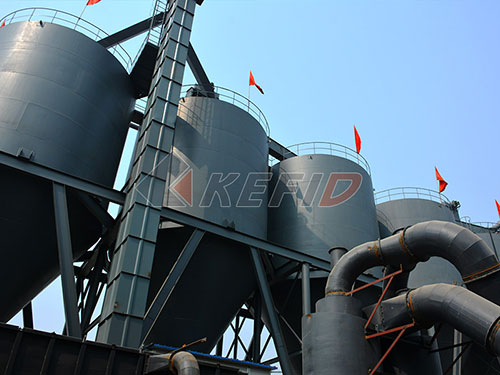
A. Pre-Test Phase:
- Representative Feed Material: The single most important factor. The client must supply several tons of material that is chemically and physically identical to what will be fed in real operation. For a quarry sourcing granite from a specific seam, that exact granite must be sent.
- Defined Test Parameters: Client and manufacturer agree on test goals: target product size(s), desired capacity range, and any specific concerns (e.g., minimizing fines or achieving a particular shape).
- Machine Configuration: The manufacturer sets up the exact impact crusher model (or closest pilot-scale equivalent) with the proposed blow bar metallurgy (manganese steel, martensitic steel, ceramic composites) and grate/crusher settings.
B. Execution Phase:
The test run is conducted at the manufacturer’s R&D or testing center. Engineers monitor key parameters:
- Feed rate (steady vs. variable)
- Power draw (amperage) of the rotor drive
- Crusher settings (rotor speed / apron gap / grinding path adjustment)
- Operational smoothness
Multiple product samples are taken at different stages—after initial impact (“first pass”), from secondary/tertiary curtains/grinding paths if applicable—and under different machine settings.
C. Post-Test Analysis:
Samples are collected for rigorous laboratory analysis: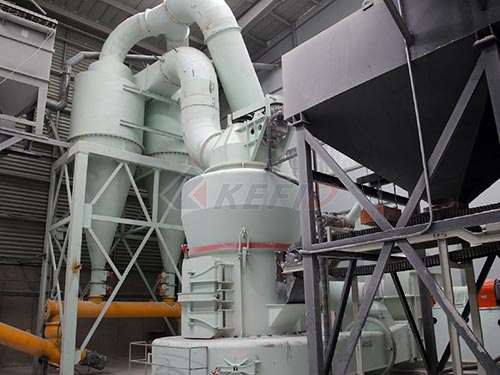
- Sieve Analysis: The definitive test to produce a gradation curve showing the percentage of material passing through various sieve sizes.
- Particle Shape Analysis: Using digital imaging or manual gauges to determine percentage of cubical vs. flaky or elongated particles.
- Wear Measurement: Precise weighing/measuring of blow bars before and after the test to calculate wear rate (grams per ton crushed).
- Report Generation: A comprehensive technical report correlates all inputs (feed material analysis) with outputs (product gradation), providing graphs like “Product Gradation Curves at Different Settings” and “Wear Rate Projections.”
3.Interpreting Sample Data: Beyond Basic Gradation
An informed buyer looks for specific insights in sample data:
- Steepness of Gradation Curve: A steep curve indicates tight control over top size but may produce more fines; a flatter curve indicates a broader product range.
- Fines Generation (“Fines Yield”): How much sub-75µm or sub-4mm material is produced? This is critical if fines are undesirable or if they represent valuable by-products.
- Consistency Across Settings: Does changing an adjustment hydraulicly lead to predictable linear changes in output? This speaks to machine controllability.
- Energy Efficiency Indicator: While not always directly measured for clients during standard tests comparing power draw against throughput provides an indicator; lower kWh/ton means lower operating costs.
4.The Strategic Importance & Limitations
Factory sampling is not merely technical due diligence; it’s strategic risk management.
For Buyers, it:
- Provides leverage for negotiating based on proven performance versus promised performance.
- Allows comparison between different manufacturers on an apples-to-apples basis, using their own material.
- Uncovers potential issues before installation, saving immense cost from unscheduled downtime post-purchase.
For Manufacturers, it:
- Demonstrates confidence in their technology.
- Builds trust through transparency.
- Gathers valuable application data to further refine machine design.
However limitations exist:
- Scale Effects: A test on smaller pilot plant might not perfectly replicate full-scale continuous operation over months especially regarding heat buildup bearing temperatures etc..
- Feed Variability Real-world feed varies more than prepared sample batches do so some margin must be accounted for based upon experience from both sides involved during discussions around results interpretation phase where engineering judgment plays key role alongside hard numbers from lab reports generated post-testing event(s).
Conclusion
In conclusion within high-stakes industries dependent on efficient comminution evaluation through Impact Crushers Factory Samples transcends being merely recommended procedure becoming instead fundamental cornerstone prudent capital asset acquisition strategy . It transforms subjective choice into objective selection process grounded empirical evidence enabling mine manager quarry operator recycling plant owner make informed decision aligns precisely operational needs financial constraints long term production goals . Ultimately investing time resources comprehensive factory sampling program represents minimal upfront cost compared potentially catastrophic consequences selecting unsuitable equipment thereby safeguarding productivity profitability years come while ensuring supply high quality end products market demands today tomorrow alike .
