Impact Crushers: A Comprehensive Guide to Bulk Procurement for Industrial Operations
In the realm of industrial aggregate processing, mining, and construction material recycling, the impact crusher stands as a pivotal piece of equipment. Its ability to deliver high reduction ratios, produce a well-graded, cubical product, and handle a variety of medium-hard materials makes it indispensable. For large-scale operations—such as major quarrying projects, national construction firms, or aggregate suppliers—procuring these machines via a factory bulk order represents a strategic decision with significant financial and operational implications. This article provides a detailed, objective analysis of impact crushers within the context of bulk factory procurement, covering technology, economic rationale, procurement strategy, and key considerations.
1. Technological Overview: The Mechanics of Impact Crushing
Impact crushers utilize the principle of dynamic impact to fracture material. Unlike compression crushers (e.g., jaw or cone crushers) that squeeze rock between surfaces, impact crushers employ high-speed rotors fitted with blow bars (hammers) that strike incoming feed material. The kinetic energy from these collisions throws the material against stationary impact aprons or anvils, causing it to shatter along natural fault lines.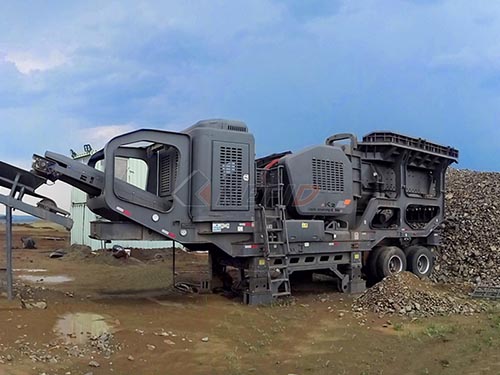
There are two primary configurations:
- Horizontal Shaft Impactors (HSI): The most common type for primary and secondary crushing of softer to medium-hard materials like limestone and recycled concrete. They offer excellent control over product shape and size.
- Vertical Shaft Impactors (VSI): Often used for tertiary and quaternary crushing stages to produce premium-shaped aggregates (cubicity) and manufactured sand. They operate on a “rock-on-rock” or “rock-on-anvil” principle for wear part optimization.
Key technological advantages driving bulk demand include:
- High Reduction Ratio & Capacity: Capable of reducing large feed sizes (e.g., 1m³) to fine aggregates in a single stage.
- Superior Product Shape: Produces more cubical particles, essential for high-quality concrete and asphalt mixes.
- Versatility: Can be configured for primary, secondary, or recycling applications with adjustable rotor speed and apron gaps.
- Relative Simplicity: Generally simpler in design than cone crusher circuits for similar duties.
2. The Economic Rationale for Factory Bulk Orders
For an entity requiring multiple units—such as a multinational deploying standardized plants across regions or a large contractor supplying several mega-projects—a bulk factory order transitions from a simple purchase to a capital investment strategy.
A. Direct Cost Advantages:
- Volume Discounts: Factories offer substantial discounts per unit when orders exceed standard quantities (e.g., 5+ units). This can reduce the capital expenditure (CAPEX) by 15-30% compared to individual purchases.
- Economies of Scale in Logistics: Consolidating shipment of multiple units in containers or Ro-Ro vessels drastically lowers per-unit freight costs, insurance, and customs clearance expenses.
- Standardized Spare Parts Package: A bulk order allows negotiation for a comprehensive initial spare parts kit (blow bars, aprons liners, rotor assemblies) at a bundled price, ensuring operational readiness and reducing future procurement lead times.
B. Operational & Strategic Benefits:
- Fleet Standardization: Operating identical models across sites simplifies operator training, maintenance procedures, and spare parts inventory management. Technicians require knowledge of only one system.
- Unified Technology & Performance: Guarantees consistent product quality output from different locations if feed material is similar, which is crucial for companies with strict product specifications.
- Enhanced Negotiation Leverage: A bulk order provides significant leverage to negotiate not just on price but also on warranty terms (extended duration), payment cycles, and inclusion of advanced monitoring technology (IoT sensors).
- Synchronized Delivery & Deployment: Coordinating delivery schedules ensures machines arrive aligned with project timelines, preventing costly delays at various sites.
3. The Bulk Order Procurement Process: A Step-by-Step Strategy
A successful bulk procurement requires meticulous planning beyond issuing a purchase order.
-
Internal Needs Assessment & Specification:
- Define the exact application(s): primary limestone crushing vs. recycling C&D waste.
- Determine required capacity (TPH), feed size max/min, desired product gradations.
- Standardize specifications across intended sites as much as possible.
-
Supplier Pre-Qualification & RFQ:
- Identify 3-5 reputable manufacturers with proven global service networks.
- Issue a detailed Request for Quotation (RFQ) specifying technical requirements AND commercial terms for the bulk package (e.g., “Price for 1 unit vs. price for 6 units”).
-
Technical Evaluation & Factory Audit:
- Evaluate proposed machine designs, metallurgy of wear parts (high-chrome vs. martensitic steel), rotor robustness, and accessibility for maintenance.
- Conduct an on-site audit of the shortlisted factories to assess manufacturing quality control processes,welding standards,and testing protocols.This is critical for ensuring long-term reliability.
-
Commercial Negotiation & Contracting:
- Negotiate based on the total package value: unit prices,freight,warranty(parts&labor),spare parts kits,and commissioning support.
- Include clauses for performance guarantees (throughput & product gradation), penalties for delayed delivery,and terms for phased deliveries if needed.
- Define Intellectual Property regarding any custom modifications.
-
Logistics & Commissioning Planning:
- Plan port-of-entry clearance,duties,and inland transportation in advance.
- Schedule factory-trained engineers for commissioning at each site,included in the package where possible.
4. Critical Considerations & Potential Challenges
Bulk ordering is not without risks; professional due diligence is paramount.
A. Technical Pitfalls:
- Over-Standardization: Forcing one model to suit slightly varied applications at different sites may lead to suboptimal performance at some locations.A degree of modularity or optional features should be considered.
- Technology Lock-in: Committing to one manufacturer’s ecosystem may limit future flexibility.It’s advisable to ensure critical wear parts have some interchangeability or are available from reputable third-party foundries.
B.Commercial & Logistical Challenges:
- Large Upfront Capital Outlay: Requires significant liquidity or financing arrangements.Detailed ROI analysis based on increased production efficiency is essential.
- Currency & Trade Risk: For international orders,fixed pricing in a stable currency(like USD/EUR)and clear Incoterms are vital.Hedging strategies may be necessary.
*After-Sales Service Scalability:** Verify that the manufacturer’s local service centers in all destination countries can support the sudden influx of multiple new machines.Warranty response time must be contractually defined.
C.Lifecycle Cost Analysis (LCA):
The purchase price is only ~20-30% of the Total Cost of Ownership(TCO).Bulk negotiations must aggressively address:
Wear Parts Consumption Rate & Cost: Secure long-term pricing agreementsfor consumables like blow bars
Energy Efficiency: More efficient motors driven by variable frequency drives(VFDs)can save substantial operational costs(OPEX)
Resale Value: Standardized popular models typically have higher residual values
Conclusion
Procuring impact crushers via a factory bulk order is a sophisticated supply chain strategy reservedfor serious industrial players.It transforms acapital equipment purchase intoa long-term partnershipwitha manufacturer,yielding profound cost savingsand operational synergies.The decision must be rootedin athorough technical evaluationof themachines’ suitabilityforthe intendedduties,coupledwitha rigorouscommercial process that prioritizesTCOover initial sticker price.For organizationswiththe scaleand foresightto manage suchan undertaking,the rewards—in termsof standardizedfleet performance,predictableoperating costs,and enhancedcompetitive edgein themarketplace—are substantial.In essence,a well-executedbulk orderis notjustabout buyingcrusherscheaper;it’s about engineeringa more efficient,predictable,and profitablecrushing operationon amacro scale
