
In the demanding world of aggregate processing, mining, and construction waste recycling, the impact crusher stands as a pivotal piece of equipment. Its ability to produce a well-shaped, cubical product through high-speed impact forces makes it indispensable for a wide range of applications. For end-users, the quest often leads to finding a reliable impact crusher fabricator who can deliver not just a machine, but a cost-effective solution. The term “competitive price” in this context is not merely about the lowest initial capital expenditure (CAPEX). It is a complex equation where true competitiveness is defined by total cost of ownership, performance efficiency, durability, and the fabricator’s engineering prowess. This article delves into how professional impact crusher fabricators achieve and offer genuinely competitive pricing.
A truly competitive price is holistic. A fabricator focusing solely on undercutting competitors on sticker price often compromises on critical aspects that lead to higher operational costs (OPEX). The sophisticated buyer evaluates price across several dimensions:
Achieving a favorable position in all the above categories requires strategic expertise. Here’s how top-tier fabricators build competitiveness into their machines:
1. Design Optimization & In-House Engineering:
A fabricator with strong in-house engineering capabilities can optimize designs for specific material types (e.g., abrasive limestone vs. recycled concrete). Using Computer-Aided Design (CAD) and Finite Element Analysis (FEA), they ensure structural integrity without over-engineering, saving on material costs while guaranteeing reliability. This allows for customization at near-standard model prices—a key competitive edge.
2. Advanced Manufacturing & Supply Chain Management:
Competitive fabricators invest in modern manufacturing technology like CNC plasma cutters, automated welding systems, and precision machining centers. This improves quality consistency, reduces labor hours per unit, and minimizes waste—savings passed to the customer. Strategic sourcing of raw materials (high-strength steel plate) and components (bearings, motors) through long-term partnerships also controls input costs.
3. Focus on Wear Part Economics & Quick-Change Systems:
Impact crushing is inherently abrasive. The design of wear parts (blow bars/impellers/hammers/impact plates) is paramount.
4. Efficiency-Driven Rotor & Chamber Design:
The heart of an impact crusher is its rotor.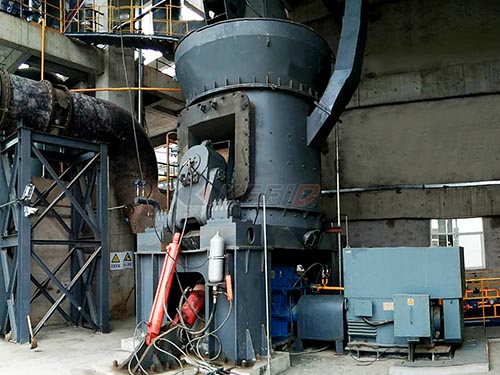
5. Integration of Automation & Monitoring Systems:
Modern “competitive” includes smart features that prevent costly damage and optimize output.
The way a fabricator operates its business significantly influences pricing strategy:
To identify a fabricator offering genuine competitive price buyers should move beyond simple price sheets ask probing questions:
In conclusion securing an impact crusher at a truly competitive price from a reputable fabricator is an exercise in evaluating integrated value not just comparing invoice totals The most competitive fabricators are those who leverage intelligent design disciplined manufacturing deep metallurgical knowledge strategic sourcing They embed durability efficiency serviceability into their machines thereby driving down the customer’s ultimate metric: cost per ton of finished product
The initial purchase price remains important but it is merely one variable in complex long-term operational equation Therefore partnership with an impact crusher fabricator whose engineering excellence operational understanding aligns with specific production goals represents most profound form of competitive advantage delivering superior financial returns over lifespan equipment This holistic approach defines new standard competitiveness within industry moving conversation from cheap machinery toward intelligent sustainable productive capital investment
Lorem ipsum dolor sit amet, consectetur adipisicing elit. Consectetur sequi saepe ut sunt eveniet perferendis excepturi, iste obcaecati. Qui tempore hic sed quia soluta obcaecati vel.