The Unyielding Power of Reduction: A Detailed Analysis of How a Jaw Crusher Operates
In the fundamental processes of mining, quarrying, and aggregate recycling, the primary reduction of large, rugged materials into manageable sizes is a critical first step. At the heart of this comminution stage often stands a machine of robust simplicity and brute-force efficiency: the jaw crusher. A cornerstone of mineral processing and construction industries for over a century, the jaw crusher’s operating principle is elegantly straightforward yet relies on sophisticated engineering to achieve its powerful performance. This article provides a comprehensive examination of the working mechanism, components, types, and key operational considerations of this indispensable piece of equipment.
Fundamental Operating Principle: The Intermittent Compression Crusher
At its core, a jaw crusher functions on the principle of compression. The machine is designed to apply immense mechanical force to large rock or ore particles, forcing them to fracture along their natural cleavage lines. Unlike continuous grinding mills, a jaw crusher operates on a cyclical, intermittent basis. It does not employ impact or shear as its primary breaking force but rather a squeezing action generated by two vertical jaws—one stationary and one moving.
This action can be likened to a nutcracker, but on an industrial scale capable of handling boulders measuring over a meter in diameter. The process involves two key phases within each cycle:
- The Opening Stroke (Downward/Eccentric Motion): The movable jaw retreats from the fixed jaw, creating a widening gap at the bottom of the crushing chamber. This allows the feed material to gravitationally descend further into the chamber.
- The Closing Stroke (Upward/Eccentric Motion): The movable jaw advances towards the fixed jaw, progressively reducing the space between them and applying compressive force to the trapped material. Once the force exceeds the compressive strength of the rock, it fractures.
This cyclical process repeats itself at rates typically between 250-300 cycles per minute, creating a continuous flow of crushed material discharged from the bottom opening.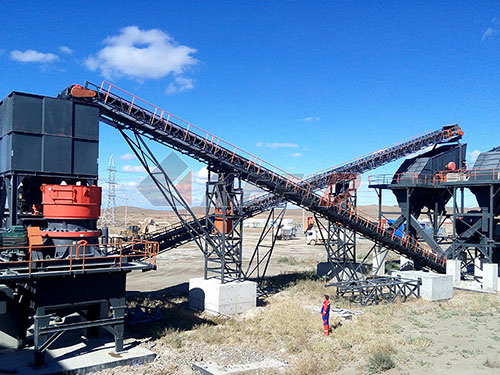
Deconstructing the Components: Anatomy of a Jaw Crusher
To fully understand its operation, one must be familiar with its key components:
- Fixed Jaw: This is a rigid vertical surface mounted to the main frame of the crusher. It serves as an anvil against which the rock is crushed. Often, it is referred to as the “stationary die.”
- Movable Jaw: This is the active component that exerts the crushing force. It is typically mounted on an eccentric shaft that translates rotational motion into reciprocating (back-and-forth) motion.
- Jaw Plates (or Dies): These are replaceable manganese steel liners attached to both jaws’ surfaces facing each other. They feature corrugated patterns (cheek plates) that are crucial for applying both compressive and some shearing forces to enhance breaking efficiency and protect the underlying jaw structure from wear.
- Eccentric Shaft: This is arguably the most critical mechanical component in most modern jaw crushers. It is a heavy-duty shaft with an offset lobe (the eccentric). As this shaft rotates via connection to an electric motor and pulley system, this offset lobe imparts an elliptical motion to the bottom of the movable jaw.
- Toggle Plate: A safety-critical component located behind/underneath themovable jaw assembly.The toggle plate acts as both a simple lever mechanism and afailsafe device.It holdsthe bottom ofthe movablejaw in positionand transmitscrushing forcesto therear ofthe frame.Ifan uncrushable object(e.g., tramp iron) enterschamber,the toggle plateis designedto fractureor mechanically release,promptly stoppingthecrusherand preventingcatastrophicdamagetoothercomponents.
- Adjustment Wedge: A mechanical system usedto controlthe sizeofdischargeopening(closedsidesetting).By raisingor loweringa wedgeassemblybehindthetoggleplatearea,thepositionofthemovablejawatitsdischargeendcanbealtered.Thisdirectlydeterminesthemaximumsizeofcrushedproduct.
- Flywheel: Heavy wheels mountedonboth endsoftheeccentricshaft.Theirrotationalinertiastoresenergy duringthenon-loadpartofthecycle(theopeningstroke)and releasesitduringthepower-intensivecrushingstroke.Thishelpsmaintainconsistentcrusherspeedandsmoothoutpowerdemandsfromthemotor.
The Crushing Cycle: A Step-by-Step Breakdown
The interplay between these components creates a highly effective crushing action:
- Feed Entry: Material (known as feed) is loaded into topofcrushingchamberfromavibratingfeederorhopper.Theinitialsizeofmaterialthatcanbeacceptedisdeterminedbythedistancebetweenthetwojawsatthetop(feedopening).
2.InitialCompressionandDescent: Asthemovablejawbeginsitsclosingstroke,thematerialnearthetopofthechamberisthefirsttobecompressed.Largerrocksarebrokenintosmallerfragments.Assoonasapieceoffracturesufficientlytofallthroughthegapatthatmomentitdescendsdeeperintothechamber.
3.ProgressiveReduction: Thisprocessrepeatscontinuouslyasthematerialtravelsdownward.Eachtimeitissubjectedtoacrushingstroke,theparticlesbecomeprogressivelysmaller.Thegeometryofthechamber—wideratthetopandnarroweratthebottom—ensuresthatmaterialisconstantlybeingnippedandcrushedasitmovesdownwardundertheforceofgravityandthemechanicalactionofthejaws.
4.FinalDischarge: Whenthematerialhasbeenreducedtoasizesmallerthanthesetdischargeopening(closedsidesetting),itexitsfromthebottomofthecrusher.Thisfinalproductisreferredtoasthecrusher”product”or”discharge.”
It’s important tonotethatnotallmaterialiscrushedinasinglecycle.Someparticlesmayrequiremultiplecompressioncyclesbeforetheyarebrokenenoughtoescape.Thiscreatesaninterparticlecrushingeffectwhererocksalsocrushagainsteachother,furtherimprovingefficiency.
Variations in Motion: Blake vs.DodgeJawCrushers
WhilemodernjawcrushersarepredominantlybasedontheBlakedesign,therearetwomainhistoricaltypesdefinedbythemotionofthemovablejawandpivotingpoint:
- BlakeJawCrusher(DoubleToggle): Inthisclassicdesign,themovablejawispivotedatthetop.Theeccentricshaftislocatedatthebottom,causingthemovablejawtohaveamaximummovement(atravelpath)atitsdischargeend.Thisresultsinasubstantialreciprocatingmotionatthebottomthatdeliversahighlyeffectivecompressiveforce.Itisgenerallyconsideredmorerobustandbetterforhard,tough,andabrasivematerials,butismorecomplexmechanically.
- DodgeJawCrusher(SingleToggle): Inthissimplerdesign,themovablejawispivotedatthebottom,andtheeccentricshaftislocatedatthetop.Thisimpartsanellipticalmotionwhereeverypointonthemovablejawmovesinanarc.ThisdesignprovideslessscrappingmotionreducingwearonjawplatesbutgenerallyhasalowercapacitycomparedtoaBlakecrusherofequivalentsize.Modernsingle-togglecrushersareverypopularfortheirsimplicity,lighterweight,andgoodperformanceinlesssevereserviceconditions.
Mostcontemporary”overhead eccentric”jawcrushersareeffectivelysingle-toggledesignswithoptimizedkinematicstoprovideaggressivecrushingactionwithhighcapacity.
KeyOperationalParametersandConsiderations
Understandinghowajawcrusherworksalsoinvolvesgraspingkeyparametersthatgovernitsperformance:
- ClosedSideSetting(CSS): Thisisthesmallestdistancebetweenthestationaryandmovablejawattheirclosestpointduringacycle.Itistheprimarydeterminantofthecrusher’smaximumproductsizereductionratio(CSSdividedbyfeedsize).
- Capacity: Thethroughputrate(tonsperhour)dependsonmultiplefactorsincludingCSS,materialdensityhardnessfriabilityfeedgradationfeedrateandcrusherspeed
- PowerConsumption: Crushingishighlyenergy-intensive.Powerdrawisdirectlyrelatedtothehardnessofthematerialandthereductionratiobeingachieved
- WearPartLife(JawPlates): Abrasionistheprimarycauseofwear.Replacingmanganesesteeljawplatesisamajoroperatingcost.Lifeexpectancydependsonthematerial’sabrasivenessfeedsizeandproperoperationavoidingslip-pagewithimproperfeeddistribution
InconclusionajawcrusherachievesitstransformativeworkthroughadirectapplicationofcompressivemechanicalforceItsdesigncharacterizedbyacyclicalreciprocatingmotionbetweenfixedmovingjawsrepresentsaperfectmarriageofsimplicitystrengthfunctionalityWhileadvancementsinhydraulicsautomationmaterialshaveenhanceditsefficiencyandreliabilityfundamentaloperatingprincipleremainsunchangedsincethe19thcenturyAsatestamenttoitsrobustdesignitcontinuestobeaprimaryworkhorseindevelopingtheworldinfrastructureprovidingessentialrawmaterialsthroughunwaveringpowerprecision
